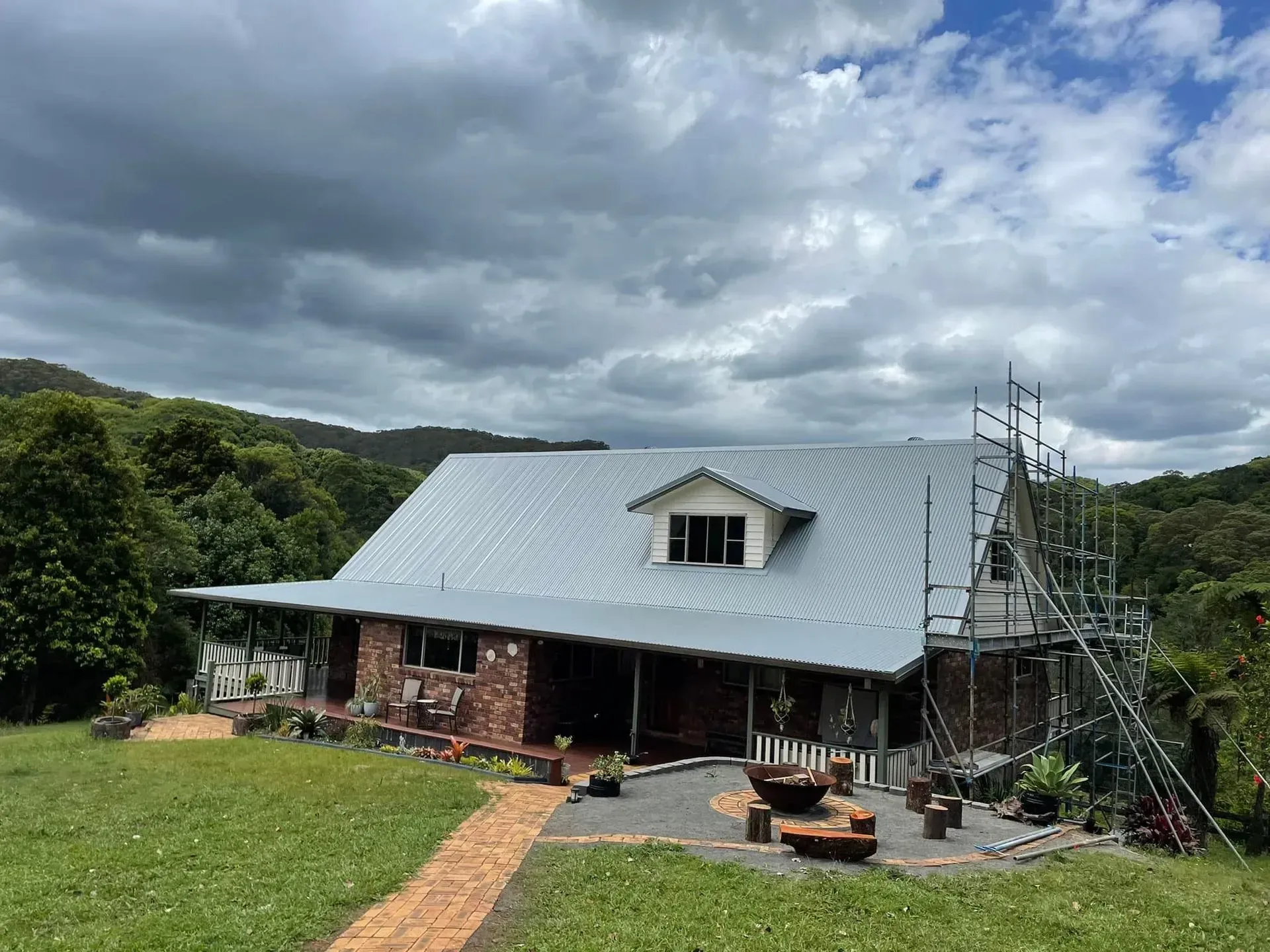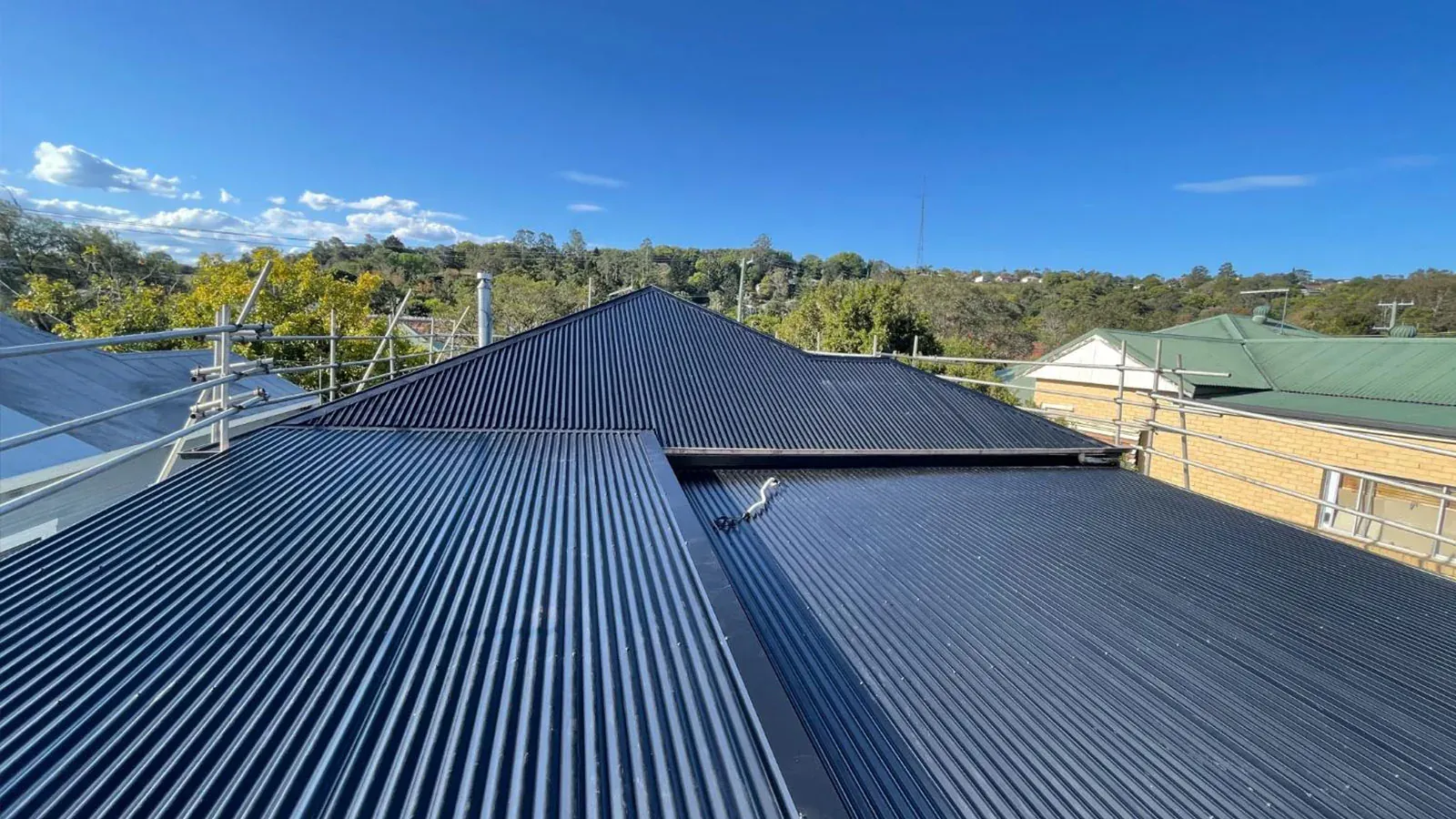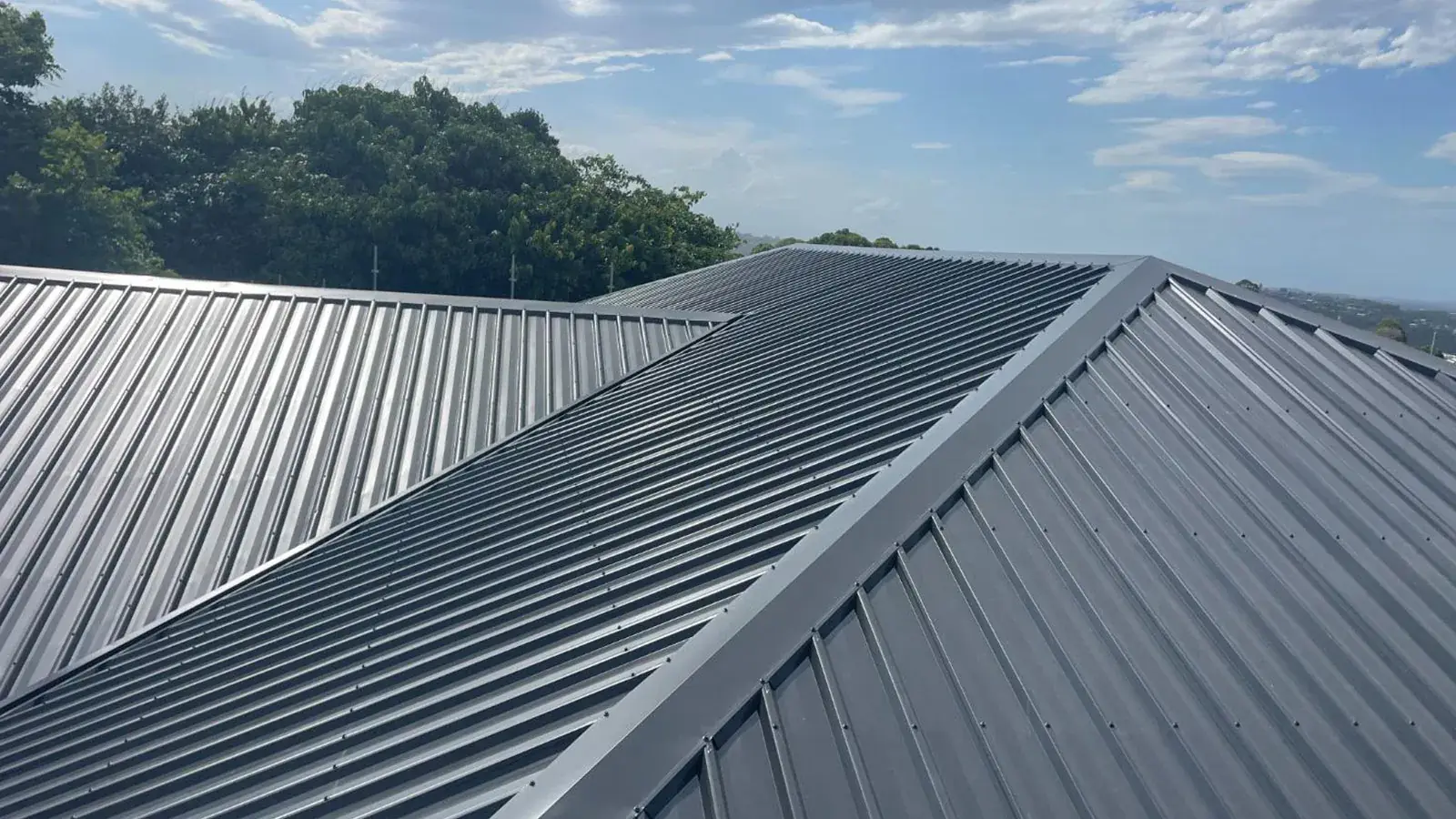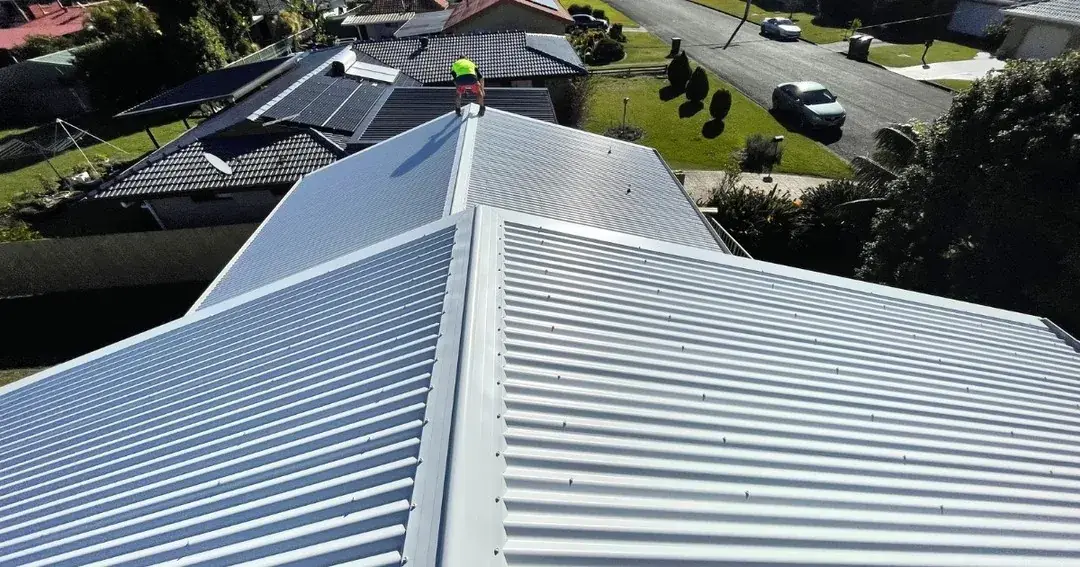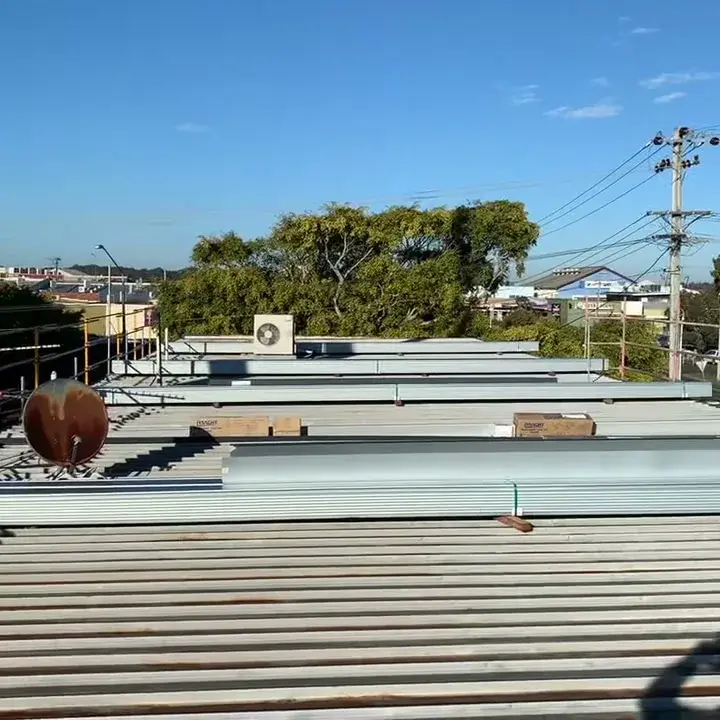
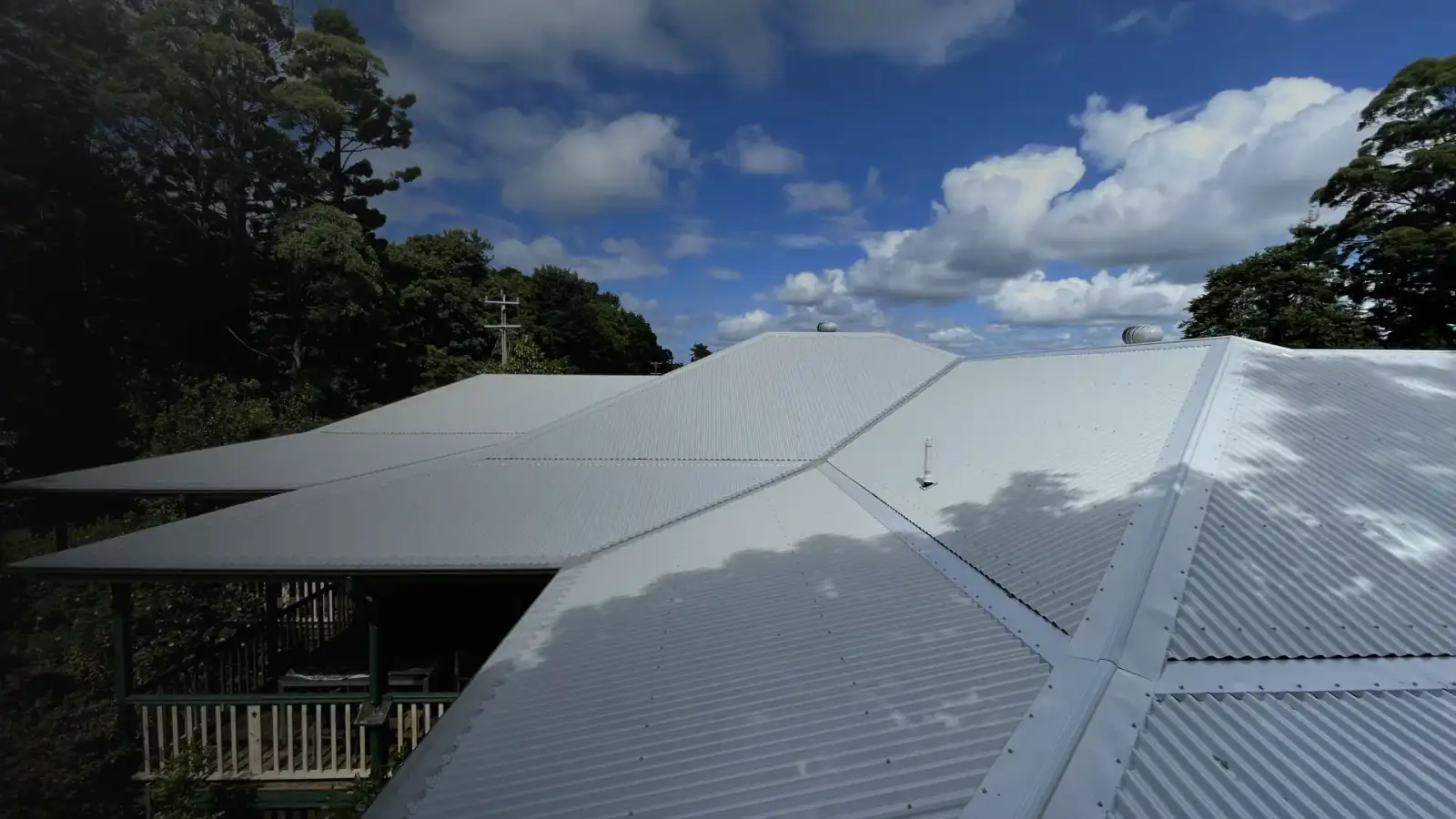
The main benefits of metal roofing are low weight, long life with little upkeep, clean run-off for rainwater tanks and cooler roofs in lighter colours. Ricky Jenner Roofing installs Colorbond and metal roofing across the Northern Rivers, and the downsides (rain noise, condensation and coastal corrosion) each have a fix.
What are the benefits of metal roofing?
- It is light. Lysaght lists its corrugated Custom Orb sheet in Colorbond steel at about 4.35 kg per m², a fraction of a tiled roof. BlueScope notes that a lighter roof can let the battens, frame and footings be sized smaller, which matters on older homes and when converting from tiles.
- It lasts, with little upkeep. On the right site, Colorbond steel lasts for decades. Rain washes most of the roof clean, so upkeep is mostly hosing the sheltered spots and keeping gutters clear. Our guide to how long it lasts covers what speeds wear up.
- It suits rainwater tanks. Metal sheds water quickly and leaves little behind. NSW Health’s advice is to cover lead flashings, keep gutters clean, fit a first flush device and keep appliance overflows off the roof.
- It can keep the house cooler. A light roof can run up to 35°C cooler on the surface than a dark one on a hot day, and all but one core Colorbond colour carries Thermatech. Metal also sheds its heat quickly after sunset. See our guide to cool roof colours.
- It is recyclable. BlueScope says every Colorbond steel product contains recycled material and the steel is 100% recyclable.
- It works on low pitches and in bushfire areas. Metal suits skillions and verandahs that tiles cannot cover, and Lysaght notes Colorbond steel can be used up to BAL-FZ. Your certifier confirms the full roof system.
What are the downsides of metal roofing?
Every roofing material has trade-offs. These are the ones worth knowing about metal, and how a good installation handles each.
| Downside | How a good install deals with it |
|---|---|
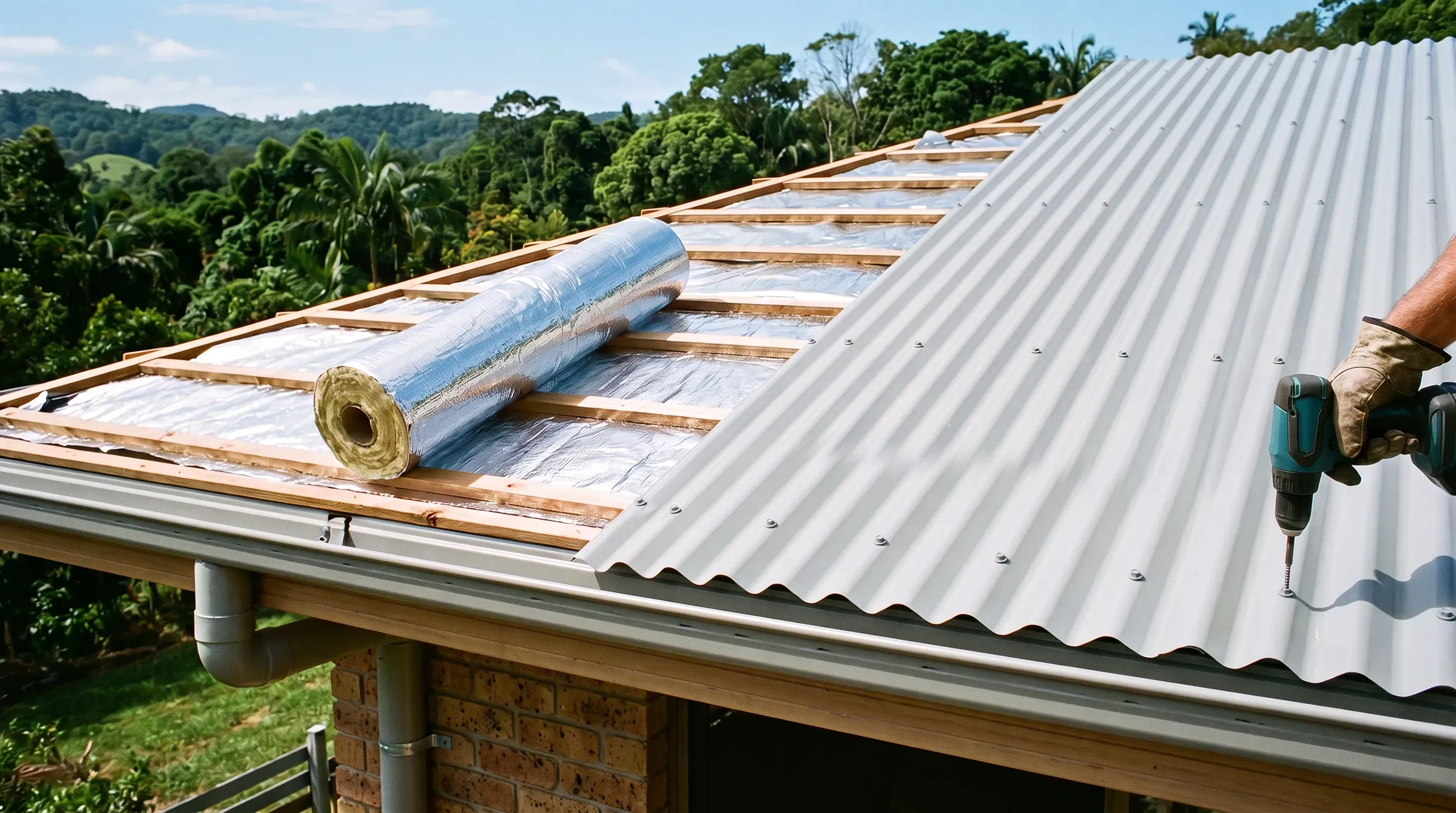
| Rain noise | Bare sheets drum in heavy rain. An insulation blanket under the sheets, plus ceiling insulation, quietens most of it. |
| Condensation | Moist air meets the cold sheet on clear nights. A foil-faced blanket or sarking acts as a vapour barrier. |
| Coastal corrosion | Salt builds up where rain cannot wash it off. The right grade for the distance from the surf, Class 4 screws and regular hosing handle it. |
| Mixed metals | Copper, lead and stainless steel attack the coating. Flashings and screws must be compatible, and other trades need watching. |
| Dents | Hail, or walking in the wrong place. Walk only near the supports, and have the roof checked after big hail. |
| Glare | A light roof can bounce sunlight towards neighbours. Colour, pitch and orientation can be chosen with glare in mind. |
Rain noise is the one most people ask about. An insulation blanket laid over the battens deadens most of it, which is why blanket and sarking go under the new roofs we install. A ventilated roof space helps with condensation too.
How does metal compare with tile?
Here is the short version. For the full side-by-side, read our guide to Colorbond vs tile.
| Metal (Colorbond) | Tile | |
|---|---|---|
| Weight | Around 4 to 5 kg per m² | Around 38 to 55 kg per m² |
| Lowest pitch | 1 to 5 degrees, depending on the profile | Usually 15 degrees or more |
| Rain noise | Louder without an insulation blanket | Quieter |
| Heat at night | Cools quickly after sunset | Holds heat into the evening |
| Upkeep | Hose sheltered areas, keep gutters clear | Cracked tiles, ridge bedding and pointing |
Is metal roofing right for your home?
For most homes in the Northern Rivers, from coastal Ballina to the Lismore hills, metal roofing is a practical choice. It is light, suits tanks, handles our heat and heavy rain, and is simple to maintain. The downsides are real but well understood, and each fix should be written into your quote.
Ricky Jenner Roofing is based in Wollongbar, and Ricky has been a licensed roof plumber since 2009. If you are weighing up a new roof, our metal roofing page shows the profiles, colours and jobs we do.
Common questions
What are the downsides of metal roofs, and how are they fixed?
Rain noise is the best-known downside, and it is mostly a sign of a roof with no insulation blanket under the sheets. Condensation and coastal corrosion are the other real problems. A blanket with a foil face quietens the rain and limits condensation, and choosing the right grade and fixings for your distance from the surf deals with corrosion.
What is the best roof for your money?
For many Northern Rivers homes, a metal roof in the standard Colorbond range gives the best value over its life. It is light, goes on quickly, suits rainwater tanks and needs little upkeep. The best value on your house depends on the frame, the pitch and how close you are to the surf, so compare full installed quotes rather than material prices.
Is a metal roof noisy in the rain?
A bare metal roof is louder than tiles in heavy rain. An insulation blanket laid under the sheets makes most of the difference, together with ceiling insulation and a sound frame. The blanket damps the sheets and absorbs much of the drumming before it reaches the rooms below, so an insulated metal roof is far quieter than a bare one.
Can I collect rainwater from a Colorbond roof?
Yes. A Colorbond roof can supply a rainwater tank, as long as the roof and gutters are set up for it. NSW Health advises replacing or covering any lead flashings, keeping gutters clear, fitting a first flush device and not letting hot water or air-conditioner overflows drain onto the roof. It also recommends town water for drinking where you have it.
Which roof style is the cheapest?
A simple gable roof covered in a common profile such as corrugated steel is usually the cheapest roof to build or replace. It has few hips and valleys to cut and flash, and it can often be sheeted in full-length sheets. Complex shapes, steep pitches and difficult access add cost whatever material goes on top.