In a Colorbond vs tile roof comparison, Colorbond is lighter, works on lower pitches, suits rainwater tanks and needs less upkeep, while tile is quieter in rain and worth keeping if it is sound. Ricky Jenner Roofing installs Colorbond roofs and converts tired tile roofs to metal across the Northern Rivers, and this guide sets out both sides.
Colorbond vs tile at a glance
Weights and pitches are maker data: Lysaght for Colorbond sheet, and one Australian tile maker’s range.
| Colorbond steel | Concrete or terracotta tile | |
|---|---|---|
| Weight | About 4.35 kg per m² (corrugated, 0.42 mm steel) | About 50 to 55 kg per m² for concrete, 38 to 44 for terracotta |
| Lowest pitch | 1 to 5 degrees, depending on the profile | 15 degrees or more |
| Heat | Cools quickly after sunset | Holds the day’s heat into the evening |
| Rain noise | Louder without an insulation blanket | Quieter |
| Upkeep | Hose sheltered areas, replace rusty screws | Replace cracked tiles, re-point ridges |
| Storms | Stays down when fixed to its wind class; hail can dent | Tiles can lift, slip or crack |
| Looks | 22 standard colours, many profiles | Traditional, textured look |
| Lifespan | Decades, with the right grade and upkeep | Tiles last; bedding, valleys and sarking wear sooner |
On heat, BlueScope draws on the federal Your Home guide: a heavy roof releases the day’s heat into the evening, while an insulated metal roof cools quickly once the sun is off it. In our warm summers, that matters for sleeping.
Where does a tile roof fall short?
Tiles have a look many people love, and a well-kept tile roof can serve for a long time. The trade-offs are:
- Weight. At roughly eight to twelve times the weight of steel sheeting, tiles put a heavy load on the battens, frame and walls.
- Breakage. Tiles crack under foot traffic, falling branches and big hail, and a cracked tile can let water in well before a stain shows on the ceiling.
- Ridge bedding and pointing. The mortar and pointing that hold the ridge and hip cappings wear over time and need redoing.
- Pitch. Tiles need a steeper roof, which rules them out for skillions and low extensions.
- No sarking on older roofs. Wind-driven rain that gets past a tile goes straight into the roof space.
Where does Colorbond fall short?
Metal has trade-offs too, and each has a fix:
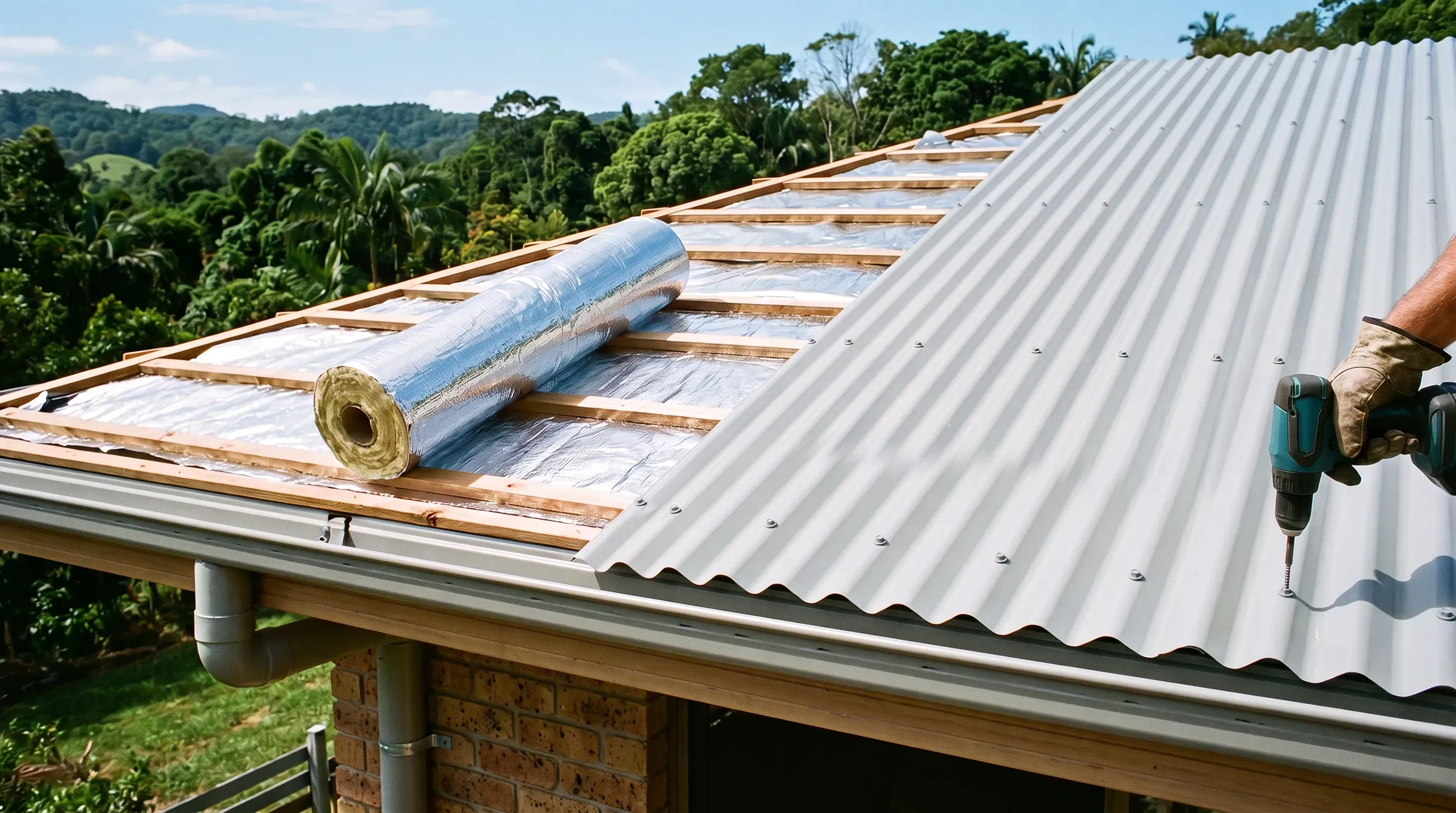
- Rain noise. A bare metal roof is louder in heavy rain. An insulation blanket under the sheets deals with most of it; our guide to insulation under metal explains how.
- Heat in dark colours. A dark roof with no insulation gets hot. Lighter colours, Thermatech finishes and a blanket under the sheets fix that.
- Coastal corrosion. Near the surf, the grade and screws have to suit the distance from breaking surf.
- Dents. Hail and careless foot traffic can dent the sheets.
- Condensation. A foil-faced blanket or sarking and a ventilated roof space handle it.
For the full list, read metal roofing pros and cons.
Should you keep your tiles or convert to metal?
Keep the tiles when most of them are sound, the ridges only need re-pointing in a few places, the valleys are in good order and you like the look. A repair and a tidy-up can give a solid tile roof many more years.
Convert when the problems are spread across the roof:
- many cracked, porous or slipped tiles, or leaks that return after each repair
- ridges and hips that need full re-bedding
- rusted valley irons or no sarking under the tiles
- a frame struggling with the weight, or plans for tanks, a low extension or less upkeep
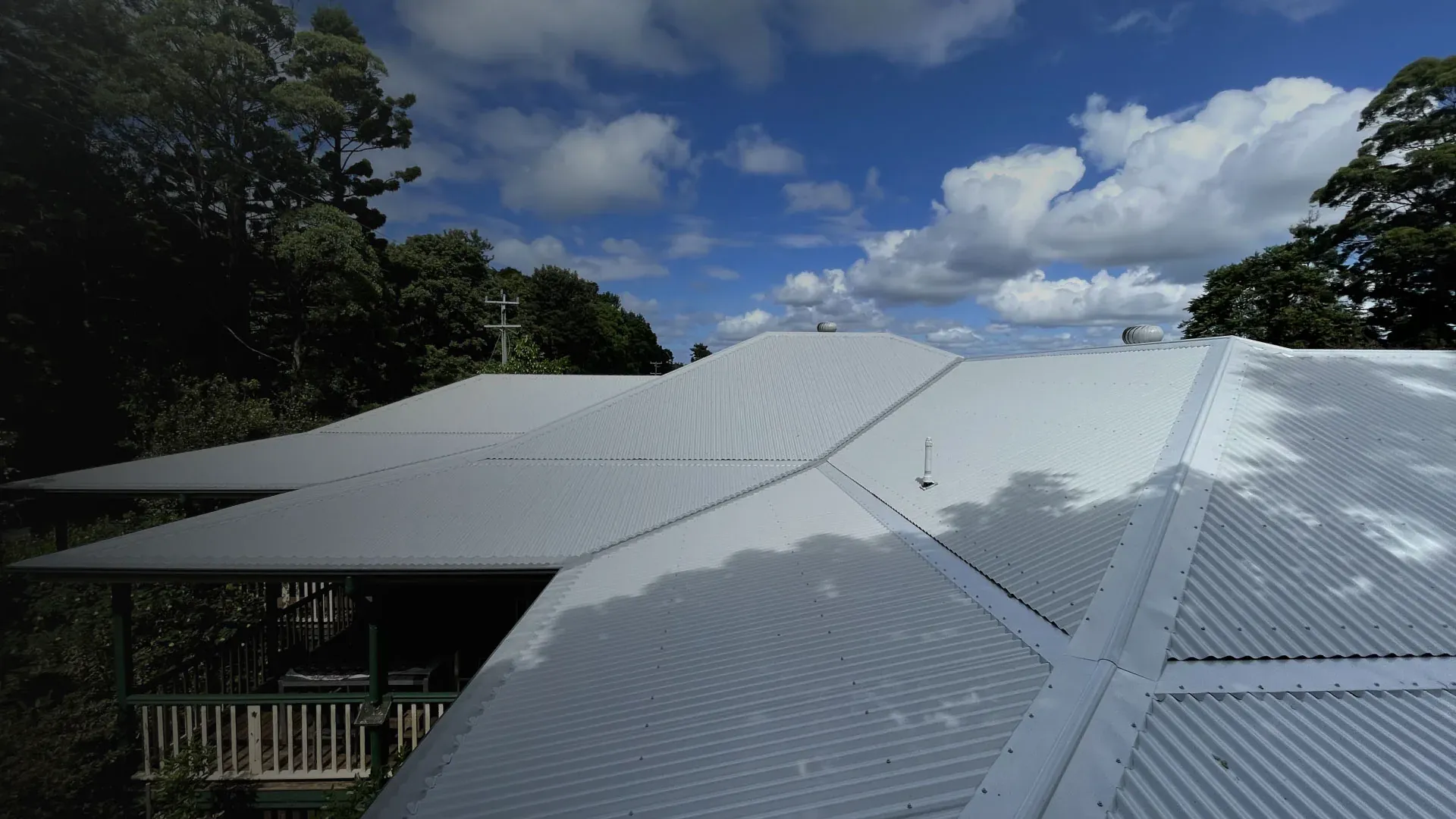
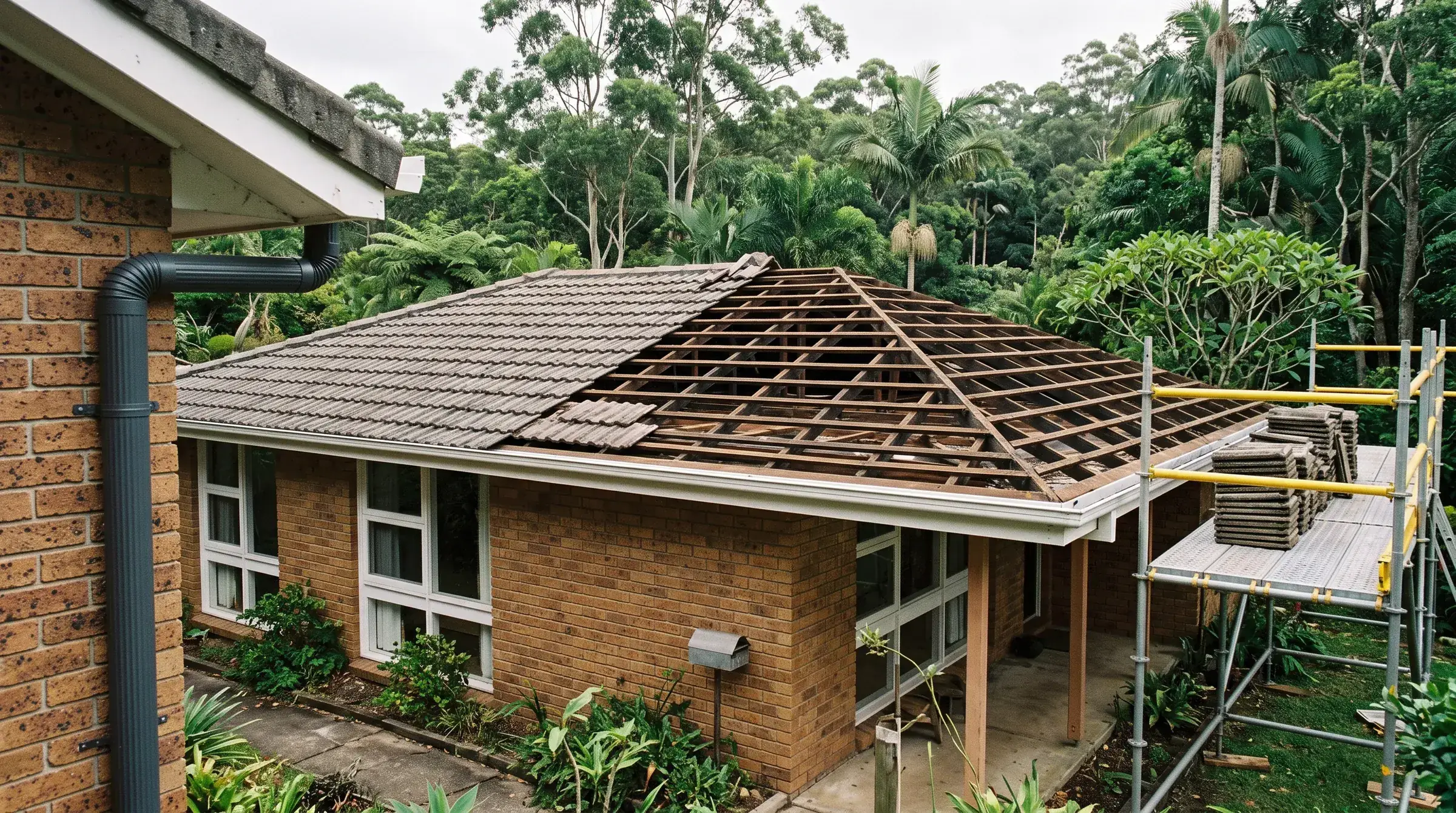
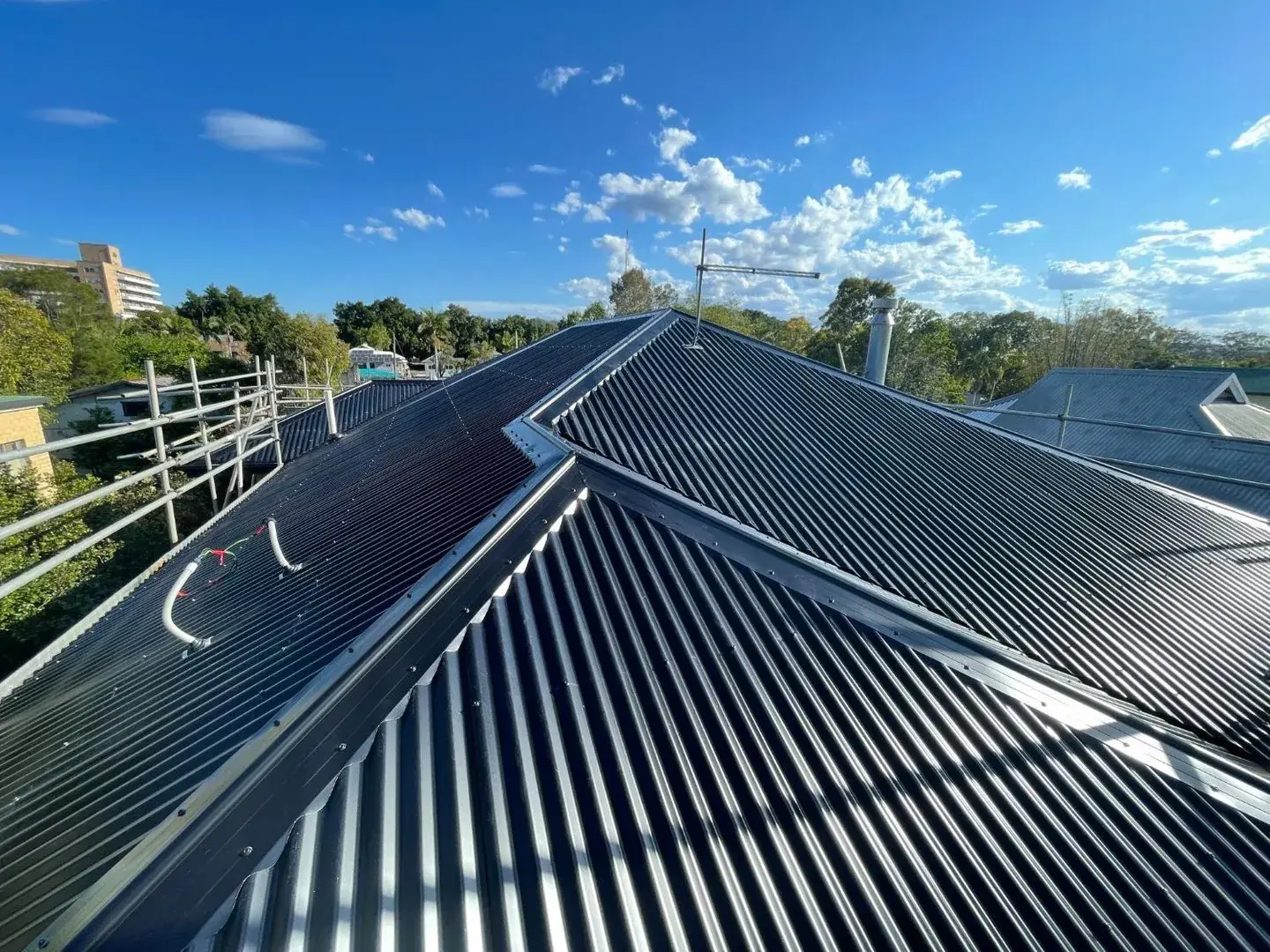
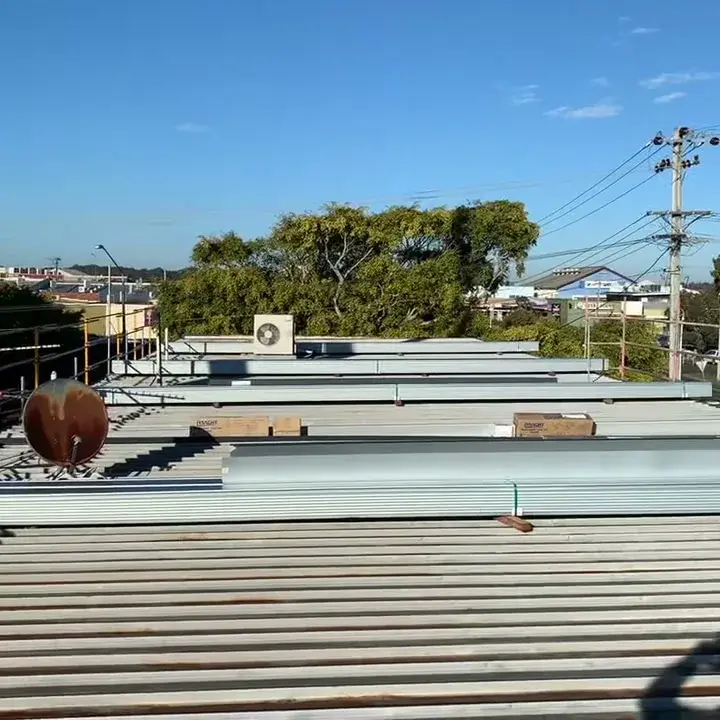
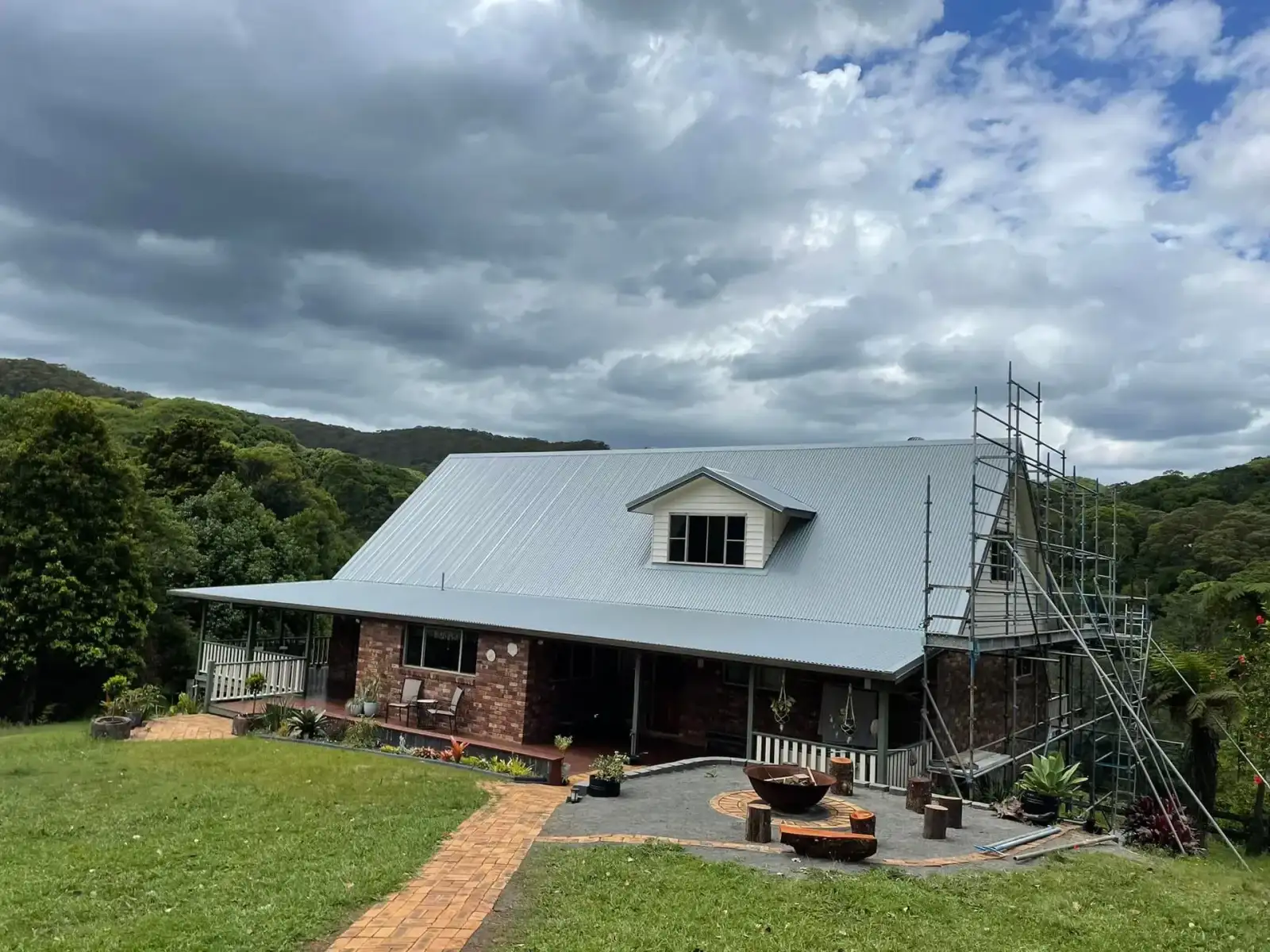
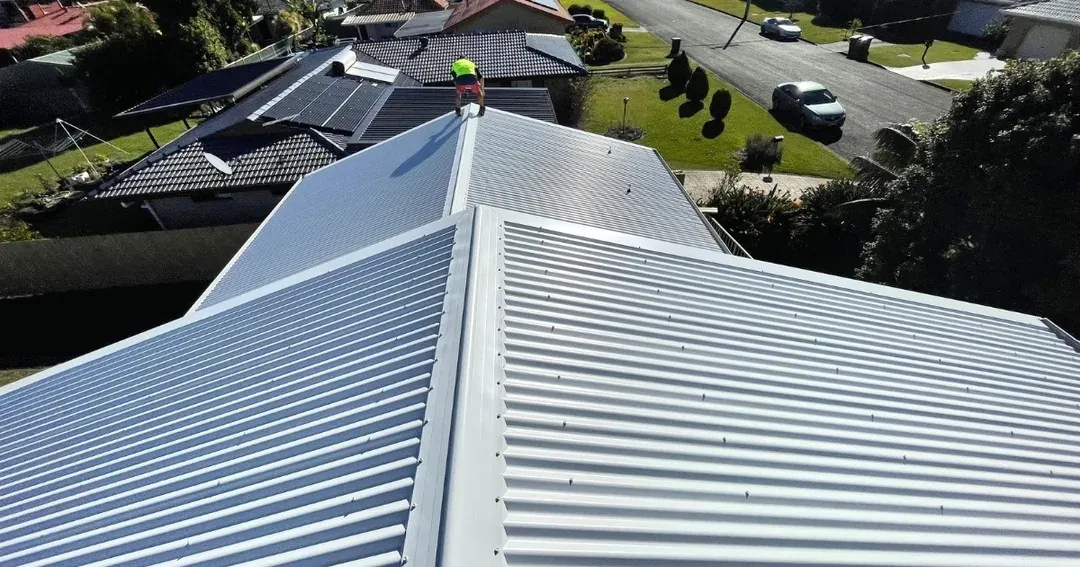
A tile to metal roof conversion replaces the whole covering in one job: tiles off, battens and frame checked, sarking and blanket down, new sheets and flashings on. Removal, disposal and batten work are the big items, and our guide to Colorbond roof cost breaks them down. The house pictured above, with tiled roofs next door, is one of our conversions to Colorbond roofing.
Ricky Jenner Roofing is based in Wollongbar, and Ricky has been a licensed roof plumber since 2009. Scaffold and edge protection go up on every job before the first tile comes off, and we give a free, itemised written quote after an on-site look.
Common questions
Which is better for a roof, Colorbond or cement tile?
Neither is better for every house. Colorbond is far lighter, works on lower pitches, suits rainwater tanks and needs less upkeep. Concrete tile is quieter in heavy rain, has a traditional look and can last a long time if the bedding and flashings are kept up. For a new roof or a tired tile roof in the Northern Rivers, Colorbond is often the more practical choice.
Is it cheaper to keep a tile roof or switch to Colorbond?
It depends on what you compare. Replacing a few broken tiles is cheaper than any new roof. For a full new roof, the price turns on area, pitch, access and what has to come off, not only the material. Converting tile to metal adds removal, disposal and batten work, but leaves a much lighter roof with less upkeep.
What are the drawbacks of tiles compared with a metal roof?
Tiles are heavy, so the frame has to carry much more load. They crack under foot traffic, falling branches and hail, and the bedding and pointing that hold the ridge cappings wear over time. Tiles need a steeper pitch than metal, older tile roofs often have no sarking, and broken or slipped tiles let water through in wind-driven rain.
What is the average lifespan of a tiled roof?
There is no single figure that fits every roof. Well-made tiles are long-lasting, but a tile roof only stays watertight while its bedding, pointing, flashings, valleys and sarking are in good order, and those parts wear sooner than the tiles. Judge an old tile roof by its condition, with an inspection, rather than by its age.
What is the least expensive roof to put on a house?
A simple gable or skillion roof covered in a common metal profile is usually the least expensive roof to build. It needs few cuts and flashings, it is quick to install, and the light sheets let the frame be lighter too. Complex shapes, steep pitches and difficult access raise the cost of any roofing material.
Which roof type lasts the longest?
A roof lasts as long as its weakest parts. Metal roofs usually wear out at the fixings, laps and flashings, and tile roofs at the bedding, pointing, valleys and sarking. A Colorbond roof of the grade BlueScope recommends for the site, installed and maintained to its guidelines, lasts for decades, and a well-kept tile roof can too.