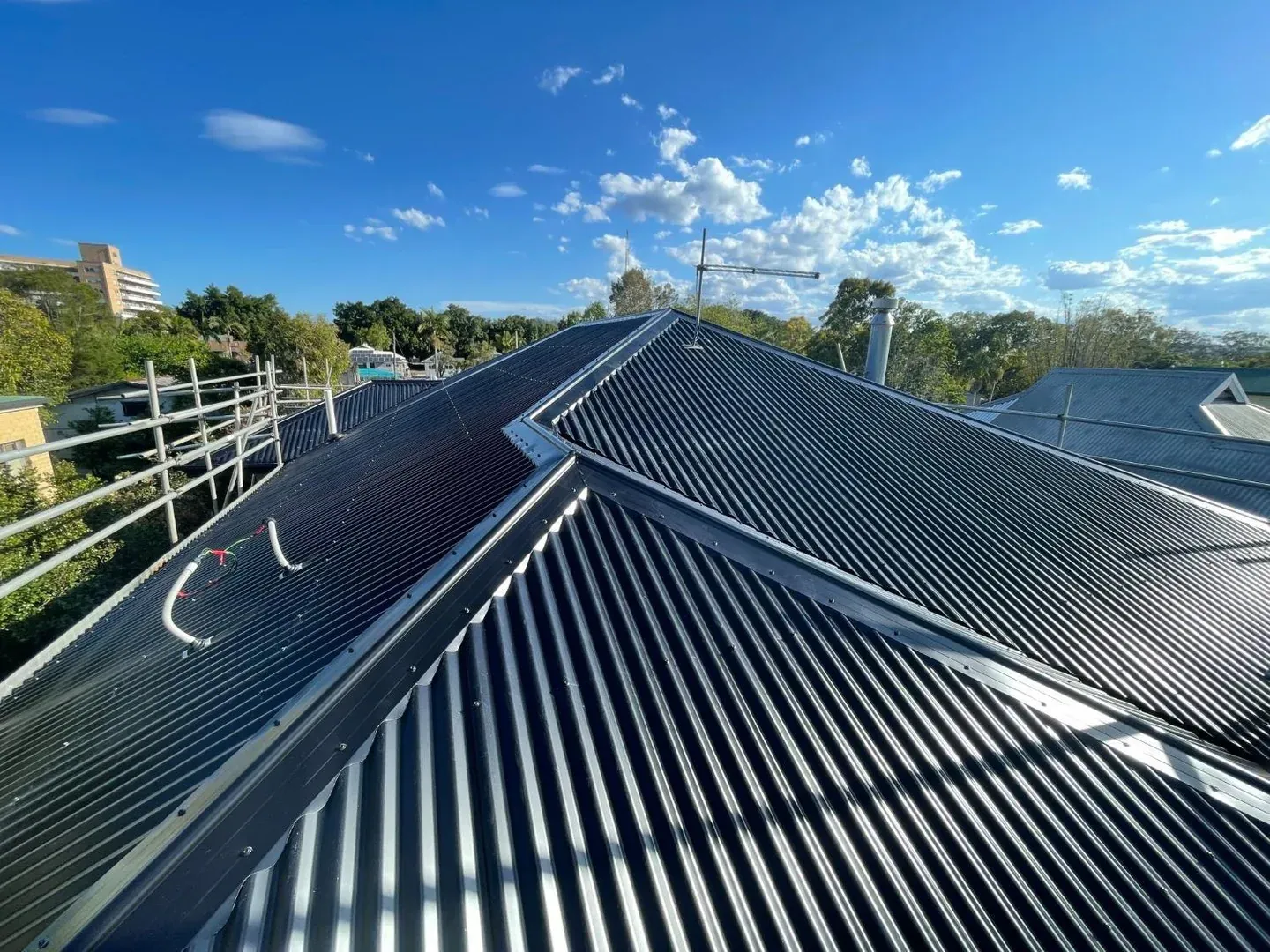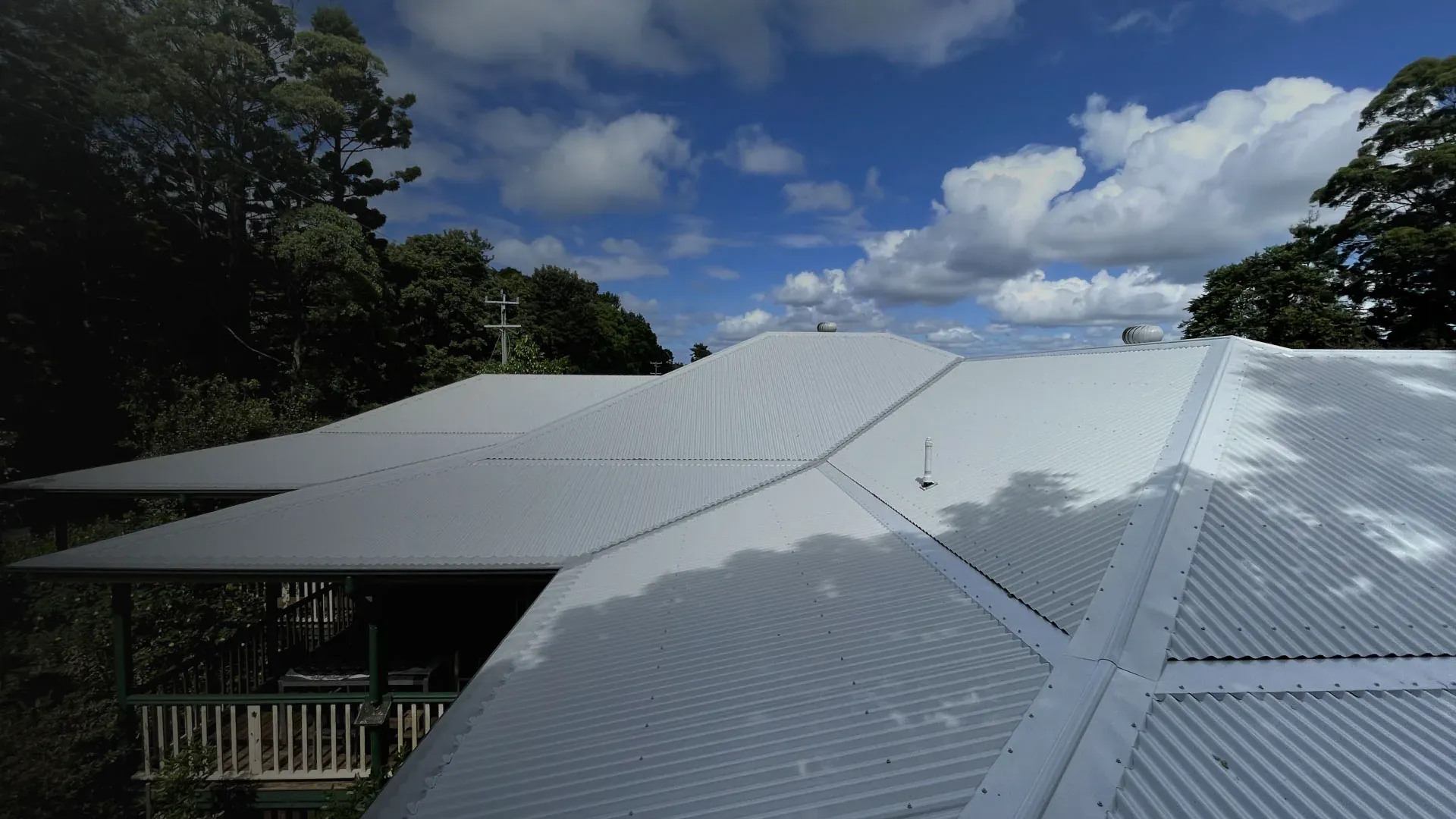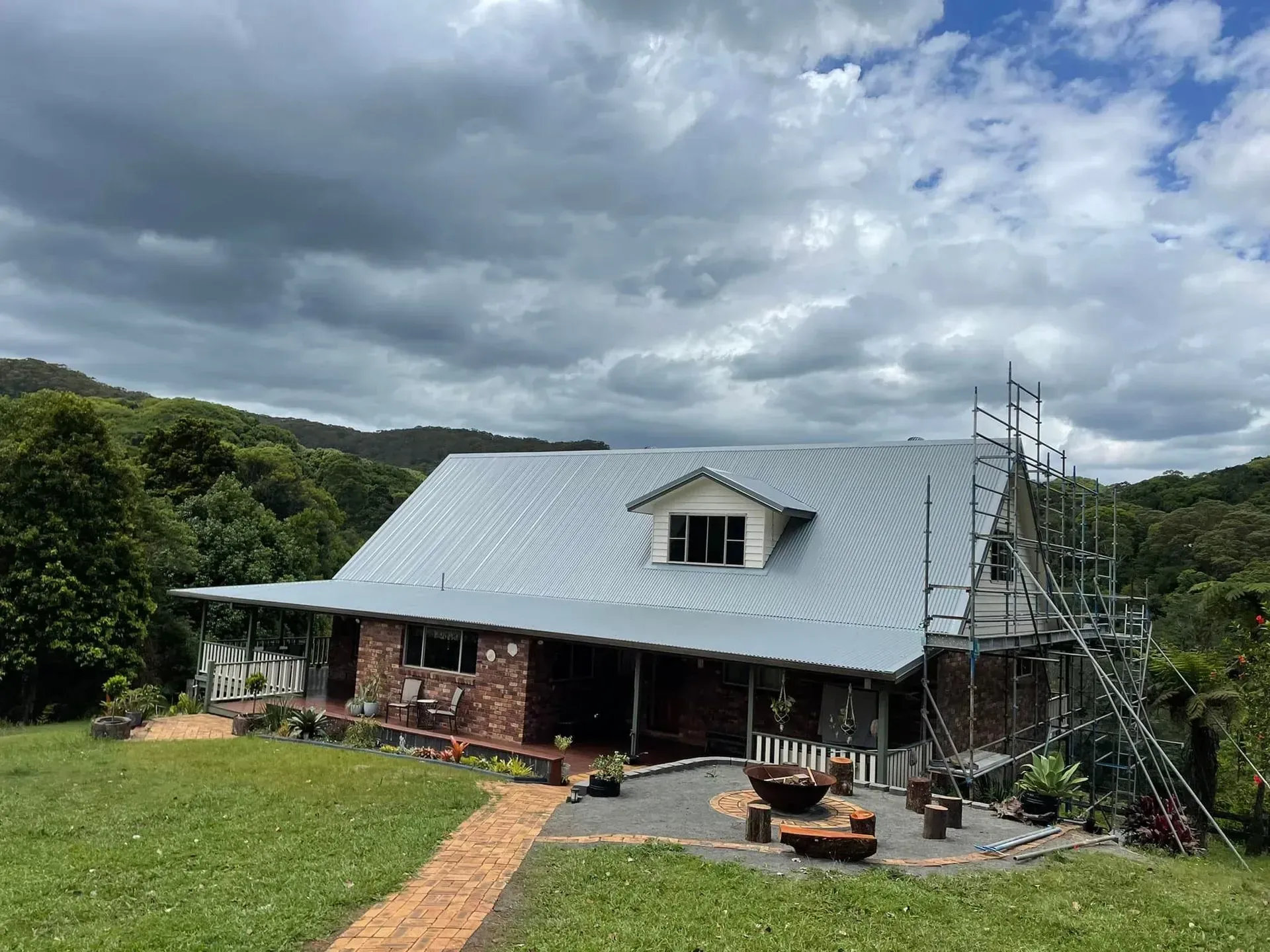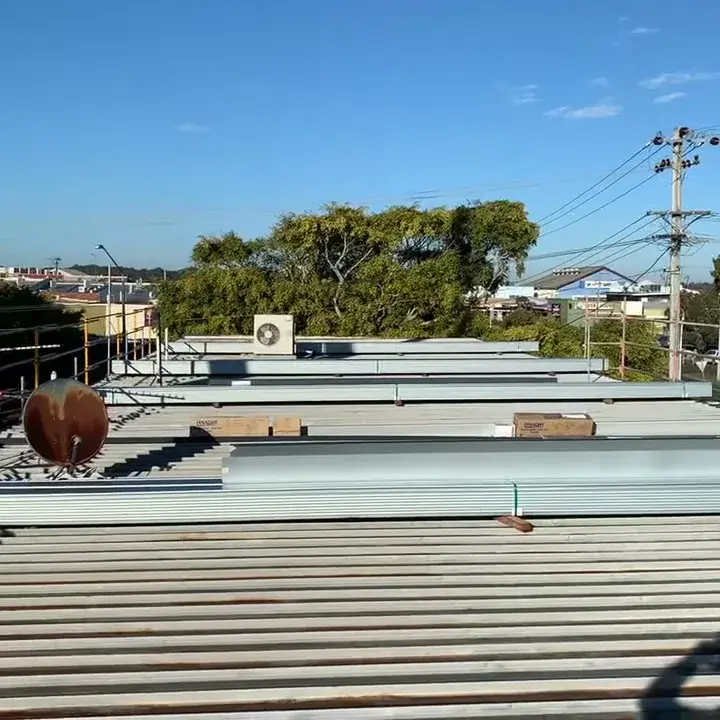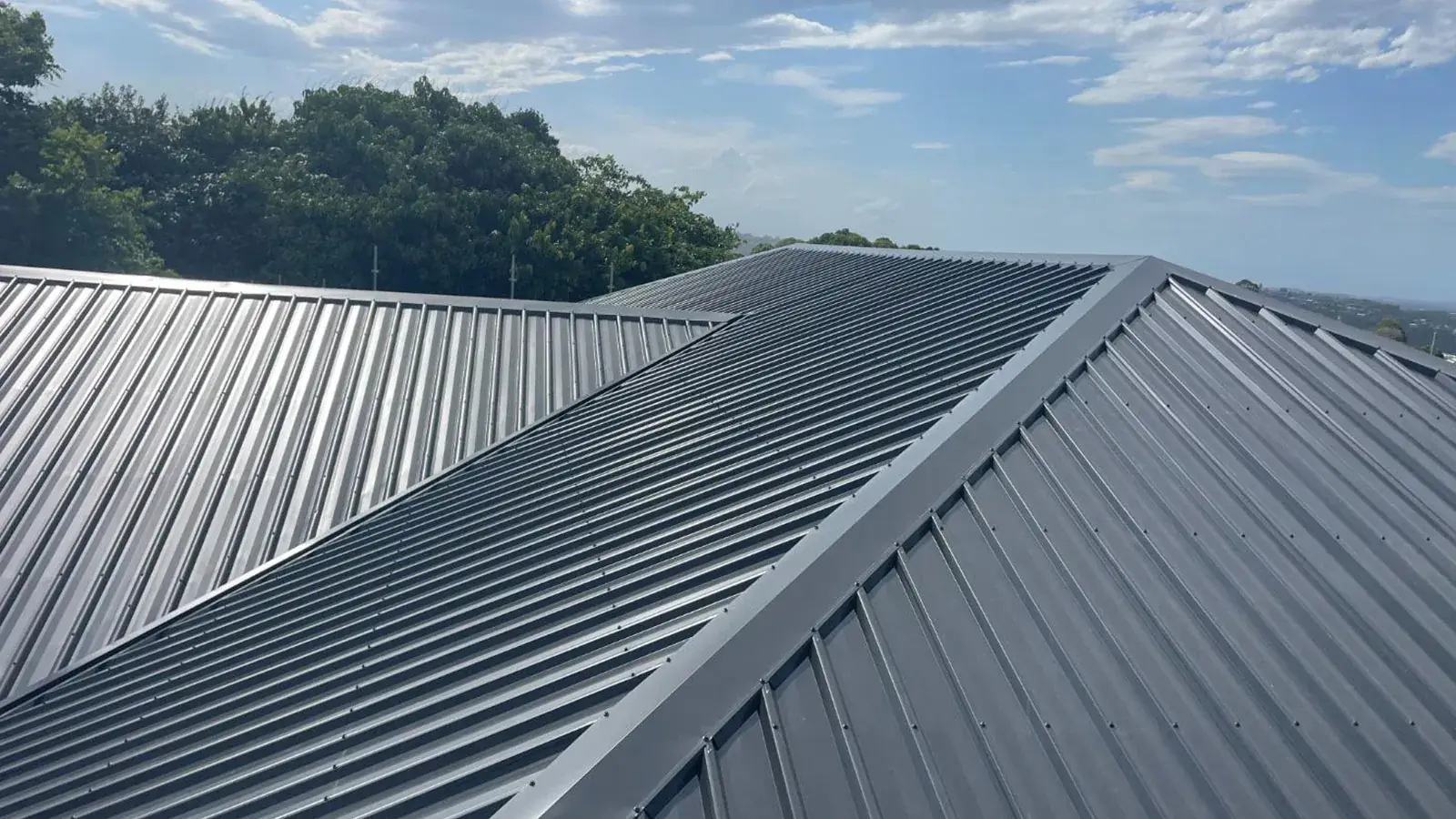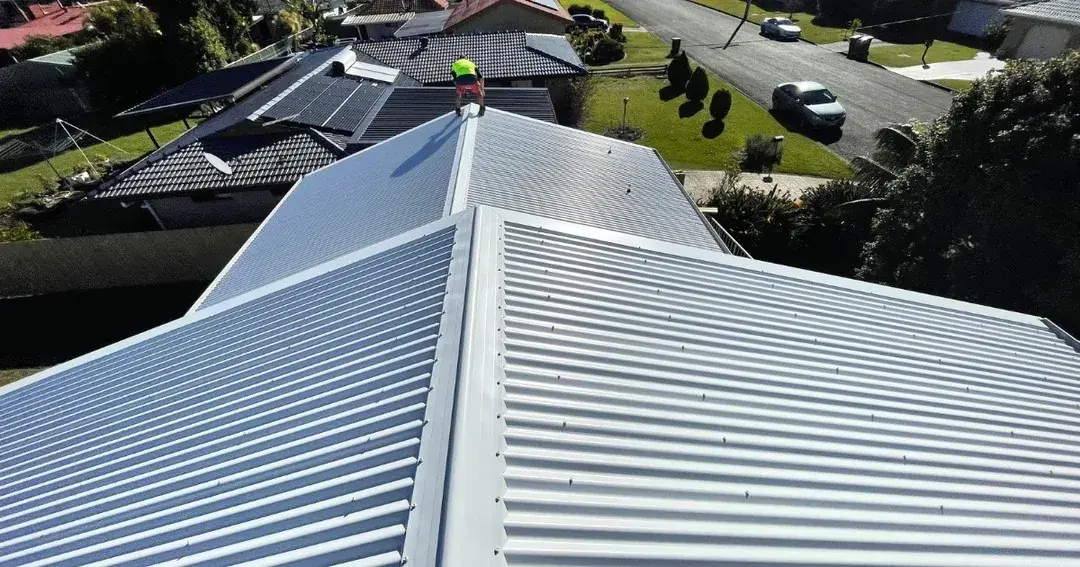
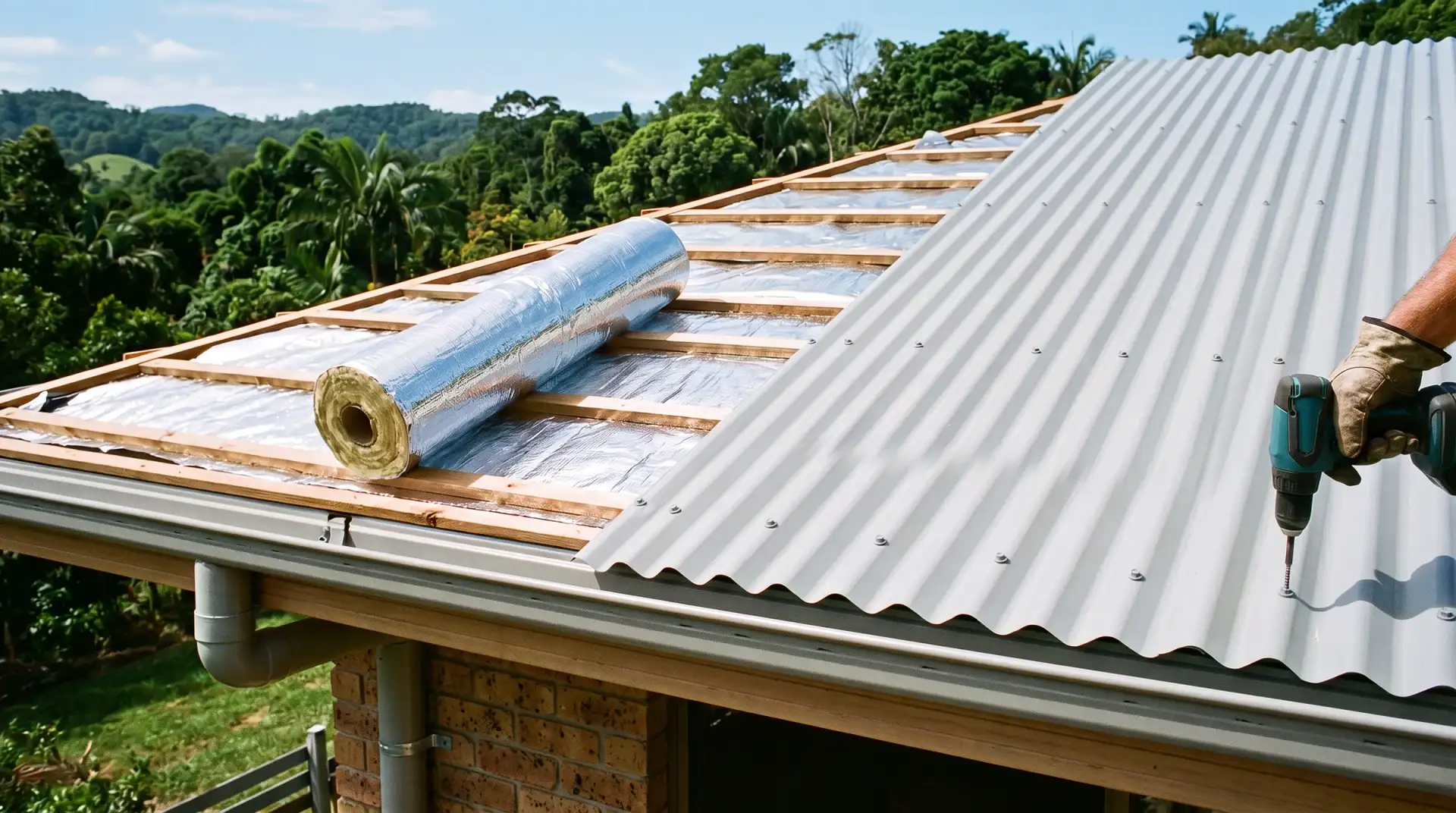
Ricky Jenner Roofing lays metal roof insulation, blanket and sarking, under new roofs across the Northern Rivers. The short answer: insulation under a metal roof goes over the battens, directly under the sheets, while the roof is open. On a re-roof or a new build that usually means a foil-faced blanket, often called Anticon, laid just before the new Colorbond® sheets are fixed.
Why insulate under a metal roof?
Roof steel is thin and passes heat quickly. In summer sun the sheets get hot and radiate that heat into the roof space, and on a clear night they cool just as fast. A layer directly under the sheets does three jobs at once.
- Heat. A foil face reflects radiant heat and the blanket slows the rest. BlueScope’s thermal performance bulletin (TB-39) notes that a blanket directly beneath a metal roof reduces temperature extremes in the roof space, which also helps ducted air conditioning run more efficiently.
- Noise. The glasswool absorbs sound, so heavy rain is quieter indoors. Sitting between the battens and the sheets, it also reduces the popping noise sheets make as they expand in the sun and contract at night.
- Condensation. Warm, moist air from the house meets the cold underside of the sheets and turns to water. A blanket and a vapour-control foil keep that air off the steel.
Most people who ask us about rain noise on metal roofs are really asking about insulation. A properly insulated metal roof is not the drum people expect.
Anticon, sarking or batts: what is the difference?
Three products get mixed up, and they do different jobs.
| Product | Where it sits | Main job |
|---|---|---|
| Anticon-style blanket | Over the battens, directly under the sheets | Slows heat, absorbs rain noise, helps control condensation |
| Reflective foil sarking | Draped between the battens, under the sheets | Cuts radiant heat, and works as a vapour barrier when taped |
| Breathable sarking | Under the roofing | Lets moisture escape from the roof space while shedding water |
| Ceiling batts | On top of the ceiling | Keeps heat in or out of the rooms below |
Anticon is CSR Bradford’s name for a glasswool blanket bonded to a reinforced foil facing. It is rolled out over the battens with the foil facing down, and the sheets are screwed down on top. CSR Bradford lists it from R1.3 to R4.2, between 60 mm and 175 mm thick. Other makers sell similar blankets.
Sarking has no bulk insulation of its own. BlueScope recommends draping reflective foil between the battens with an air space of at least 20 mm above and below it, so the cold sheet never presses against it.
Ceiling batts keep heat in or out of the rooms, but do nothing about condensation under the sheets. BlueScope says the best result comes from blanket and foil under the roof combined with ceiling insulation, so batts work with a blanket, not instead of one.
When should insulation go in?
The blanket has to sit directly under the sheets, so it goes in while the roof is open. That makes three moments the right time.
- A re-roof. The best time to fit a blanket is during a roof replacement, when the old sheets are already off.
- A tile to metal conversion. With the tiles gone and new battens going on at metal spacings, a blanket is simple to add. New insulation blanket is part of our tile to metal conversions.
- A new build. The blanket and any sarking are specified with the roof, often at the same time as the roof colour.

On our re-roofs the order is simple: the old roof comes off, the battens are checked and replaced or re-spaced where needed, the blanket goes down and the new sheets are fixed on top. The blanket is trimmed back clear of the gutter and valleys. If it hangs into the gutter it can wick water, and a wet blanket held against the steel can corrode the sheet from underneath.
If the roof is sound and only a few years old, lifting it just to add a blanket rarely makes sense. Ceiling batts from inside the roof space are the practical upgrade, and the blanket can wait for the next re-roof.
How do you stop condensation under a metal roof?
On a clear night the steel cools below the temperature of the air in the roof space. Warm, moist air from showers, cooking and clothes dryers rises, meets the cold sheet and condenses. BlueScope’s condensation and insulation bulletin (CTB-11) lists the measures that work.
- Duct fans outside. Bathroom fans and range hoods should discharge outdoors, not into the roof space. The NCC 2022 housing provisions require exhaust from bathrooms, kitchens and laundries to discharge to outdoor air.
- Use a vapour-control foil and tape the laps. BlueScope recommends a membrane with a vapour barrier classification under AS/NZS 4200.1, with its overlaps taped.
- Keep the blanket between the foil and the steel. The blanket keeps the foil away from the cold sheet, so the foil stays warm and dry.
- Do not seal the roof space completely. Pitched metal roofs usually get enough trickle ventilation through the open ends of the sheet profile.
The NCC only requires dedicated roof-space ventilation in climate zones 6, 7 and 8, the cooler zones, not the subtropical Northern Rivers. Here, condensation is managed by getting those details right.
What about bushfire-prone blocks?
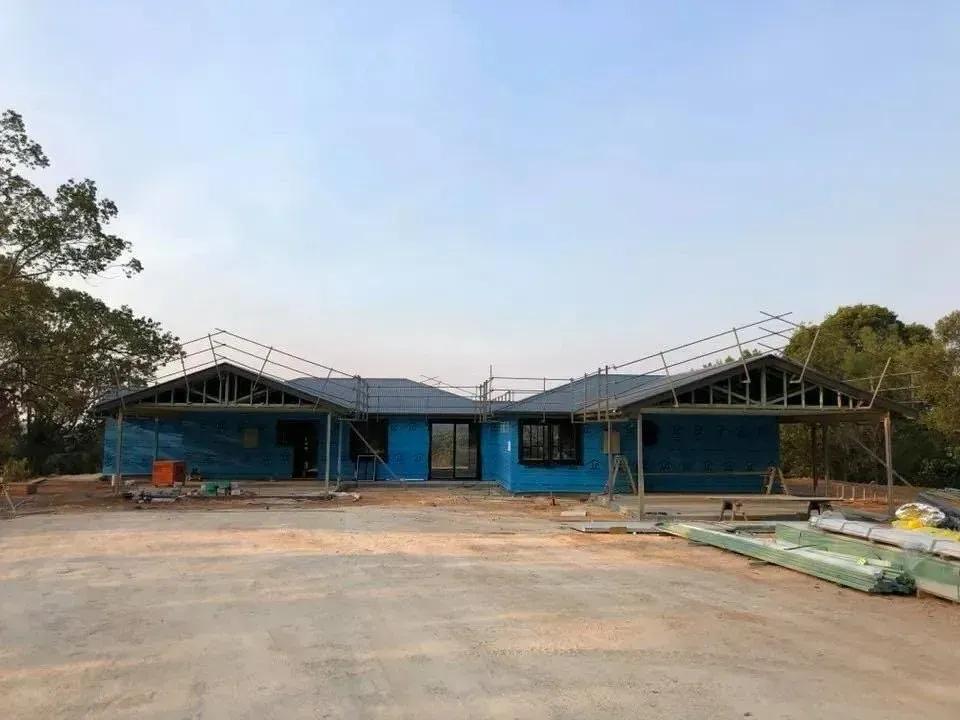
If your block is mapped as bush fire prone land, the roof has to be built to the bushfire attack level (BAL) set for the site under AS 3959, as the NSW Rural Fire Service explains. That affects which sarking and blanket can go under the sheets. CSR Bradford states that Anticon meets the requirements for metal roofs from BAL-12.5 to BAL-FZ when installed to its specifications. Check your BAL certificate before the materials are ordered.
What to ask for in a quote
When you compare quotes for metal roofing, a few questions make the insulation line easy to judge.
- Which blanket, and what R-value? Ask for the blanket and any sarking as their own lines, with the product named.
- Is the foil vapour-control, and are the laps taped? That is what makes the difference to condensation.
- Does the roof colour change what is needed? On a new home, under the NCC and NSW BASIX rules, a roof’s solar absorptance can change how much insulation is required.
Our guide to choosing Colorbond roofing covers the other decisions that go with it, and every job starts with an on-site look and a free itemised quote.
COLORBOND® is a registered trade mark of BlueScope Steel Limited. Anticon and Bradford are brands of CSR.
Common questions
What is roof sarking?
Roof sarking is a flexible membrane laid under the roof sheets or tiles, over the battens or rafters. Reflective foil sarking cuts radiant heat and, with its laps taped, can work as a vapour barrier. Breathable sarking lets moisture escape from the roof space while shedding any water that gets past the roofing. Under a metal roof it is often paired with a blanket.
What is Anticon?
Anticon is CSR Bradford's name for its foil-faced glasswool roofing blanket, and many people now use the word for any blanket of that type. It is rolled out over the battens so it sits directly under metal roof sheets, where it slows heat coming through the roof, absorbs rain noise and helps control condensation. Bradford lists it from R1.3 to R4.2.
Do I need insulation under a metal roof?
Most homes are better with it. Bare steel heats up quickly in the sun and cools quickly at night, so without a blanket or sarking the roof space swings hard in temperature, rain is louder and condensation can form under the sheets. BlueScope says the best thermal result comes from blanket and foil under the roof combined with ceiling insulation.
Can insulation be added without replacing the roof?
Ceiling batts can be added from inside the roof space at any time. A blanket or sarking that sits directly under the sheets is different, because the sheets have to come off for it to be laid properly over the battens. That is why the right time to add it is during a re-roof, a tile to metal conversion or a new build.
How do I stop condensation under a metal roof?
Keep warm, moist air away from the cold underside of the sheets. Duct bathroom fans and range hoods outside rather than into the roof space, lay a vapour-control foil with its laps taped, and put a blanket between the foil and the steel so the foil stays warm. Trim the blanket back from the gutter so it cannot wick water.