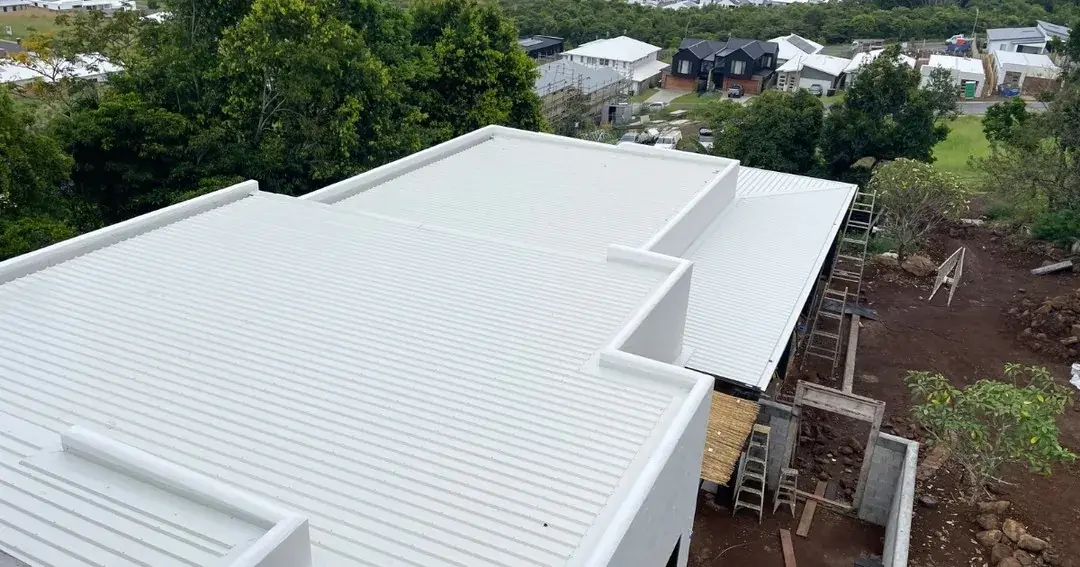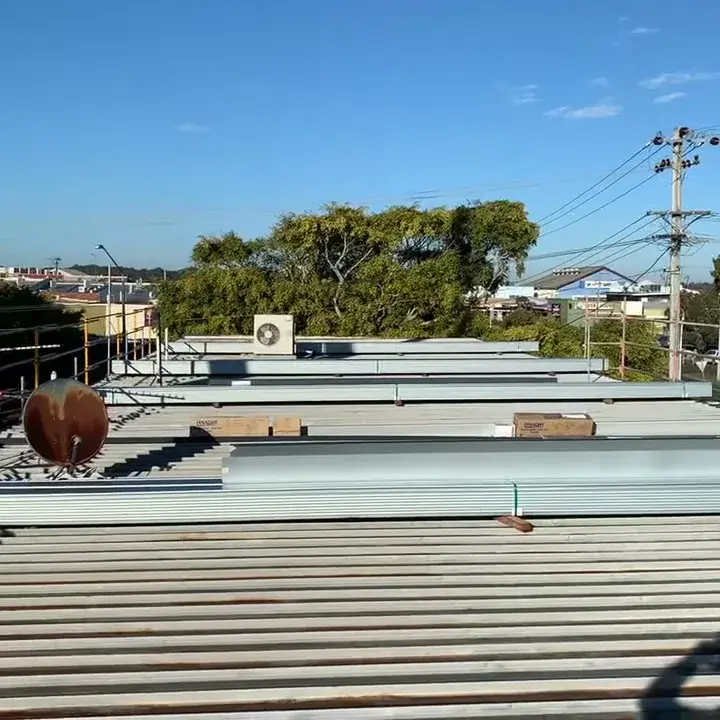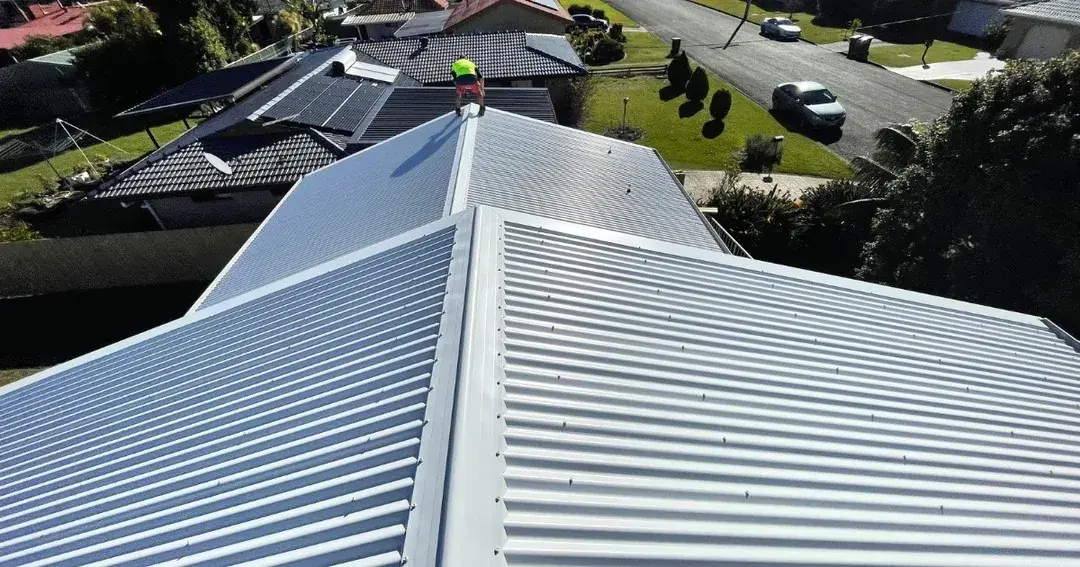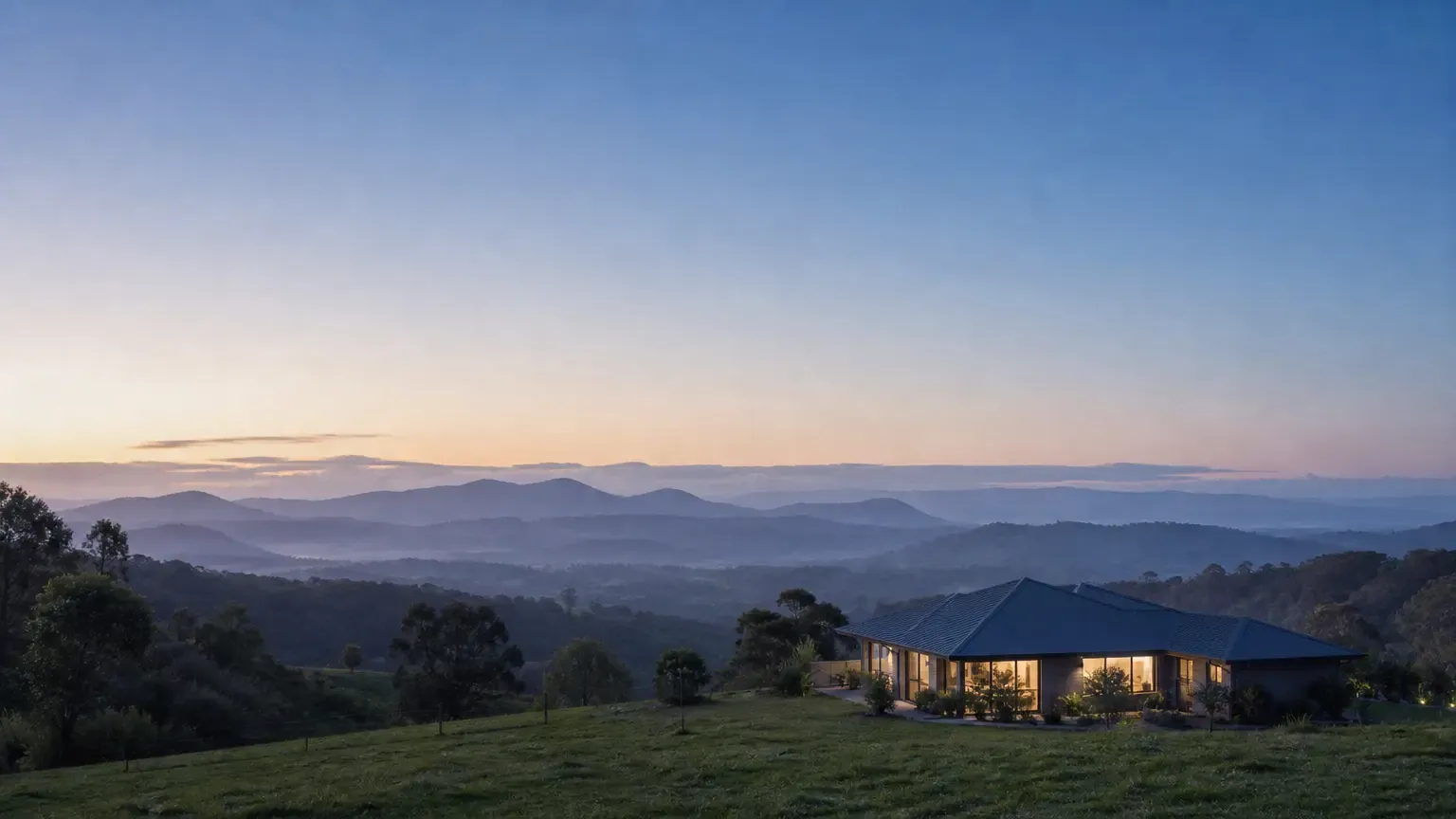
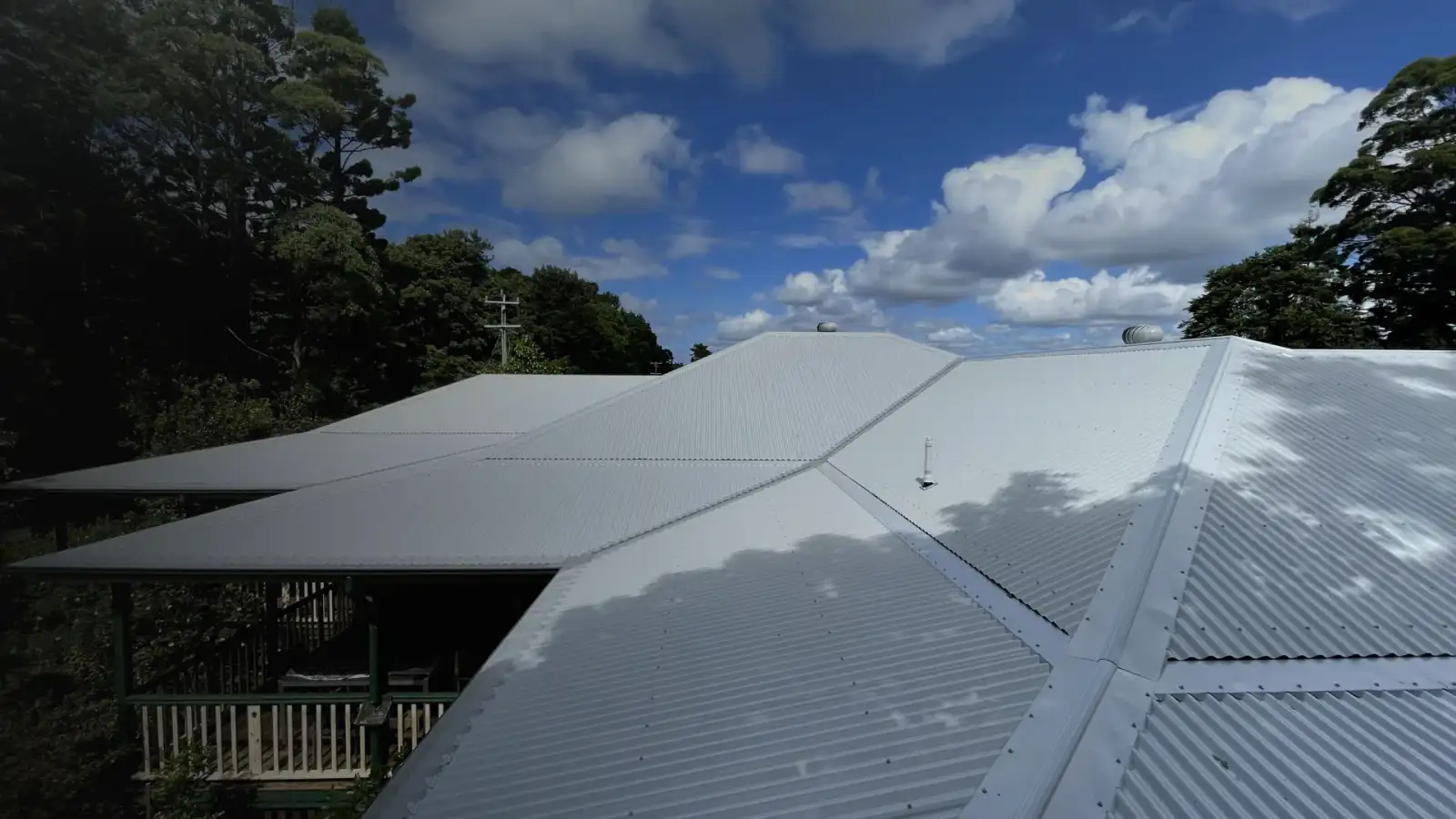
Ricky Jenner Roofing installs the full Colorbond® colour range on re-roofs, new builds and tile to metal conversions across the Northern Rivers. The short answer to choosing between Colorbond roof colours: start with BlueScope’s 22 core colours, narrow them down for heat, salt, estate rules and your trims, then check a physical sample in daylight. Light colours keep a roof cooler, and darker ones absorb more of the sun.
Try colours on a house first
Screens are only a rough guide, but seeing a colour on a whole roof narrows a long list quickly. Our Colorbond colour visualiser on the home page lets you try every core colour on an illustrative weatherboard home. After that, look at real sheets. BlueScope itself recommends checking your colour against an actual product sample, because light, screens and devices all change how a colour looks.
A colour that looks grey on a chart can read warm or cool on a roof, depending on the light and what surrounds it. A few habits help:
- Look at samples outside, in both morning and afternoon light.
- Hold them against your walls, window frames, fence and any trims you are keeping.
- Compare two or three finalists side by side rather than one at a time.
The 22 core Colorbond roof colours
These are the colours in BlueScope’s core palette for the Classic finish, checked against colorbond.com in September 2026. The number after each is its solar absorptance (SA), the share of the sun’s energy the surface absorbs, from BlueScope’s colours and finishes page. The lower the number, the cooler the roof.
| NSW BASIX class | Colours and solar absorptance |
|---|---|
| Light (below 0.475) | Dover White 0.28, Surfmist 0.33, Classic Cream 0.33, Southerly 0.40, Paperbark 0.43, Evening Haze 0.43, Shale Grey 0.44 |
| Medium (0.475 to 0.70) | Dune 0.48, Bluegum 0.57, Windspray 0.60, Pale Eucalypt 0.60, Gully 0.64, Wallaby 0.64, Basalt 0.67, Jasper 0.67, Woodland Grey 0.70, Manor Red 0.70 |
| Dark (above 0.70) | Ironstone 0.73, Monument 0.73, Cottage Green 0.73, Deep Ocean 0.74, Night Sky 0.95 |
Six of these also come in a Matt finish (Surfmist, Shale Grey, Dune, Bluegum, Basalt and Monument), with slightly different figures. The SA values are BlueScope’s nominal figures for new Classic product, and we have grouped them into the BASIX bands explained below. BlueScope notes that the palette varies with the end use, so check that your colour is made in your roof profile before you set your heart on it.
Light or dark: how roof colour affects heat
Roof colour matters in a subtropical climate, because summer is when the roof works hardest. BlueScope’s thermal performance bulletin (TB-39) makes three points worth knowing.
- Light roofs run much cooler. In hot, sunny weather the surface of a light roof can be up to 35°C cooler than a dark one, and the benefit is biggest in warm climates.
- Two roofs of the same colour can perform differently. BlueScope’s Thermatech® paint reflects more of the invisible near-infrared part of sunlight. It is in 21 of the 22 core colours, all except Night Sky.
- A metal roof cools down fast. Steel has low thermal mass, so it cools quickly once the sun is off it rather than storing heat into the evening.
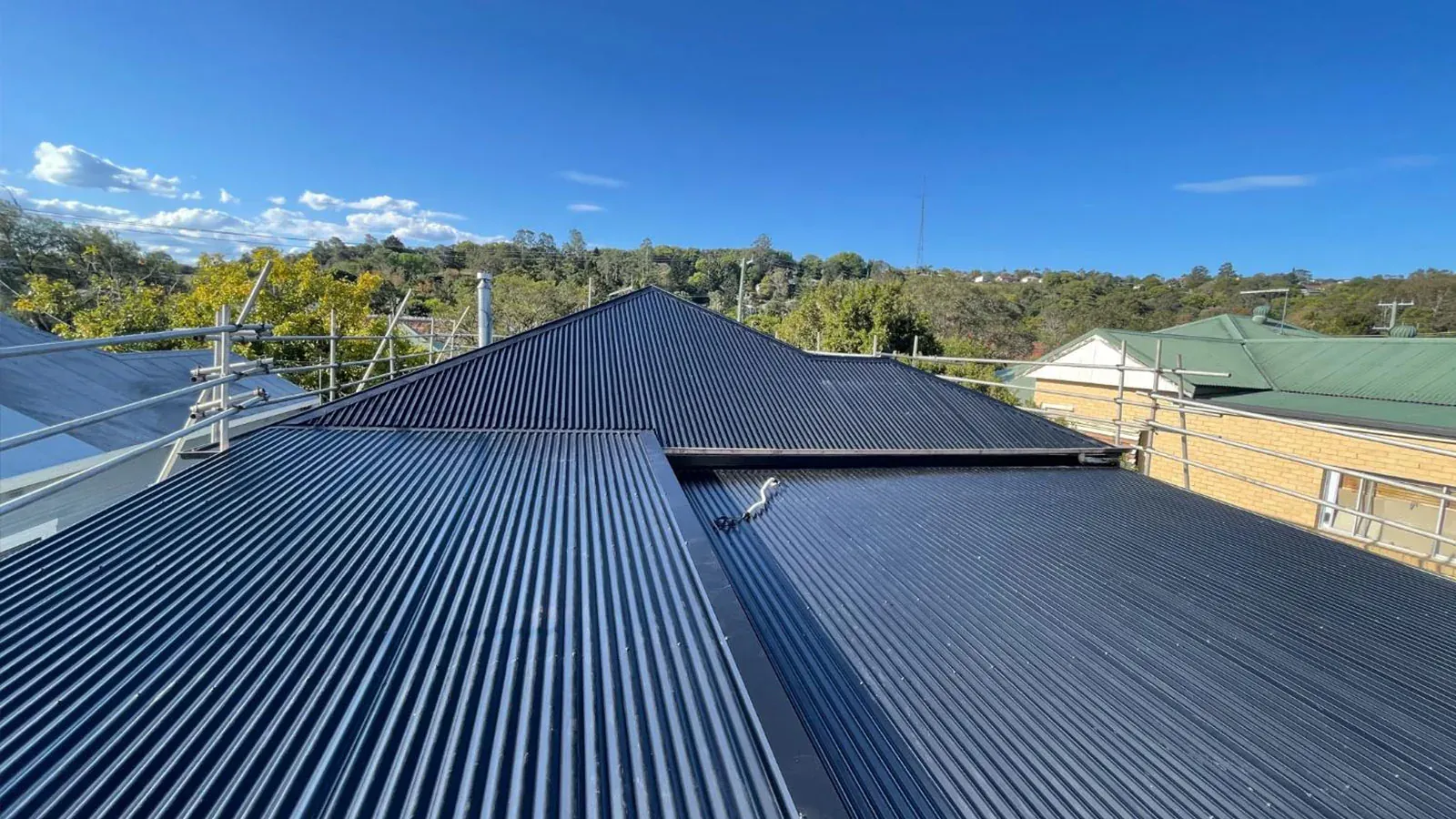
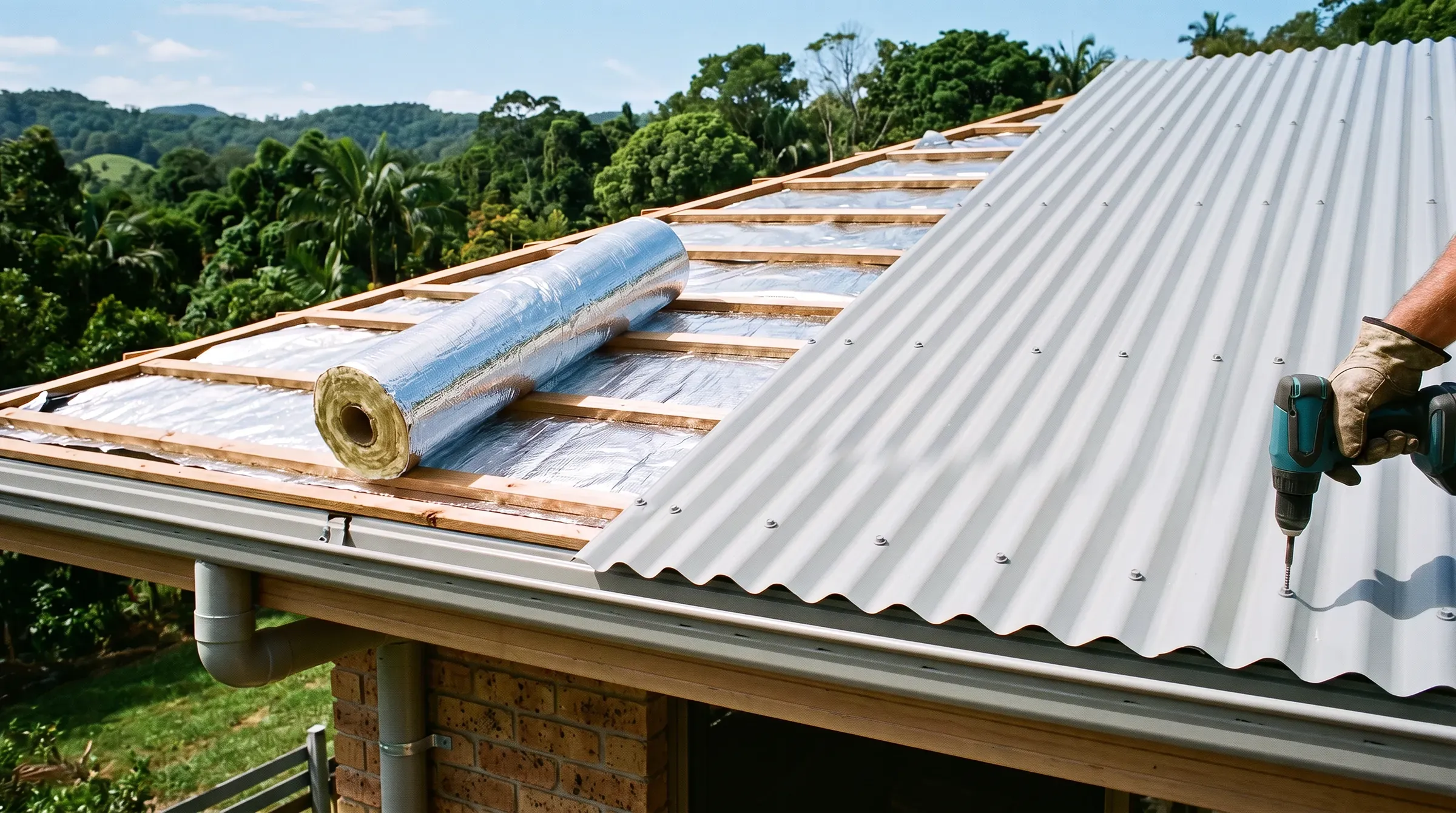
Colour is only half of the story. The blanket under the sheets and the batts on the ceiling decide how much of the roof’s heat reaches your rooms, so read our guide to insulation under a metal roof as well.
Does roof colour matter for BASIX on a new home?
On a new home, or any work that needs a BASIX certificate, roof colour becomes a design input. BlueScope’s summary of the rules sets out how it works in NSW:
- BASIX colour bands. Light is an SA below 0.475, medium is 0.475 to 0.70, and dark is above 0.70.
- The BASIX DIY pathway. Roof SA is treated much like the NCC 2022 housing provisions, which call for 0.64 or less in climate zones 1 to 5.
- The NatHERS pathway. There is no SA limit, but the whole house has to reach its rating.
So colours above 0.64, such as Basalt, Woodland Grey and Monument, generally mean the NatHERS pathway on a new build. Rules change, so your building designer or BASIX assessor has the final word.
Coastal homes: pick the steel, then the colour
Close to the sea, choose the material first and the colour second. BlueScope’s roofing selection guide (TB-1A) sets the distances from breaking surf, measured from the high-water mark:
- Colorbond steel, Classic or Matt finish: roofs more than 200 m from breaking surf.
- Colorbond Ultra steel: roofs more than 100 m from breaking surf, in seven core colours: Surfmist, Dune, Shale Grey, Windspray, Wallaby, Woodland Grey and Monument.
If your house is that close to the beach, your shortlist starts with those seven. Our guide to coastal roofing covers salt, wind and washing in more detail, and if you are weighing unpainted metal, read Zincalume vs Colorbond.
Estates, streetscape and neighbours
A roof is the largest single block of colour on most houses, and it is seen from the street, from the neighbours and, on the hills around here, from above.
- Estate covenants. Some estates have design guidelines on roof colour, and some now set solar absorptance limits too. Check your contract of sale or title documents before ordering.
- Heritage areas. In a heritage conservation area, check with council before changing the roof colour.
- The street. Look at the houses either side and how your roof will read from the footpath. Soft greys and neutrals sit quietly on hinterland ridges, light roofs read fresh and coastal, and dark roofs draw a strong outline against the sky.
- Glare. BlueScope lists orientation, pitch, shielding, colour and finish among the ways to manage glare from a light roof. A Matt finish is one option where a neighbour looks down on your roof.
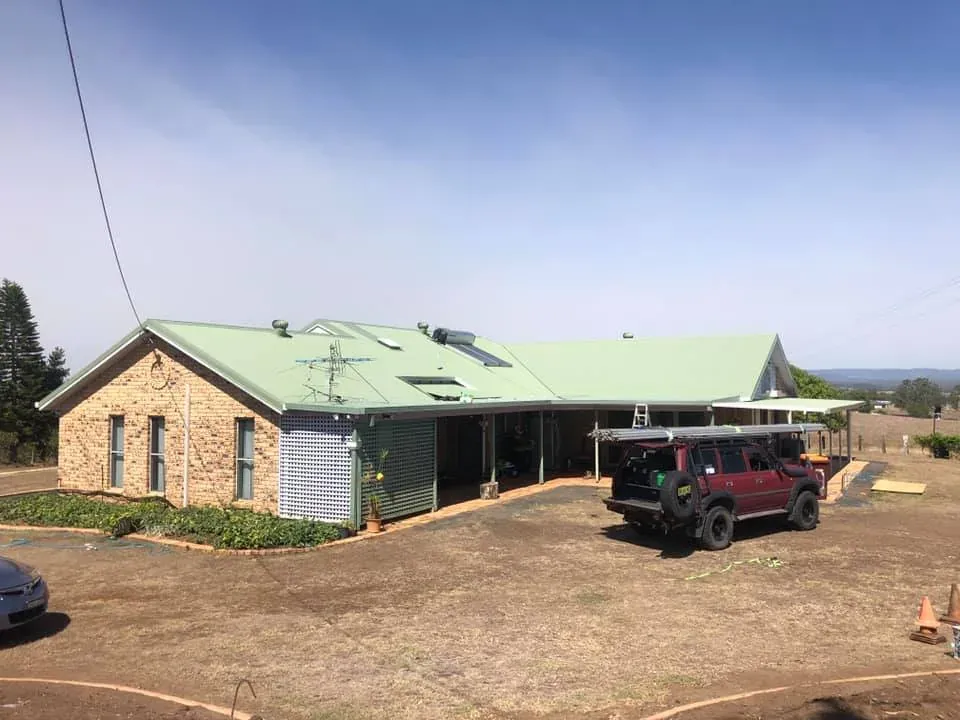
Matching gutters, fascia and trims
Gutters, fascia, downpipes, barge cappings and flashings can all be made in Colorbond colours, so plan them with the roof rather than after it. There are three common approaches:
- Match everything to the roof for a clean, single-colour roofline.
- Match the gutters and fascia to the house trims, such as window frames and posts, and let the roof stand on its own.
- Contrast on purpose, such as dark gutters under a light roof, to outline the roofline.
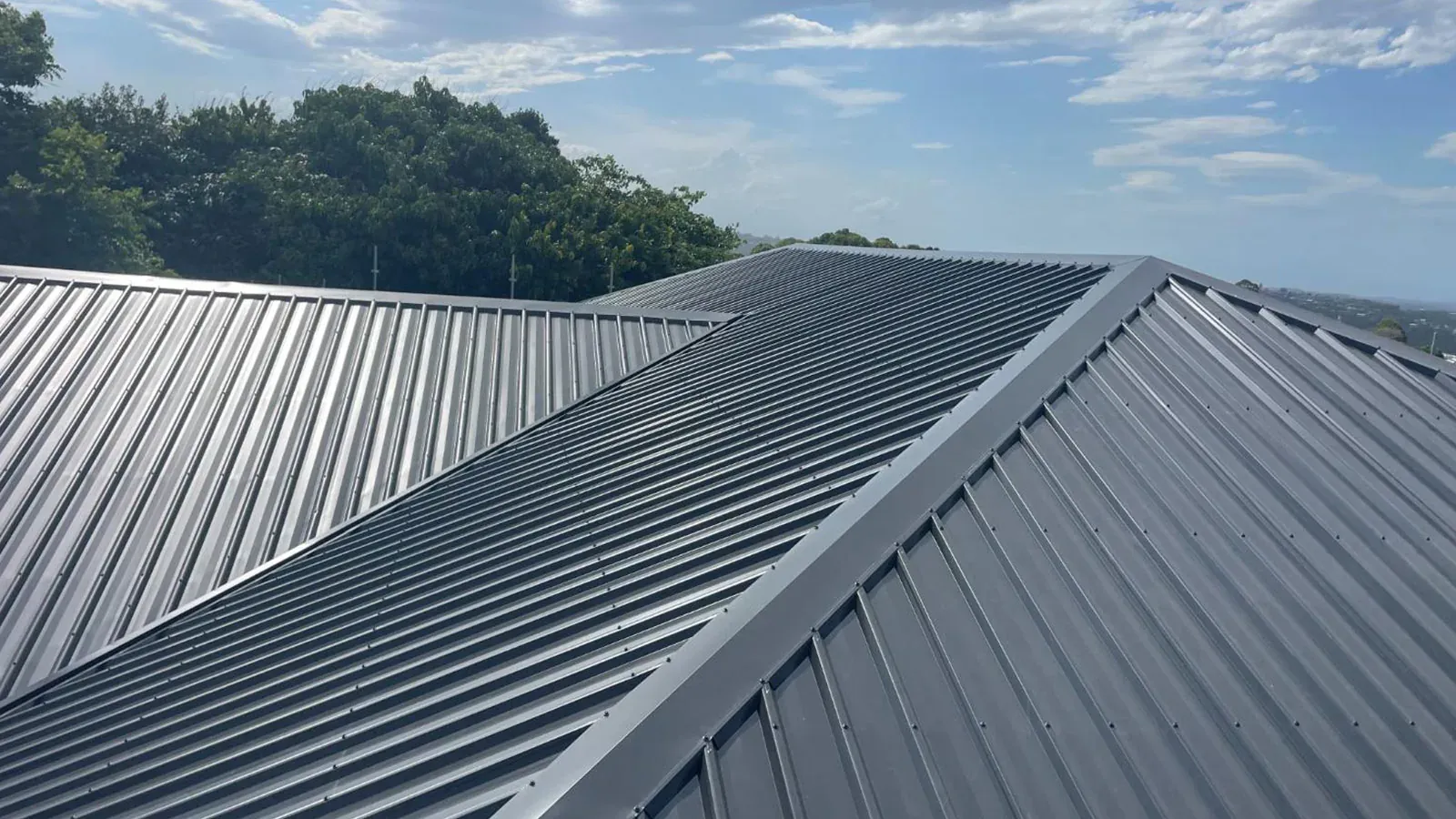
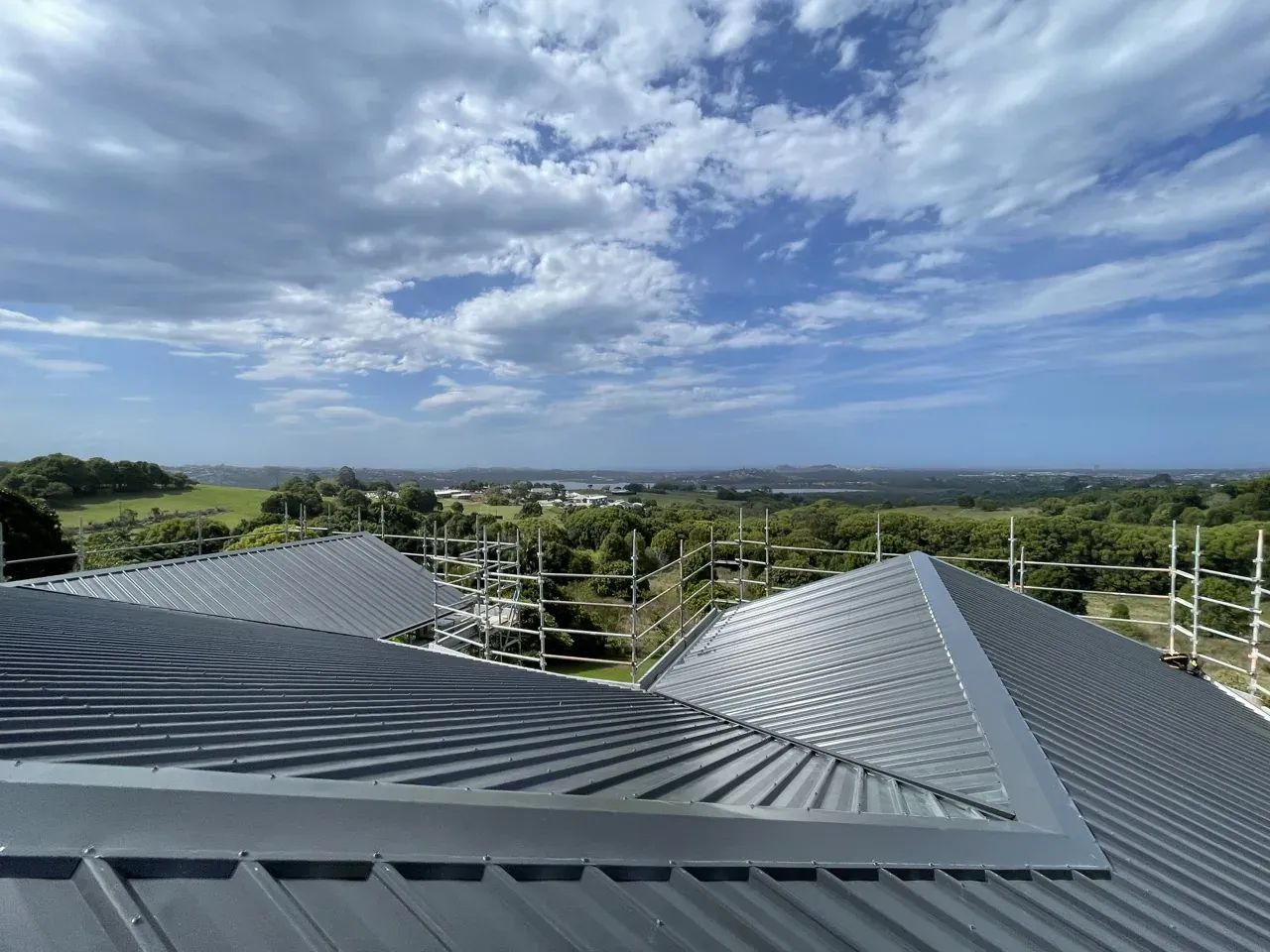
Flashings and cappings usually look best in the roof colour, so they disappear into the roof. You can see how different tones read on real roofs we’ve installed, and profiles and grades are the other half of the decision. When you are ready, the on-site look before a free itemised quote for any Colorbond roofing job is the time to talk colours through.
COLORBOND®, Thermatech® and the colour names are trade marks of BlueScope Steel Limited.
Common questions
What are the most popular Colorbond roof colours?
We do not have official sales figures, but search data is a fair guide. Across Australia, Surfmist and Shale Grey are the roof colours people search for most, followed by Dune and Monument, then Basalt, Windspray and Wallaby. Popular is not the same as right for your house, so weigh heat, salt, estate rules and your trims before choosing.
Which Colorbond colour keeps a house coolest?
Dover White, with a solar absorptance of 0.28, absorbs the least sun of the 22 core colours, followed by Surfmist and Classic Cream at 0.33. BlueScope's figures run up to 0.95 for Night Sky. Colour is only part of the answer, because insulation under the roof and in the ceiling decides how much of the roof's heat reaches your rooms.
Does a dark roof make a house hotter?
A dark roof absorbs more of the sun, so in hot, sunny weather its surface runs much hotter. BlueScope cites light roofs running up to 35°C cooler than dark ones. How much of that reaches your rooms depends on the insulation under the roof and in the ceiling. Most Colorbond colours also carry Thermatech, which reflects more heat than an ordinary paint of the same colour.
Will my roof colour fade?
All exterior paint weathers slowly, Colorbond included, but its paint is baked on at the factory rather than air-dried, and BlueScope reports its solar reflectance stays relatively close to the original after three years. Washing sheltered areas that rain does not reach helps the finish. Avoid touch-up paint on scratches, which BlueScope says weathers differently and can look blotchy.