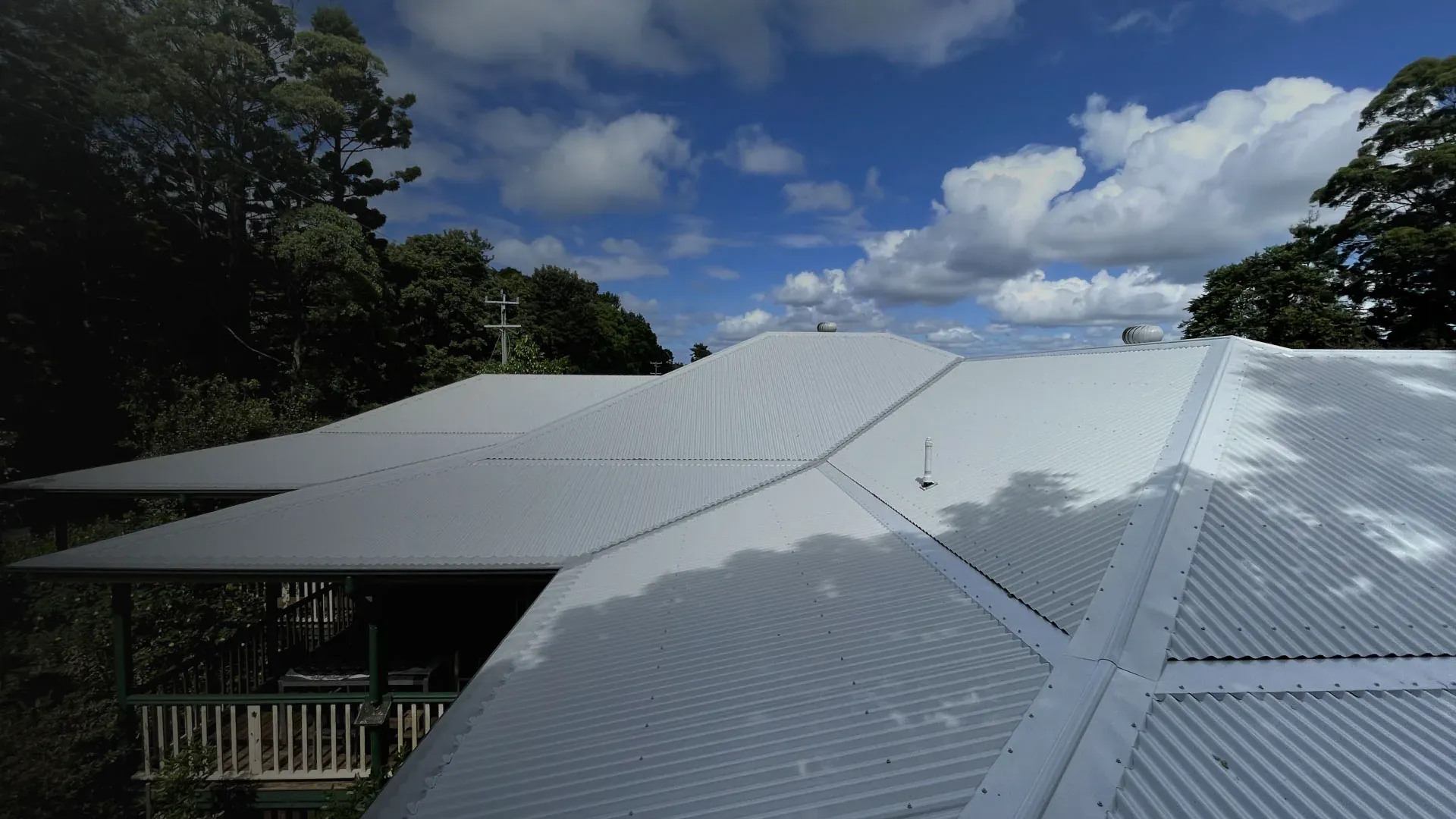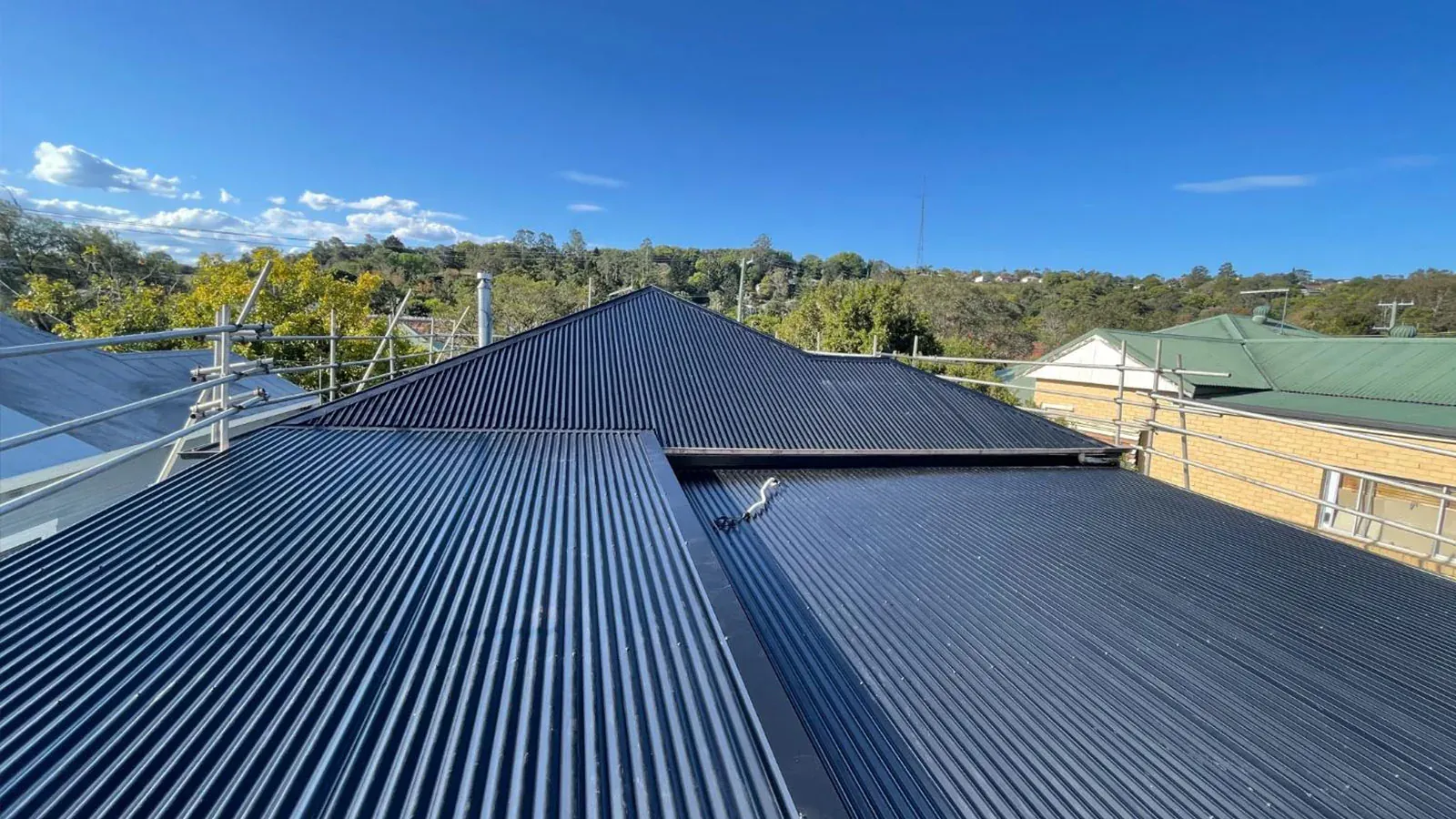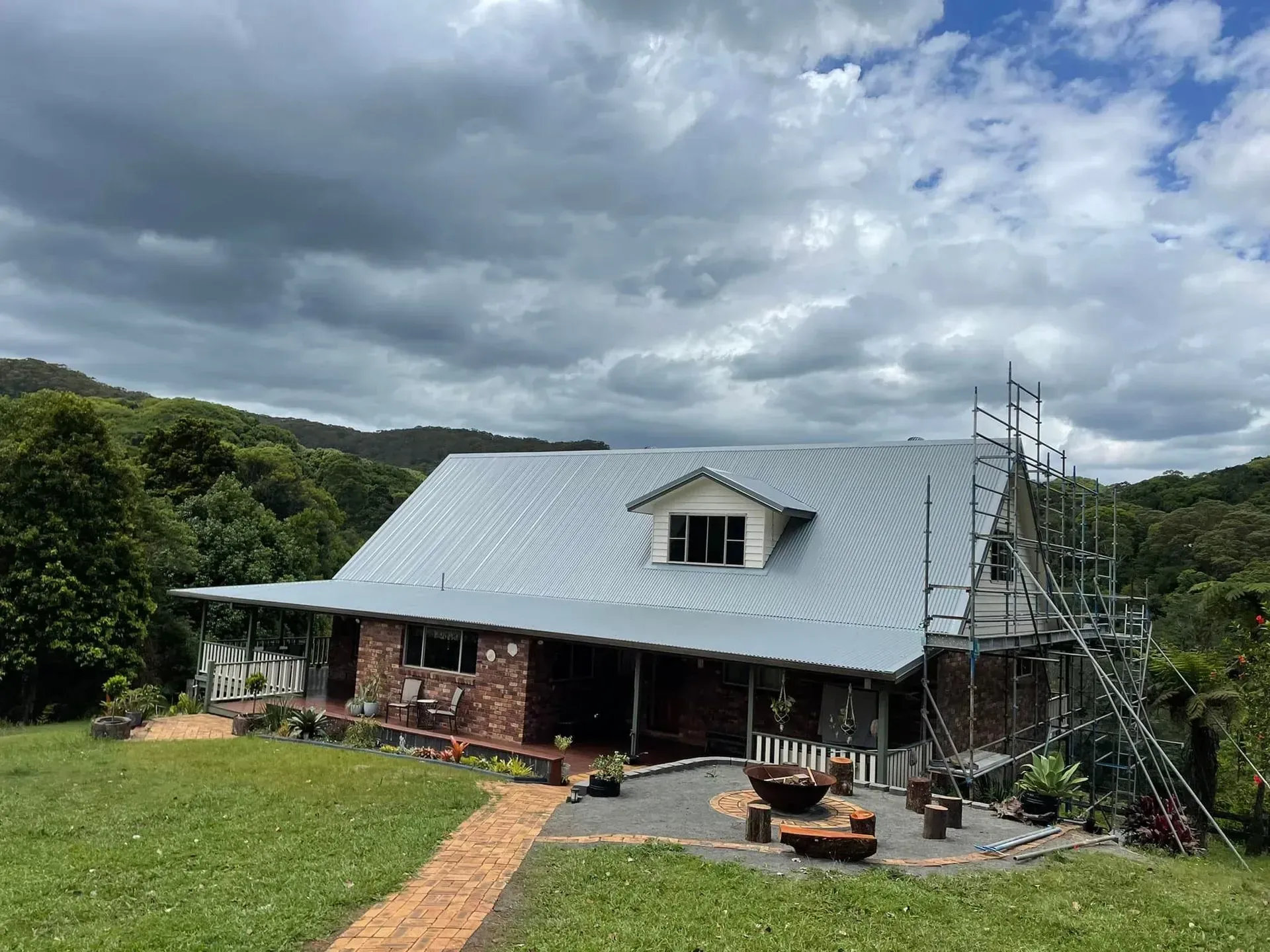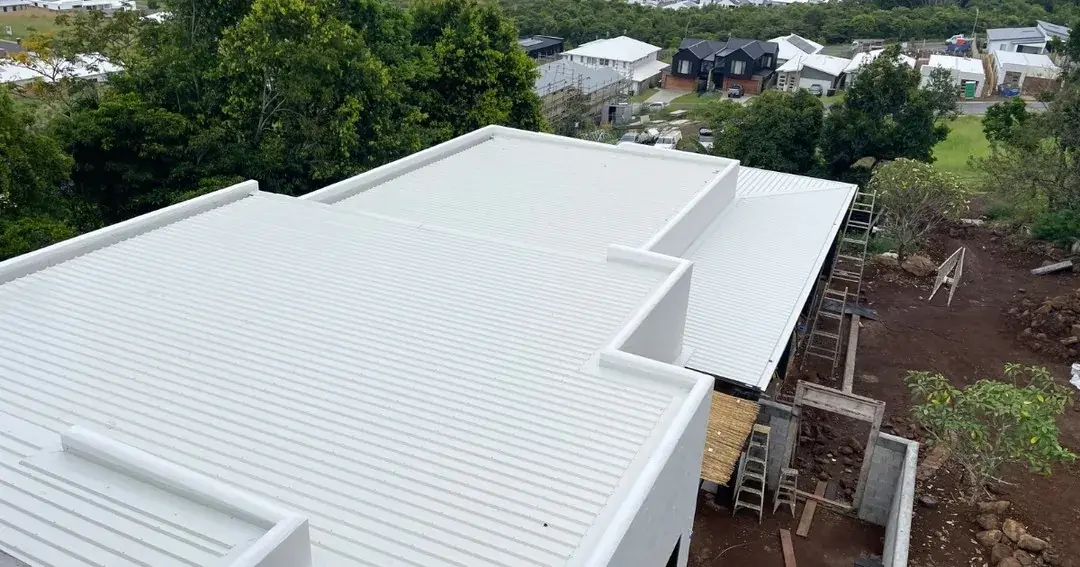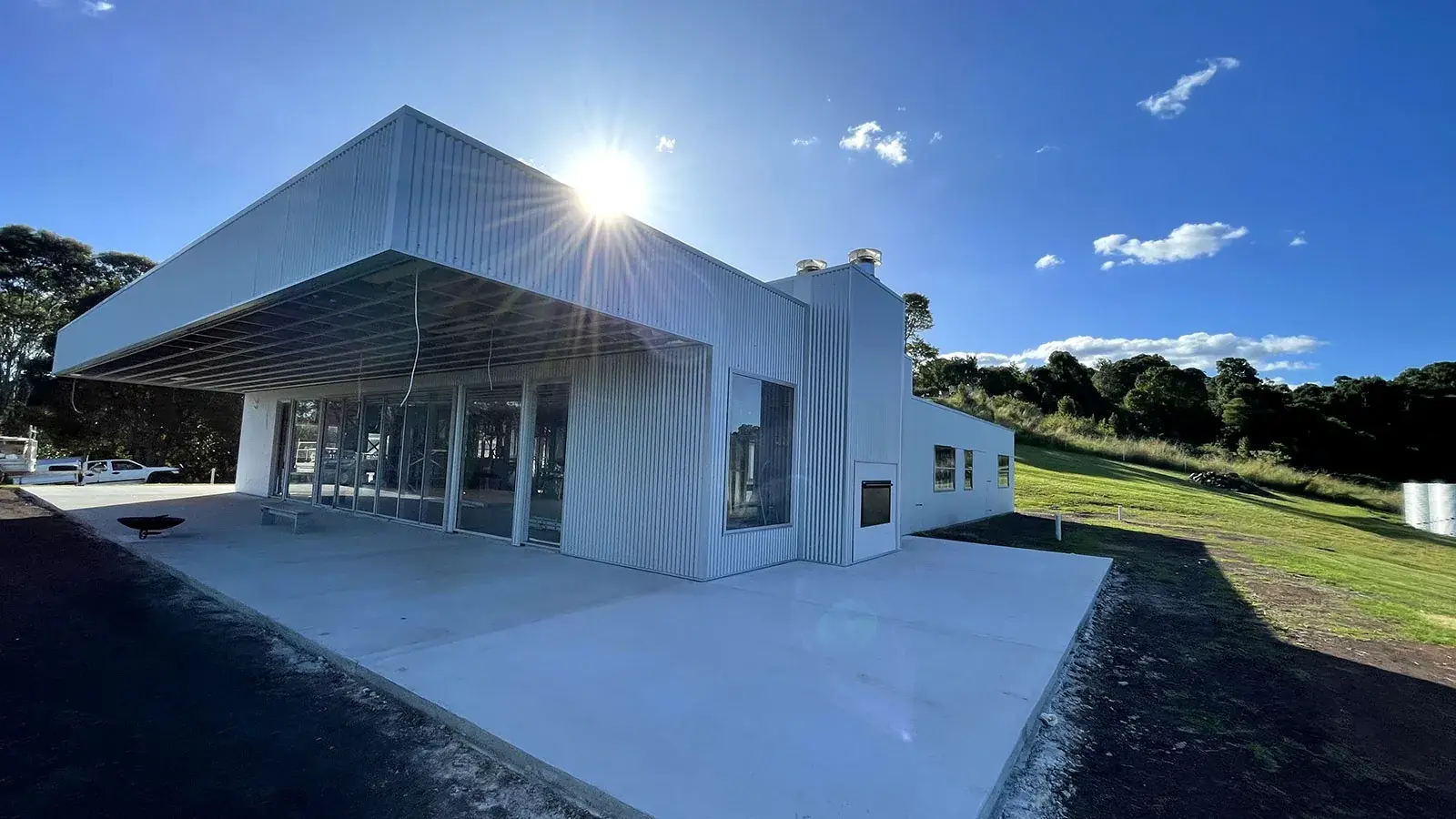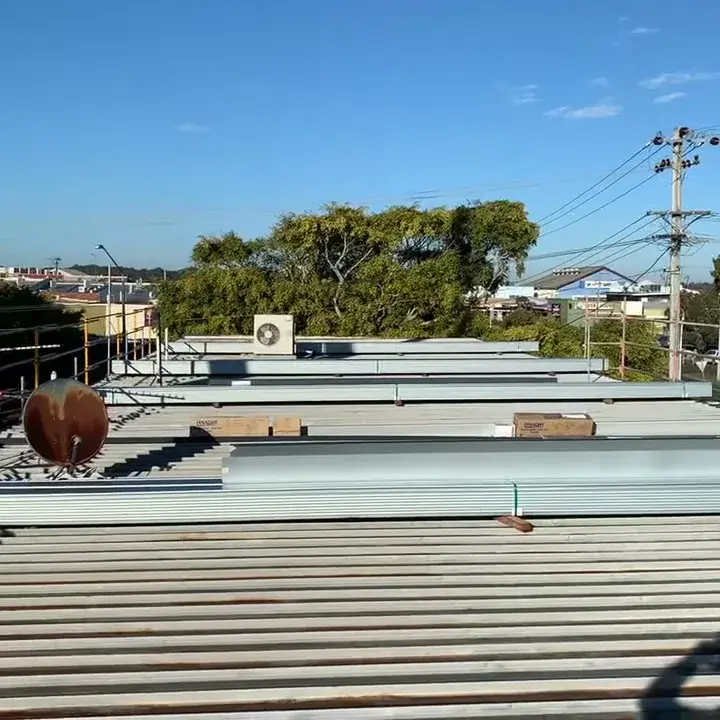
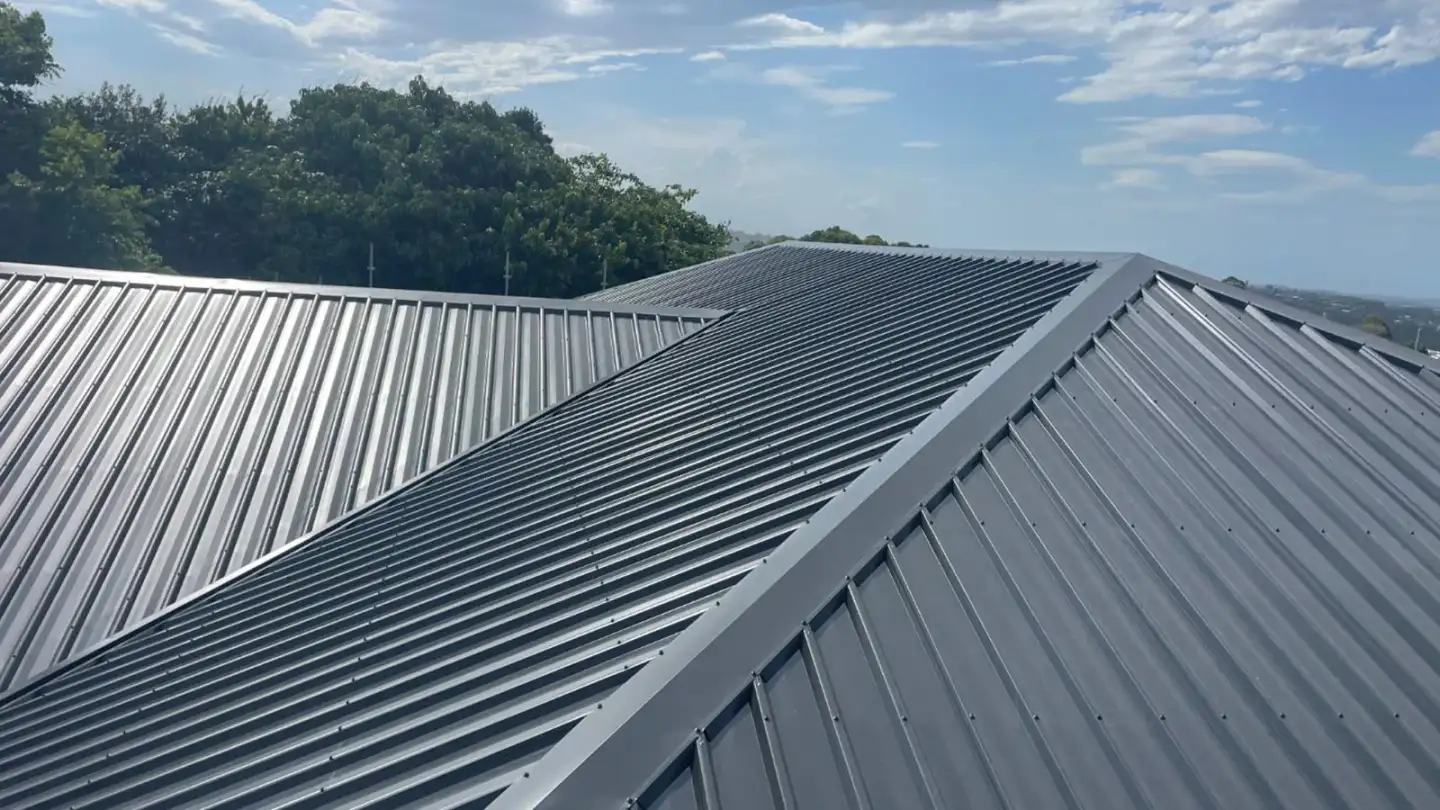
Ricky Jenner Roofing installs Colorbond® and other metal roofs on homes, sheds and commercial buildings across the Northern Rivers, and Zincalume vs Colorbond is one of the first choices we talk through with owners. The short version: Colorbond steel is Zincalume steel with a paint finish baked on at the factory. Zincalume usually costs a little less. Colorbond gives you colour, a cooler roof in the lighter shades, and more options close to salt water.
What is Zincalume, and what is Colorbond?
Both are made by BlueScope, and they start from the same steel.
- ZINCALUME® steel is steel coated with an aluminium, zinc and magnesium alloy that protects it from corrosion. BlueScope calls the current coating Activate® technology. It is left unpainted, with a thin clear resin to limit fingerprint marks during installation, and it has a spangled metallic finish.
- COLORBOND® steel uses that same alloy-coated steel as its base, then adds a high-durability paint system applied on a coil line and baked in a high-temperature oven. It comes in a Classic finish with 22 core colours, plus Matt and Metallic finishes, and as Colorbond Ultra for harsher coastal sites.
So the real comparison is about the paint: what it adds, and what it costs.
Zincalume vs Colorbond compared
The technical figures below come from BlueScope’s product pages and technical bulletins. The cost row is general trade experience.
| Zincalume steel | Colorbond steel | |
|---|---|---|
| What it is | Alloy-coated steel, unpainted | The same coated steel with a factory-baked paint system |
| Look | Metallic spangled finish that changes as it weathers | 22 core colours in the Classic finish, plus Matt and Metallic |
| Heat (solar absorptance) | Treated as 0.50 to 0.60 for NCC and BASIX | From 0.28 (Dover White) to 0.95 (Night Sky) |
| Near breaking surf | More than 200 m | Classic or Matt: more than 200 m. Ultra: more than 100 m |
| Near calm salt water | More than 100 m | No minimum distance listed |
| Material cost | Usually a little lower | Usually a little higher |
| Painting later | Possible, but voids BlueScope’s warranties | Not needed, and overpainting also voids them |
The heat row surprises people. Zincalume looks bright, but BlueScope’s colour and thermal data says to treat it as 0.50 to 0.60 for NCC and BASIX purposes. A light Colorbond colour such as Surfmist (0.33) or Shale Grey (0.44) absorbs noticeably less of the sun. Our guide to Colorbond colours lists the figure for every core colour.
Which suits a Northern Rivers roof near the coast?
Salt air is the deciding factor for a lot of homes here. BlueScope’s roofing selection guide (TB-1A) sets out which products suit which distances from the sea:
- Zincalume steel: more than 200 m from breaking surf or exposed salt water, and more than 100 m from calm salt water.
- Colorbond steel, Classic or Matt: more than 200 m from breaking surf, with no minimum distance from calm salt water.
- Colorbond Ultra steel: more than 100 m from breaking surf.
- SUPERDURA® Stainless steel: closer than that, including within 100 m of the surf.
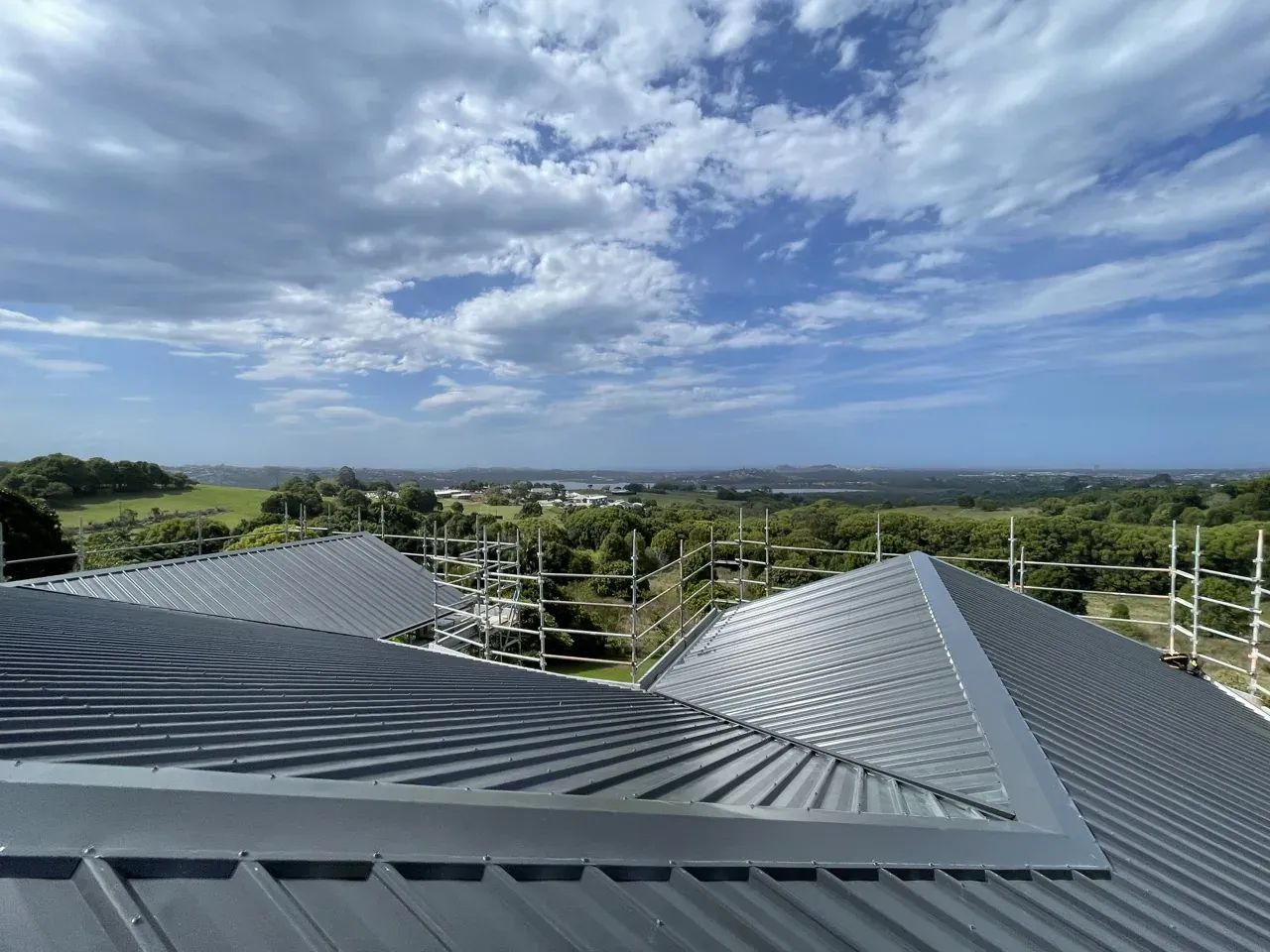
Distances are measured from the high-water mark, and open surf beaches and calm river estuaries fall into different categories. A house above an open beach and one beside the Richmond River at Ballina can sit in different categories at the same distance from the water. Prevailing winds and sheltered, unwashed areas also change how a site behaves, so on an exposed block lean towards the cautious choice. For coastal homes we use marine-grade materials and fixings, and our guide to coastal roofing goes further into salt, wind and maintenance.
Where Zincalume makes sense
Zincalume still earns its place:
- Sheds, carports and farm buildings, where colour matters less than cost. For shed roofing and other commercial work, both are worth pricing.
- Hinterland and inland sites well away from salt water, where the marine distances do not apply.
- Matching an existing Zincalume roof on an extension or a neighbouring building.
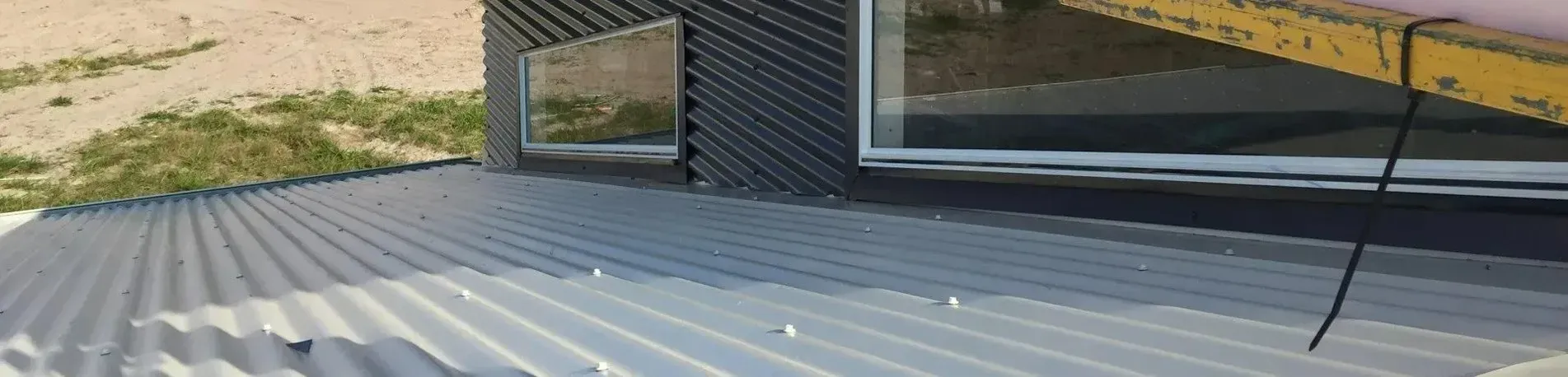
Some rules apply to both. BlueScope’s flashing bulletin (TB-8) says lead is not compatible with either, and water running off copper corrodes both. Insulation left hanging into the gutter can wick water and corrode the sheet from underneath, and metal filings from cutting and drilling have to be cleaned off the roof or they stain.
Where Colorbond makes sense
Colorbond is the usual choice for houses, for a few reasons.
- Looks and streetscape. The roof is the biggest single surface on most houses, and some estates set rules on roof colour or solar absorptance in their covenants.
- A cooler roof. Light colours absorb less of the sun, and 21 of the 22 core colours carry BlueScope’s Thermatech® solar reflectance technology.
- More coastal options. Colorbond steel has no minimum distance from calm salt water, and Colorbond Ultra comes in seven core colours for harsher marine sites.
- Matching trims. Gutters, fascia, downpipes and flashings can all be ordered in the same colours.
If colour is part of the plan, the colour visualiser on our home page shows the range on a house, and our Colorbond roofing page covers the sheet profiles we install.
What drives the price difference?
We do not publish one-size-fits-all prices, but the drivers are easy to explain. The sheet is only one part of an installed roof. These cost the same whichever steel goes on top:
- removal and disposal of the old roof
- scaffold and edge protection
- battens, insulation blanket and sarking
- flashings, cappings and gutters
- access, roof height and pitch, and labour.
That is why the gap narrows once everything is counted. Our guide to roof cost drivers goes through each one, and the fair test is to ask us to price both materials on the same free itemised quote.
Warranty. BlueScope offers material warranties for both products. The period depends on the product, how it is used and where the building is, and every warranty is subject to application and eligibility. Overpainting either product voids them, according to BlueScope’s overpainting bulletin (TB-2).
COLORBOND®, ZINCALUME®, SUPERDURA®, Activate® and Thermatech® are registered trade marks of BlueScope Steel Limited.
Common questions
Is Zincalume cheaper than Colorbond?
Usually a little, as material, because it does not carry the paint system. On an installed roof the gap is smaller than people expect, since scaffold, removal, battens, insulation, flashings, gutters and labour cost the same either way. The fair comparison is one itemised quote from the same roofer that prices the same roof in both materials.
Is Zincalume suitable near the coast?
Not close to the surf. BlueScope's roofing selection guide lists Zincalume steel for roofs more than 200 metres from breaking surf or exposed salt water and more than 100 metres from calm salt water, measured from the high-water mark. Closer in, it points to Colorbond or Colorbond Ultra. Prevailing winds and sheltered, unwashed areas change the picture, so treat the distances as a guide.
Does Zincalume rust?
The steel inside is protected while its aluminium, zinc and magnesium coating lasts. That coating wears away slowly, and faster in salt air, in places rain never washes, and where it touches wet insulation, lead flashings or water from copper pipes. Once the coating is used up in a spot, red rust appears there, usually first where water and dirt sit longest.
Can Zincalume be painted?
Yes. BlueScope's overpainting bulletin says Zincalume can be painted after the right surface preparation, generally with a water-based acrylic system. But painting it voids BlueScope's warranties, air-dried paint weathers differently from a factory-baked finish, and not every paint suits a roof that collects drinking water. If you want colour, choosing Colorbond from the start is simpler.