The best metal roofing for a coastal or holiday home depends on how far it sits from breaking surf: standard Colorbond steel beyond 200 m, Colorbond Ultra between 100 and 200 m, and SUPERDURA Stainless closer in. Ricky Jenner Roofing matches the sheet, fixings and flashings to the site on coastal jobs from Ballina and Lennox Head to Byron Bay.
Why is the coast harder on a roof?
Salt is the problem. Breaking surf throws fine salt spray into the air, and onshore winds carry it inland to settle on roofs, gutters, eaves and walls. On the open roof, rain washes most of it away. In sheltered spots, such as under the eaves, behind gutters and under verandah roofs, it builds up and holds moisture against the steel. That is where coastal corrosion usually starts.
BlueScope sets its recommendations by distance from breaking surf, and treats calm salt water, such as a river mouth or estuary, as a separate, milder case. Local conditions count too: a house on a headland facing the wind can be harder on a roof than one the same distance away tucked behind a dune.
Holiday homes have one more challenge: nobody is there. A blocked gutter or a loose screw after a storm can go unnoticed for months when the house is empty or rented out.
Colorbond, Ultra, stainless or Zincalume: which grade suits your site?
These are BlueScope’s recommendations for roofing, from the Colorbond FAQ and its product guidance, with Lysaght’s screw guidance alongside.
| Material | Distance from breaking surf | Screws |
|---|---|---|
| Colorbond steel | More than 200 m. The full core colour range. | Class 3 from 400 m inland, Class 4 between 200 and 400 m |
| Colorbond Ultra | 100 to 200 m. Heavier metallic coating, colours picked for harsh sites. | Class 4 |
| SUPERDURA Stainless | Typically within 100 m. Stainless steel base under the paint, four colours. | Stainless steel only |
| Zincalume steel | More than 200 m. Unpainted metallic finish. | Class 3 from 400 m inland; check the maker’s guidance closer in |
Always measure from the nearest breaking surf, not the nearest beach car park. Beachfront streets and headlands are where the bands matter most. Our Zincalume vs Colorbond guide compares the unpainted option.
Which screws and flashings suit a coastal roof?
The sheet grade is only half the job. The screws, flashings and anything else touching the roof have to suit it.
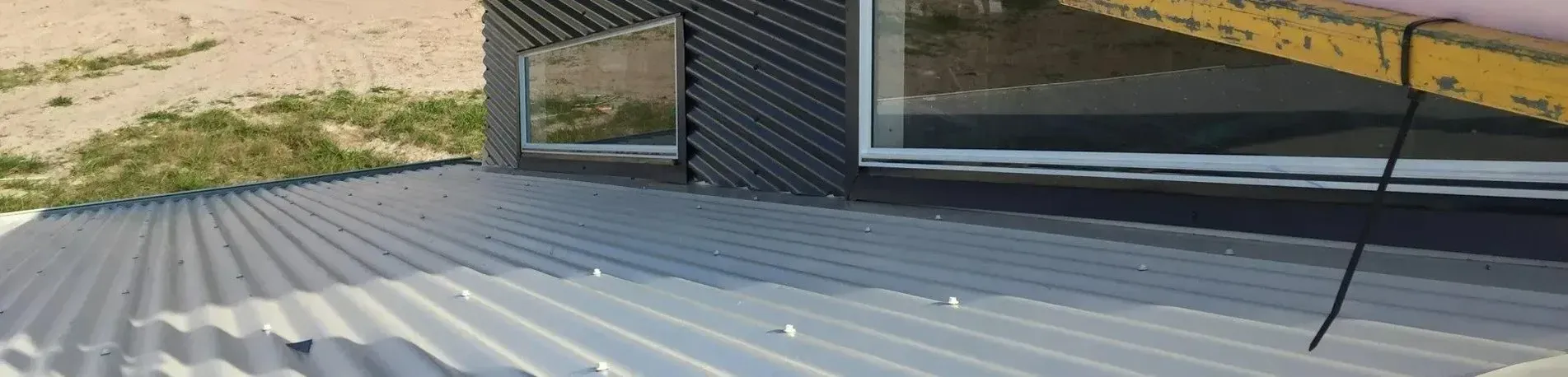
- Screws. Class 4 screws near the coast, as in the table above. Stainless screws are for stainless sheet only, because in Colorbond or Zincalume steel they cause corrosion around the fixing.
- Flashings. Ridge, hip, barge and valley cappings should be made from the same steel as the roof. BlueScope’s warranty expects Colorbond steel flashings and cappings on Colorbond roofs.
- Other metals. Copper, lead and stainless steel should not touch the roof, and water should not drain onto it from copper pipes. Watch for old lead flashings and copper hot water overflows.
- Timber. Damage from green or treated timber touching the sheets is also excluded by the warranty.
When we re-roof near the coast, the grade, the screws and the flashings are chosen together, and all three are written into the quote.
How do you look after a coastal or holiday home roof?
BlueScope’s advice is simple. Areas that rain does not wash, such as the underside of eave gutters, wall cladding under eaves and the tops of garage doors, should be hosed with fresh water at least every six months, and more often where there is salt spray. The open roof sheets are usually kept clean by rain.
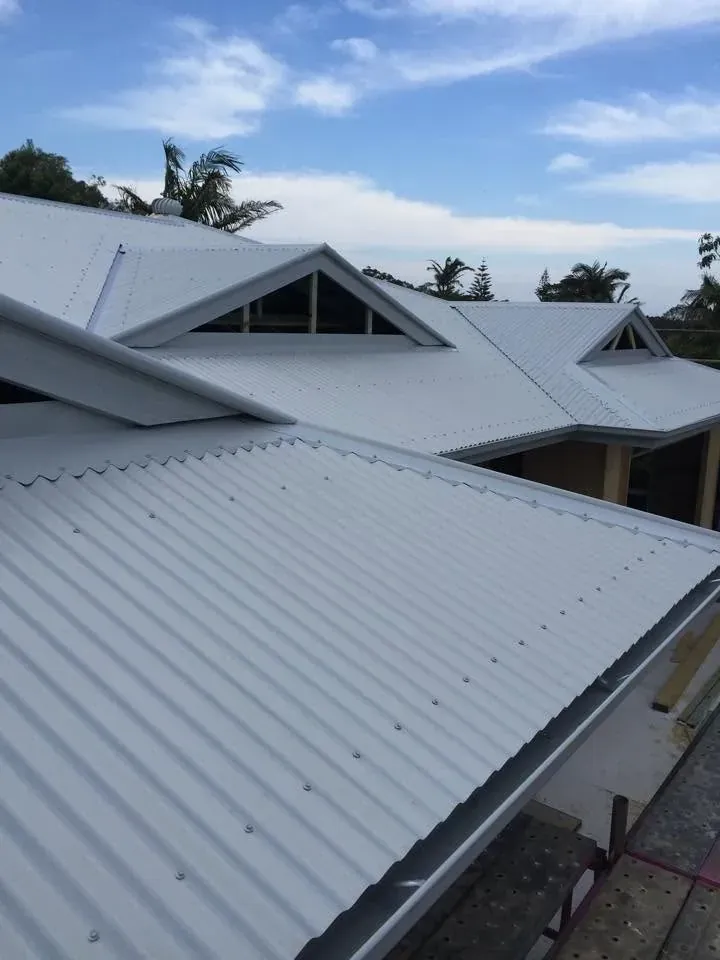
For a holiday home or a rental, put the upkeep in the calendar:
- hose the sheltered areas at each change of season, or ask your property manager to
- clear gutters and valleys before storm season, and again after big storms
- check for rust at screw heads, laps and gutter joints once a year
- book any roof work between guest stays
We can stage work around holiday-rental bookings, so a re-roof does not cost you a peak week.
What does the Colorbond warranty require?
BlueScope’s material warranty covers two things for set periods: the steel corroding through, and the paint flaking or peeling. The periods are set for each roof by product and location, and you can apply through BlueScope’s warranty system for up to 12 months after installation. The warranty is conditional. It expects the roof to be:
- the right product for the site, since severe marine exposure the product is not rated for is excluded
- installed to BlueScope’s and the sheet maker’s guidelines
- fitted with compatible screws and Colorbond steel flashings and cappings
- kept clear of debris and free draining
- maintained, including hosing the areas rain does not reach at least every six months
It does not cover normal weathering, such as the slow loss of gloss, or storm damage such as hail and cyclones. It is BlueScope’s warranty on the steel, which is separate from any warranty on workmanship.
Coastal roofing in the Northern Rivers
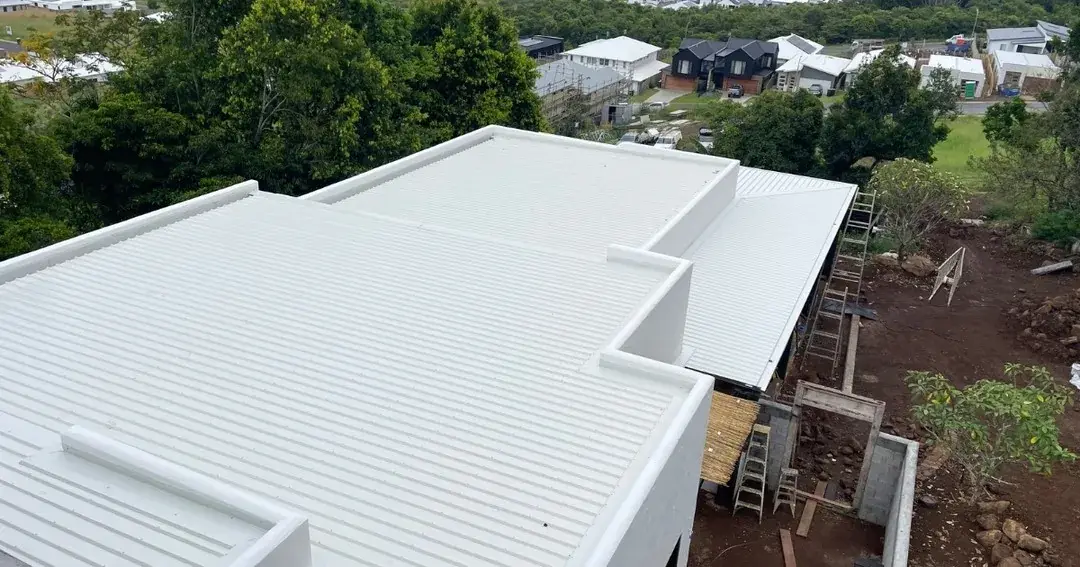
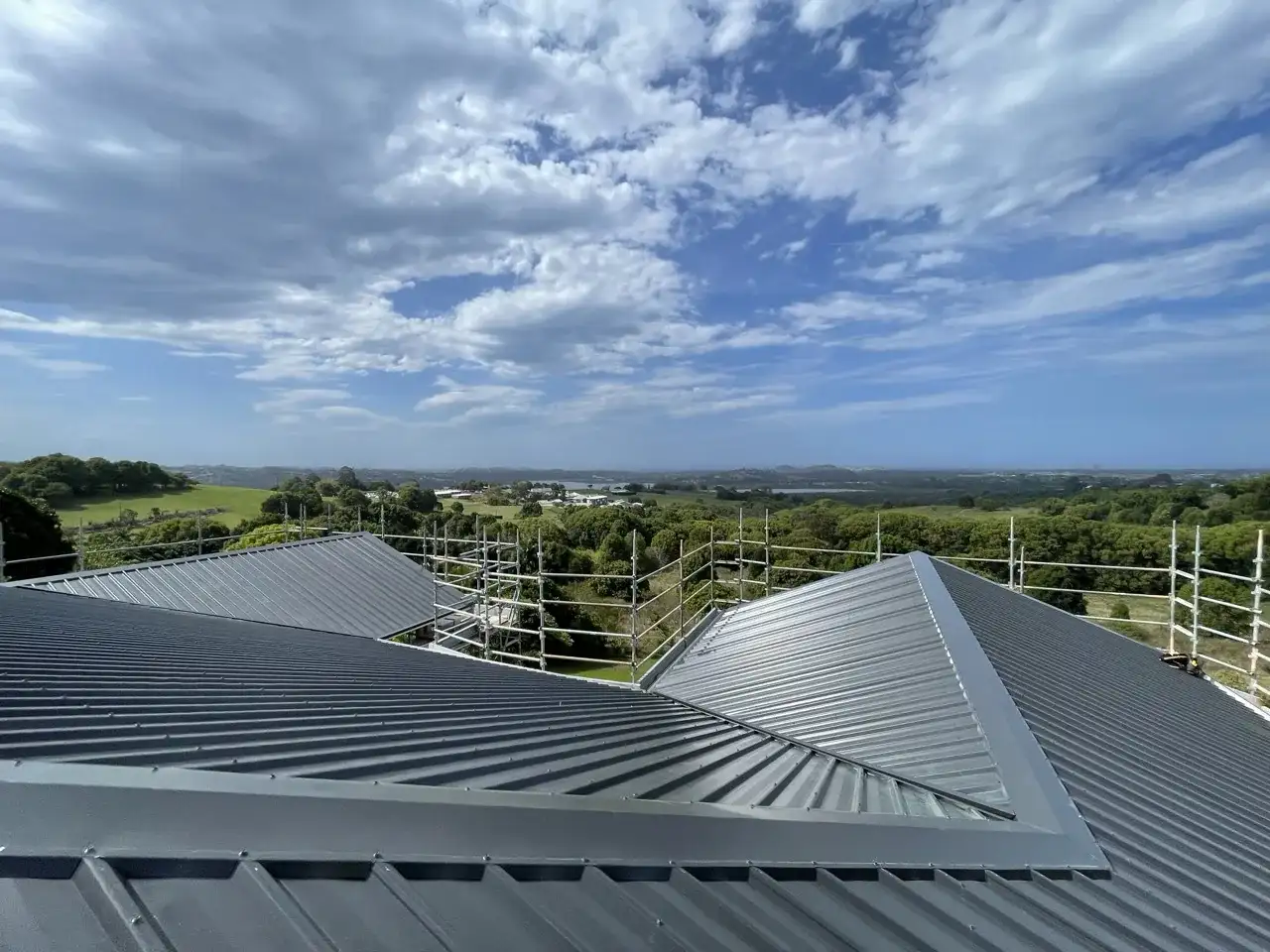
We work along the coast from our base in Wollongbar. On a 2023 new build at Skennars Head, we laid Colorbond Trimdek with Ampelite polycarbonate sheeting over the pool area. For more on the towns, see coastal roofing in Ballina and roofing in Byron Bay.
Still choosing a profile and colour? Read our guide to choosing Colorbond roofing, and for the long view, how long Colorbond lasts. Our metal roofing page covers new roofs and re-roofs.
Common questions
What is Colorbond Ultra?
Colorbond Ultra is BlueScope's grade of Colorbond steel for severe coastal and industrial sites, especially close to the breaking ocean. It has a heavier metallic coating under the paint than standard Colorbond, and its colours are chosen to hold up in harsher conditions. BlueScope recommends it for roofs between 100 and 200 m from breaking surf, where standard Colorbond is no longer the recommended grade.
Do I need Colorbond Ultra near the beach?
It depends on the distance, not the view. BlueScope recommends standard Colorbond steel for roofs more than 200 m from breaking surf, Colorbond Ultra between 100 and 200 m, and SUPERDURA Stainless within about 100 m. Calm salt water, such as an estuary, has its own bands. Measure from the nearest breaking surf and check the grade before you choose a colour.
Does the Colorbond warranty cover coastal homes?
Yes, when the product suits the site. BlueScope sets each warranty by product and location, so a coastal roof needs the grade it recommends for that distance from the surf. The warranty excludes severe marine exposure the product is not rated for, contact with incompatible metals, debris left on the roof and missed washing of areas rain does not reach.
What fixings should be used near the coast?
Lysaght's guidance is Class 4 screws for Colorbond steel between 200 and 400 m from the ocean and for Colorbond Ultra between 100 and 200 m, with Class 3 screws only further inland. Stainless steel screws are for SUPERDURA Stainless sheet only, because stainless screws in Colorbond or Zincalume steel cause corrosion around the fixing.
How often should a coastal roof be washed?
BlueScope asks for areas that rain does not wash, such as the underside of eave gutters, wall cladding under eaves and the tops of garage doors, to be hosed down with fresh water at least every six months, and more often where salt spray is common. The open roof sheets themselves are usually kept clean by rain.