A well-installed Colorbond roof can last for decades in the Northern Rivers. How long yours lasts depends on how close it sits to the surf, whether the fixings and flashings suit the steel, and how well it is kept clean. Ricky Jenner Roofing repairs, replaces and installs Colorbond roofs across the region, and this guide covers what wears them out and what keeps them going.
How long does a Colorbond roof last, according to BlueScope?
BlueScope, which makes Colorbond steel, does not publish one lifespan for every roof. It issues a material warranty whose length is set for each project, based on the product and where the building is. The warranty covers two things for set periods: the steel corroding through, and the paint flaking or peeling. You can get an estimate for your address from BlueScope’s warranty estimator.
Salt matters most. BlueScope recommends standard Colorbond steel for roofs more than 200 m from breaking surf, Colorbond Ultra between 100 and 200 m, and its SUPERDURA Stainless typically within 100 m. Calm salt water, such as a river mouth or estuary, has its own distance bands. Our guide to coastal grades goes through them.
The warranty’s exclusions are a useful list of what wears a roof out: normal weathering (the slow loss of gloss and colour), contact with lead or copper, debris left on the roof, corroded fasteners that were never replaced, and extreme events such as hail, cyclones and floods.
What shortens a metal roof’s life?
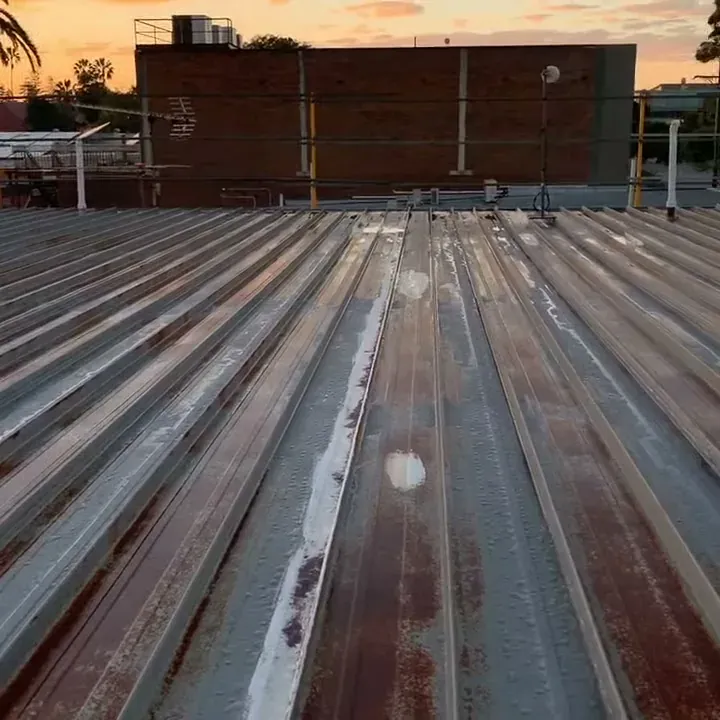
Most metal roofs that fail early do so for a handful of reasons. The Ballina clip-lock roof below, photographed before we replaced it, shows rust spreading across the sheets and white patches along the ribs.
- Salt. Where rain washes it off, it does little harm. Where it builds up, under eaves and behind gutters, it speeds up corrosion.
- The wrong screws. Lysaght’s guidance calls for Class 4 screws within 400 m of the ocean. A cheaper screw can rust long before the sheet does.
- Mixed metals. Copper, lead and stainless steel should not touch Colorbond steel, and water should not drain onto it from copper pipes.
- Debris. Leaves and silt in valleys and gutters hold moisture on the paint for days after rain.
- Swarf. Steel filings from cutting and drilling rust on the surface and stain the paint if nobody sweeps them off.
- Foot traffic. Walking in the wrong place dents sheets and cracks the paint, which lets corrosion start.
If you can already see rust along the laps or around screw heads, our page on rust and fixing repairs explains what can be fixed.
How does a metal roof handle wind, hail and heavy rain?
A metal roof is only as strong as the way it is fixed down. These are the three loads that test it in a Northern Rivers summer.
| Weather | What keeps the roof sound |
|---|---|
| Wind | Each house has a wind class under AS 4055 (N1 to N6, or C1 to C4 in cyclone areas). The sheet maker sets the screws and fixing pattern for each. |
| Hail | Big hail can dent sheets. Small dents are often cosmetic, but a heavy hit can crack the paint. BlueScope’s warranty excludes hail and other extreme weather. |
| Heavy rain | Each profile has a maximum run for the rainfall intensity and pitch. Sealed laps, sound flashings and gutters sized for the roof keep water out. |
Most wind damage to metal roofs starts at a weak point: loose or corroded screws, a lifted ridge capping or rotten battens. A roof fixed to the pattern for its wind class, with battens and tie-downs in good order, stays on. After a hailstorm, check what your home insurance covers, because the steel warranty does not.
What maintenance makes a Colorbond roof last longer?
A metal roof needs little upkeep, but that is not the same as none. These habits make the most difference:
- Hose the unwashed areas. BlueScope asks for areas rain does not reach, such as the underside of eave gutters, to be hosed at least every six months, and more often near the coast.
- Keep gutters and valleys clear. Clear leaves and silt before storm season, and trim branches that hang over the roof.
- Watch what other trades leave behind. No copper pipes, lead flashings or stainless screws on the roof, and swarf swept off after solar or antenna installs.
- Replace corroded screws. A rusty screw head is a cheap fix now and a leak later.
- Get it checked. A roof inspection every few years, and after a big storm, catches small problems before they spread.
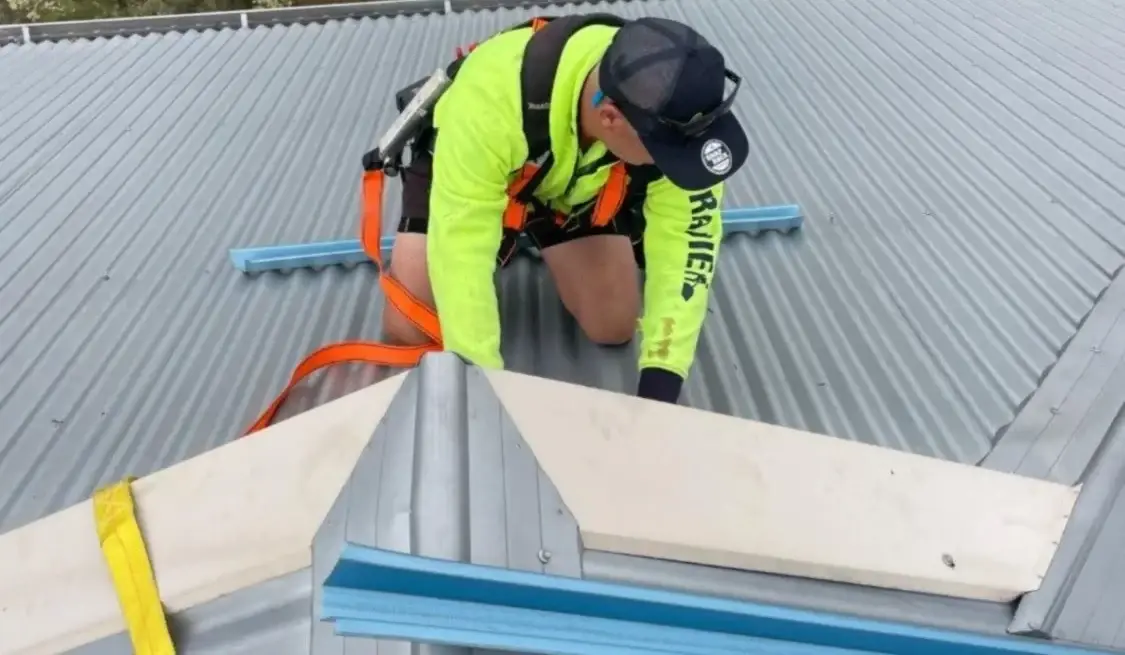
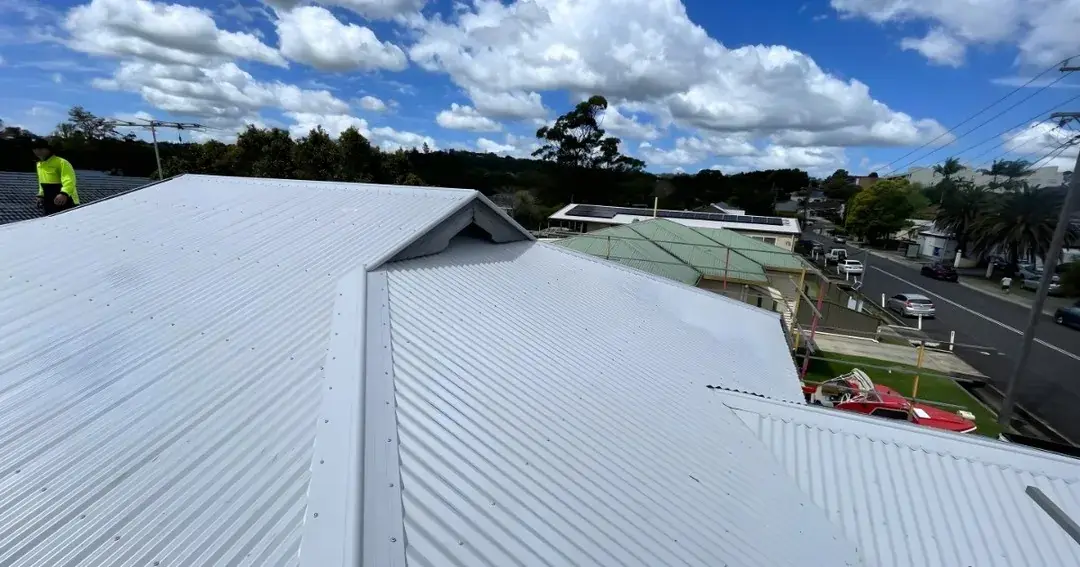
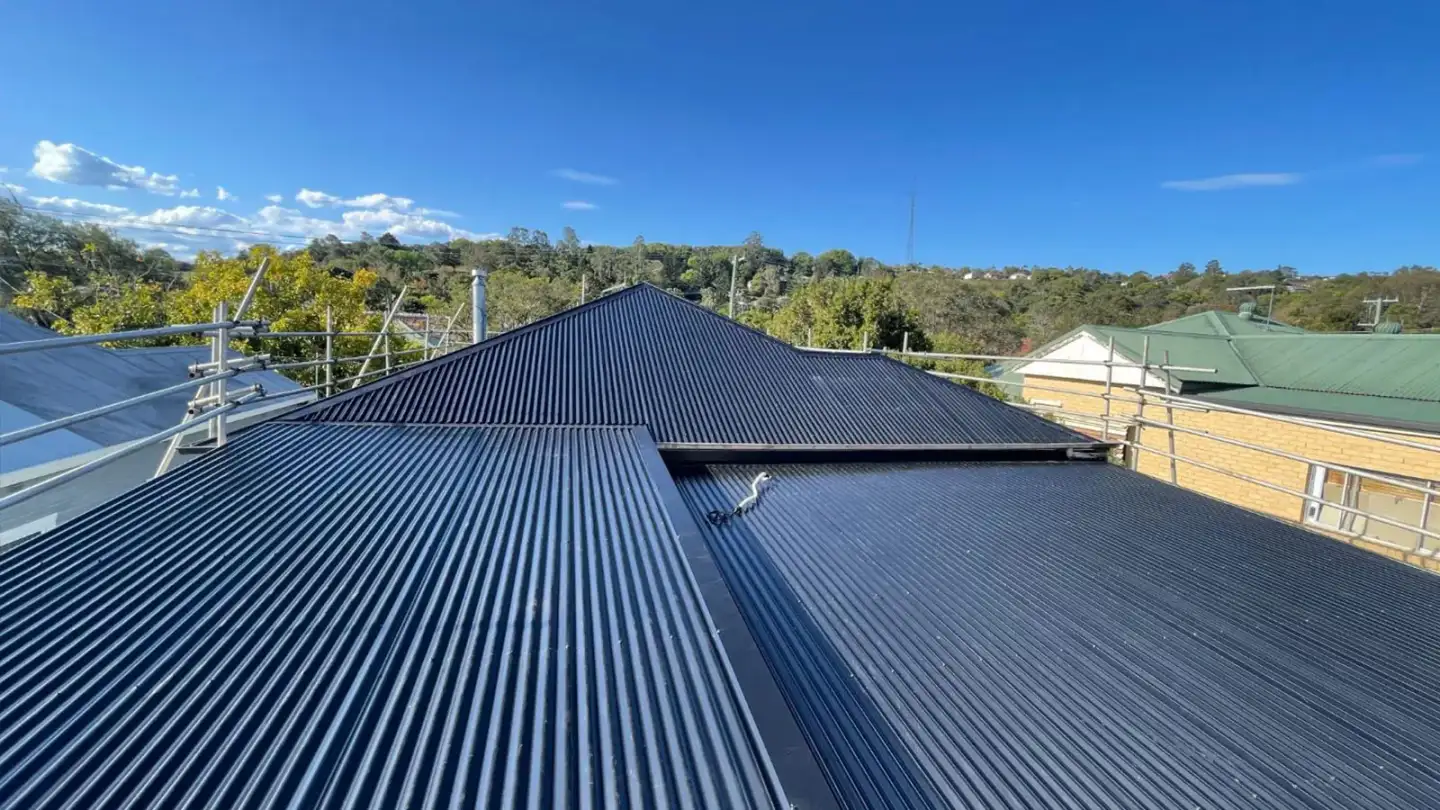
Our roof maintenance checklist has the full routine. Installation matters as much as upkeep: sheets lapped the right way to the weather, fixed to the pattern for the wind class and finished with flashings in compatible steel. Every roof we work on has scaffold and edge protection set up before work starts.
When is a metal roof near the end of its life?
Age alone does not tell you. Condition does. These are the signs that a metal roof is close to replacement:
- rust that has eaten through the sheet, or pinholes of light you can see from the roof space
- corrosion at the laps, at the ends of sheets and around screw holes
- many screws already replaced, with new rust around the replacements
- leaks that come back after each repair
- sagging lines that point to rotten battens
If one area is worn and the rest is sound, a repair can buy years. If the rust has spread across the roof, replacing an ageing roof usually costs less than chasing leaks. Before you choose the new one, read the pros and cons of metal roofing so it is picked for the next few decades, not just the next storm.
Common questions
How many years does a Colorbond roof last?
There is no single figure, because life depends on the site. A Colorbond roof of the right grade, installed and maintained to BlueScope's guidelines, commonly lasts for decades. BlueScope sets the material warranty period for each roof by product and by distance from the coast, so its warranty estimator gives the best guide for your exact address.
What is the typical lifespan of a Colorbond roof?
A well-installed Colorbond roof typically lasts for decades inland and on sheltered sites, and less where salt spray, pollution or poor maintenance speed up corrosion. Choosing the grade BlueScope recommends for your distance from breaking surf, using matching fixings and flashings, and washing unwashed areas are what let a roof reach the long end of that range.
How long does a 30 year roof really last?
A 30 year figure is usually a warranty period or a marketing line, not a promise that the roof will fail or survive at that age. Real life depends on the environment, the installation and the care the roof gets. A sheltered inland roof can outlast its warranty, while a neglected roof near the surf can wear out well before it.
Can a 20 year old metal roof still have years of life left?
Yes, if it is in good condition. Age alone is not the test. A 20 year old metal roof that is sound, with good fixings and flashings, can have plenty of life left. Replacement makes sense when sheets are rusting through, laps and screw holes are corroding, or leaks keep coming back after repairs. A roof inspection tells you which way to go.
Does a Colorbond roof need washing to last?
Only in the places rain misses. The parts of a Colorbond roof that rain washes usually need no cleaning. BlueScope asks for areas that rain does not reach, such as the underside of eave gutters, wall cladding under eaves and the tops of garage doors, to be hosed down at least every six months, and more often near the coast or heavy industry.
What is the strongest roof style?
The strongest roof is the one engineered and fixed for its site. Every house has a wind classification, and the sheet maker publishes the screws, fixing pattern and batten spacing that suit it. A metal roof fixed to that pattern, with sound battens and tie-downs, holds up far better than a stronger-looking roof with missing or corroded fixings.