Choosing Colorbond roofing comes down to five things: the roof sheeting profile, the steel grade for your distance from the coast, the colour, the insulation underneath, and gutters and flashings that match. Ricky Jenner Roofing works through all five with Northern Rivers homeowners before quoting a new roof, a re-roof or a tile to metal conversion.
1. Which roof sheeting profile suits your home?
The profile is the shape the steel is rolled into. It sets the look of the roof, the lowest pitch the sheet can handle and how it is fixed down. The names below are Lysaght’s; other roll-formers make similar shapes under their own names.
| Profile | Look and fixing | Lowest pitch (Lysaght) |
|---|---|---|
| Corrugated (Custom Orb) | The classic rounded wave, screwed through the sheet. Can be curved for bullnose verandahs. | 5 degrees |
| Trapezoidal rib (Trimdek) | Ribs about 29 mm high with fluted pans, 762 mm cover. Spans further between supports. | 2 degrees |
| Square rib (Spandek) | Squarer ribs about 24 mm high, 700 mm cover, for a crisper modern line. | 2 degrees, subject to design provisions |
| Concealed-fixed (Klip-Lok 700 Hi-Strength) | Tall ribs clipped onto hidden brackets, so no screws go through the top. | 1 degree, subject to design provisions |
| Standing seam | Narrow raised seams and flat pans, fixed out of sight. | Check the maker’s literature |
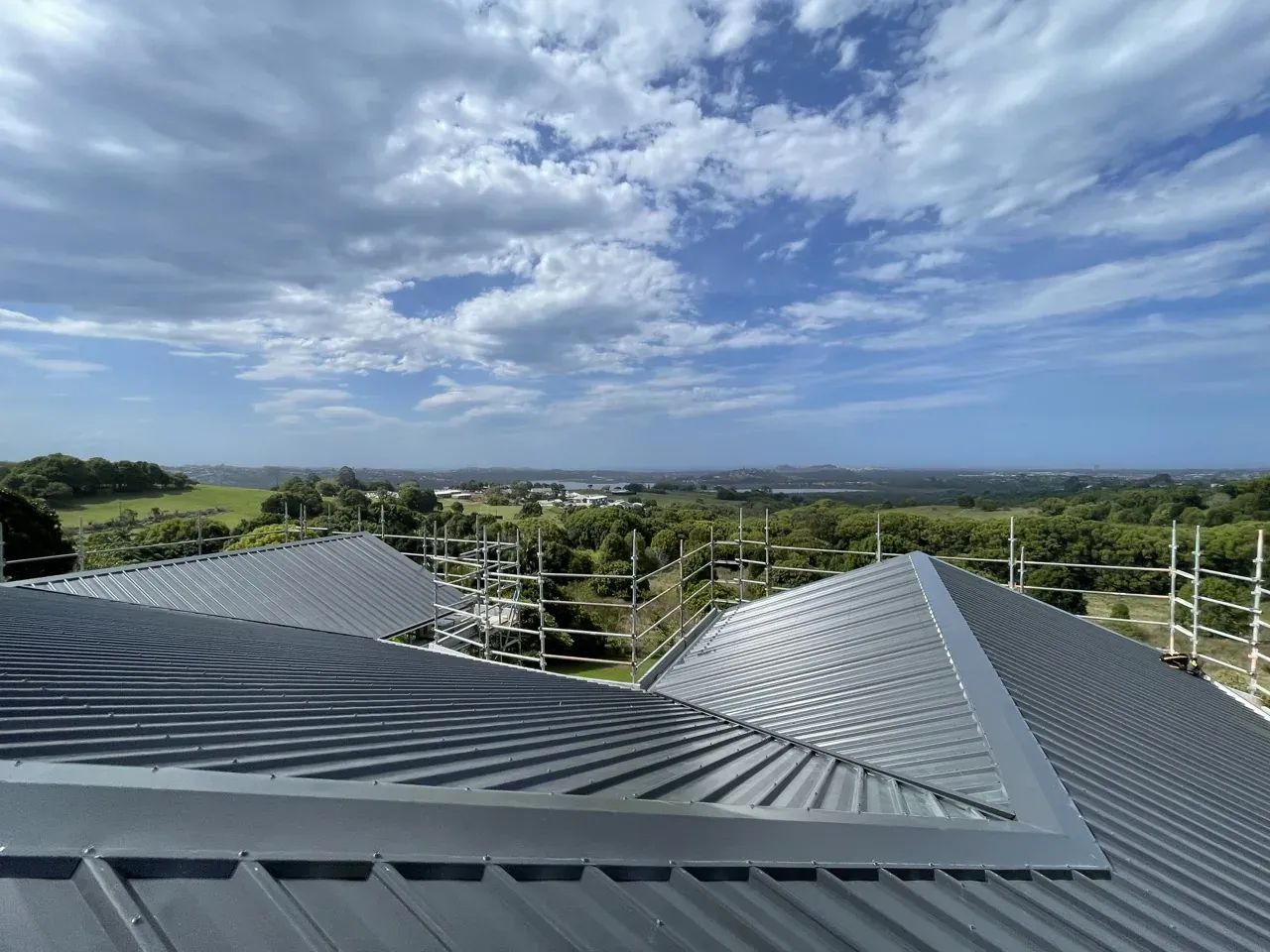
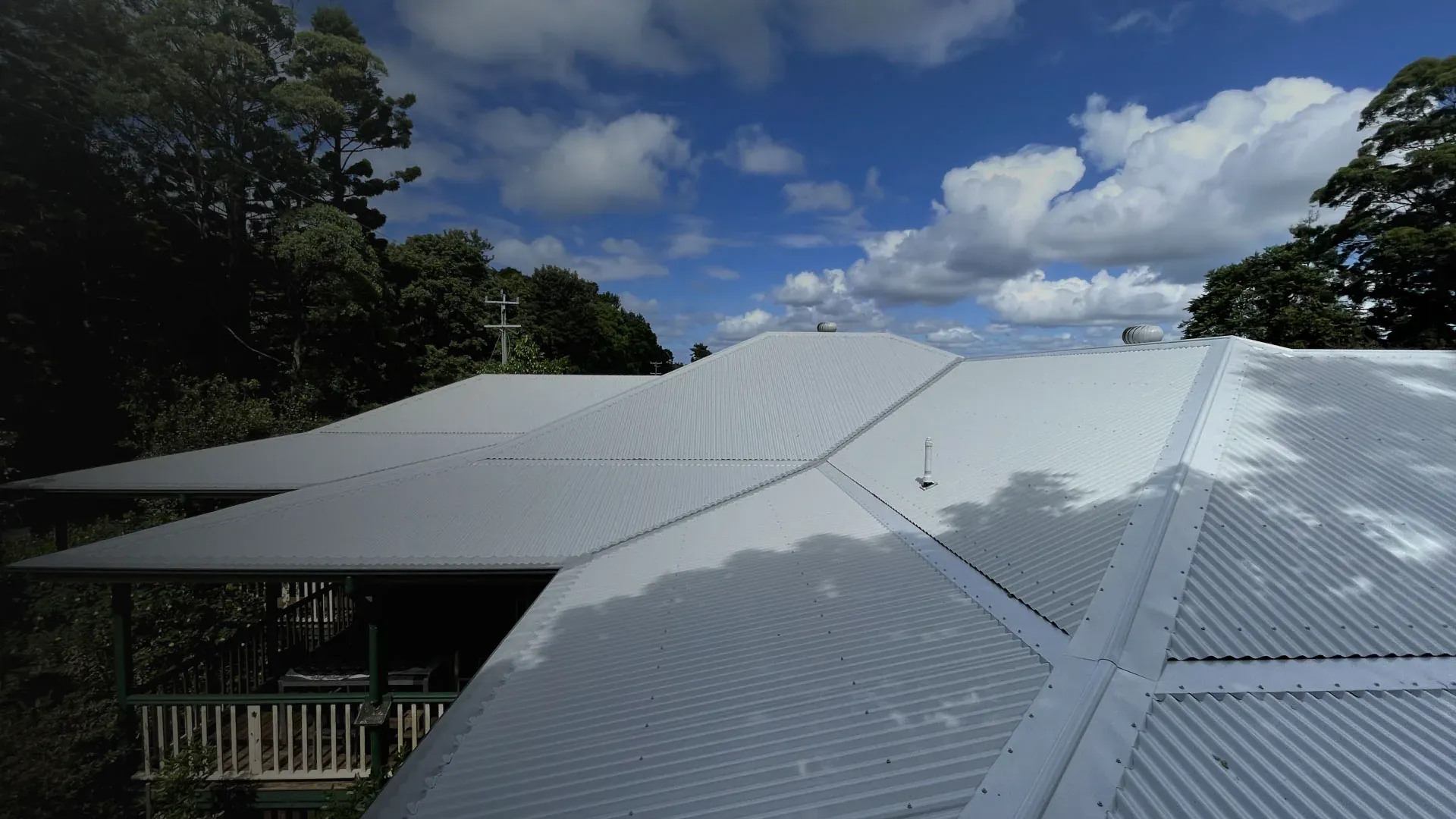
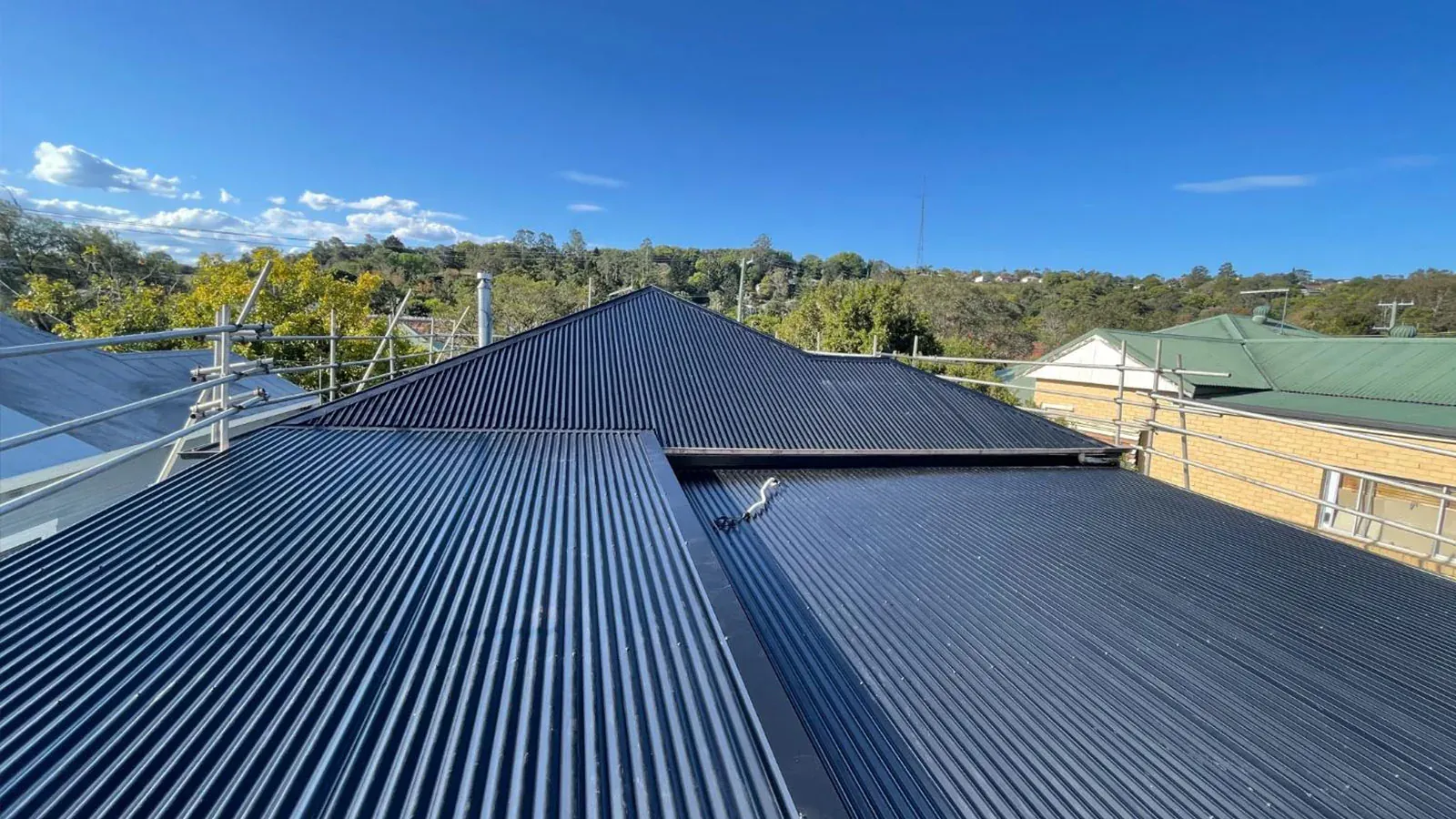
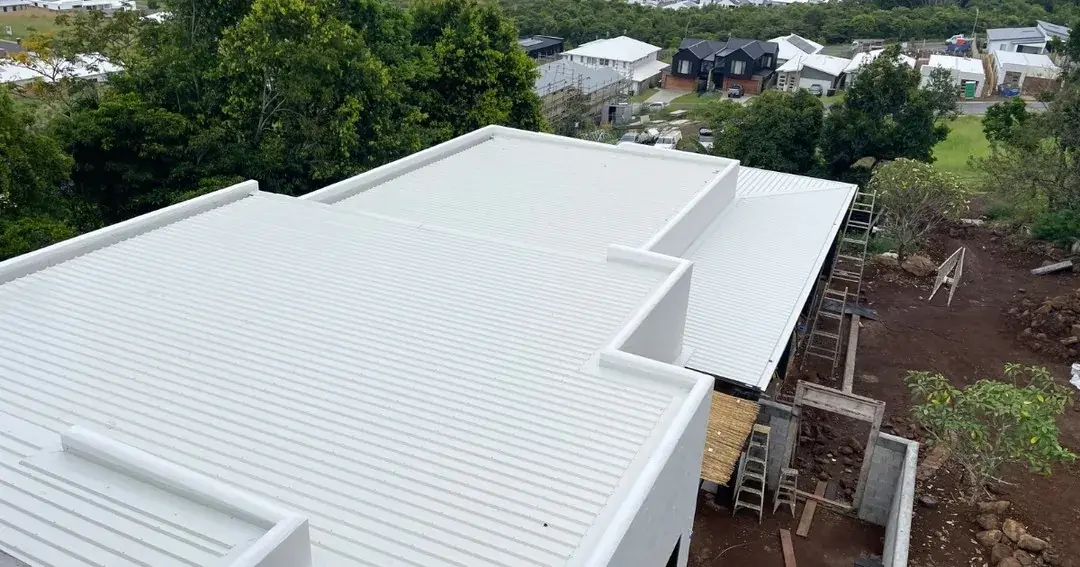
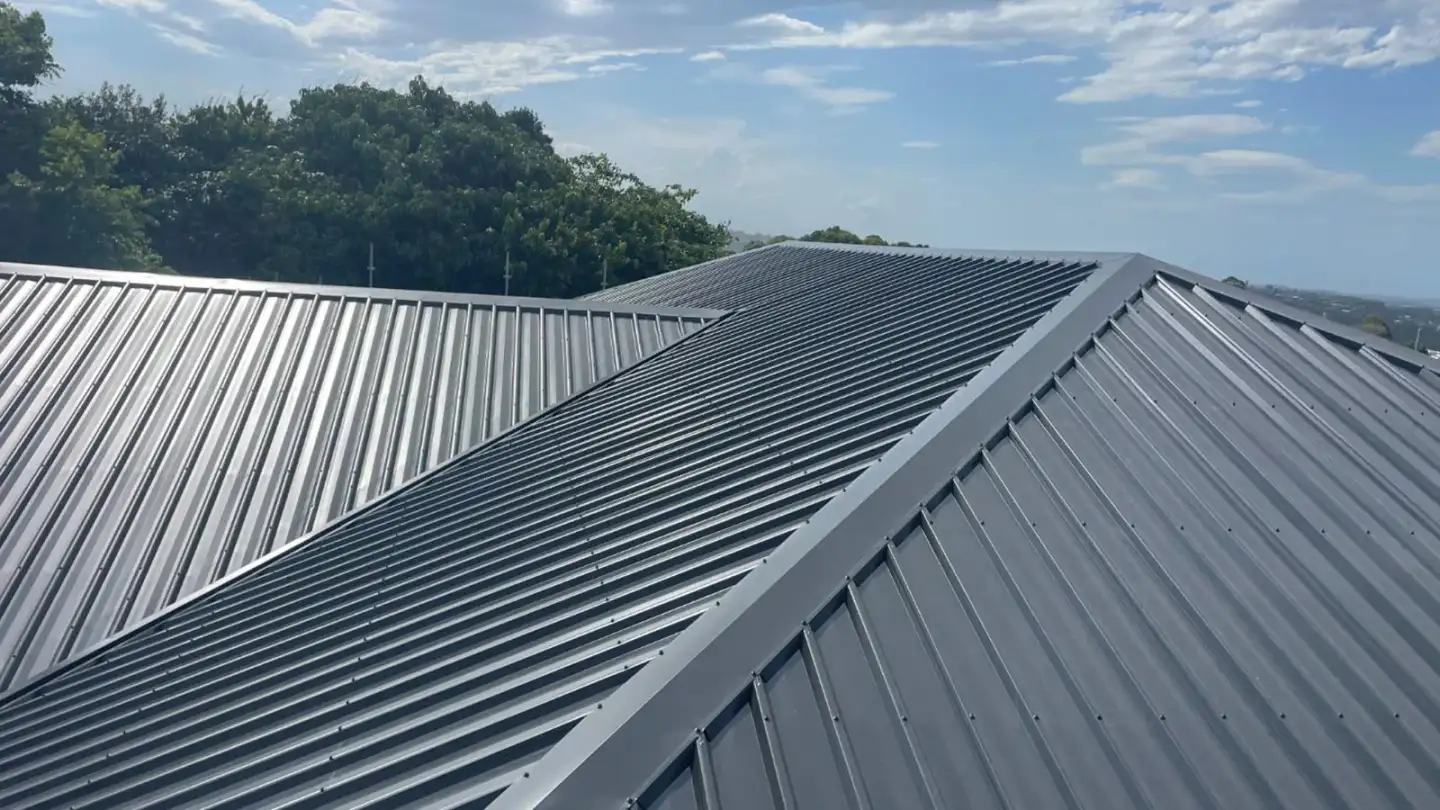
Corrugated suits Queenslanders, cottages and farm buildings. Ribbed and concealed-fixed sheets suit modern homes and long, low roofs. On a 2023 new build at Skennars Head we laid Colorbond Trimdek, and on another job our clip-lock sheets were 25 m long.
A good quote also names the sheet thickness (commonly 0.42 or 0.48 mm), which changes spans and sometimes the lowest pitch, and checks the run length, because in heavy rain water can only travel so far down a sheet before it backs up over the laps.
2. Do you need a coastal grade?
Salt spray is the main thing that shortens the life of a metal roof. BlueScope recommends standard Colorbond steel for roofs more than 200 m from breaking surf, and Colorbond Ultra between 100 and 200 m. Within about 100 m, BlueScope’s SUPERDURA Stainless is the usual specification. The screws change with the grade too: Lysaght calls for Class 4 screws within 400 m of the ocean.
Our guide to coastal grades covers the distance bands, fixings and washing in detail. If you are also weighing the unpainted option, read Zincalume vs Colorbond.
3. Which colour suits the house and the heat?
Colour is the choice most people start with, but it is also a heat decision. BlueScope notes a light roof can run up to 35°C cooler on the surface than a dark one on a hot day. Thermatech, in every core Colorbond colour except Night Sky, helps darker colours stay cooler without changing how they look.
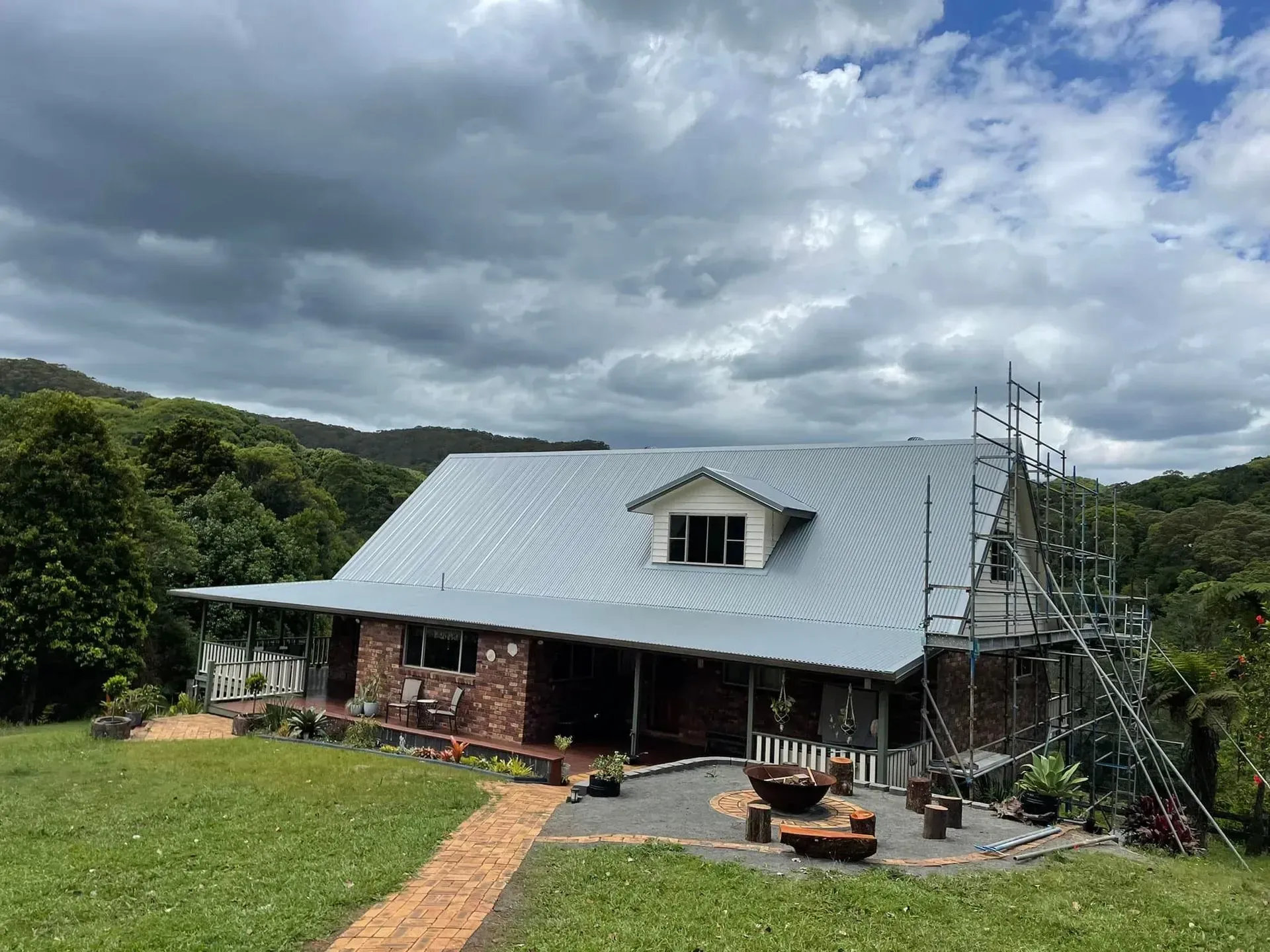
In NSW, the roof’s solar absorptance feeds into BASIX and the energy rules of the National Construction Code, so a darker roof can mean more insulation to meet the same target. Some estates also limit roof colours in their design covenants. Look at physical samples on site before you decide, and see our guide to Colorbond colours for more on each one.
4. What goes under the sheets?
What goes under the steel matters as much as the steel. An insulation blanket laid over the battens cuts heat coming through the roof and quietens rain. A foil face on the blanket, or a separate foil sarking, also acts as a vapour barrier and cuts condensation under the sheets. BlueScope notes a metal roof can carry both blanket and foil, on top of ceiling insulation, for a higher total R-value.
We lay blanket and sarking on the new roofs we install. Our guide to roof insulation explains the options.
5. Do the gutters and flashings match?
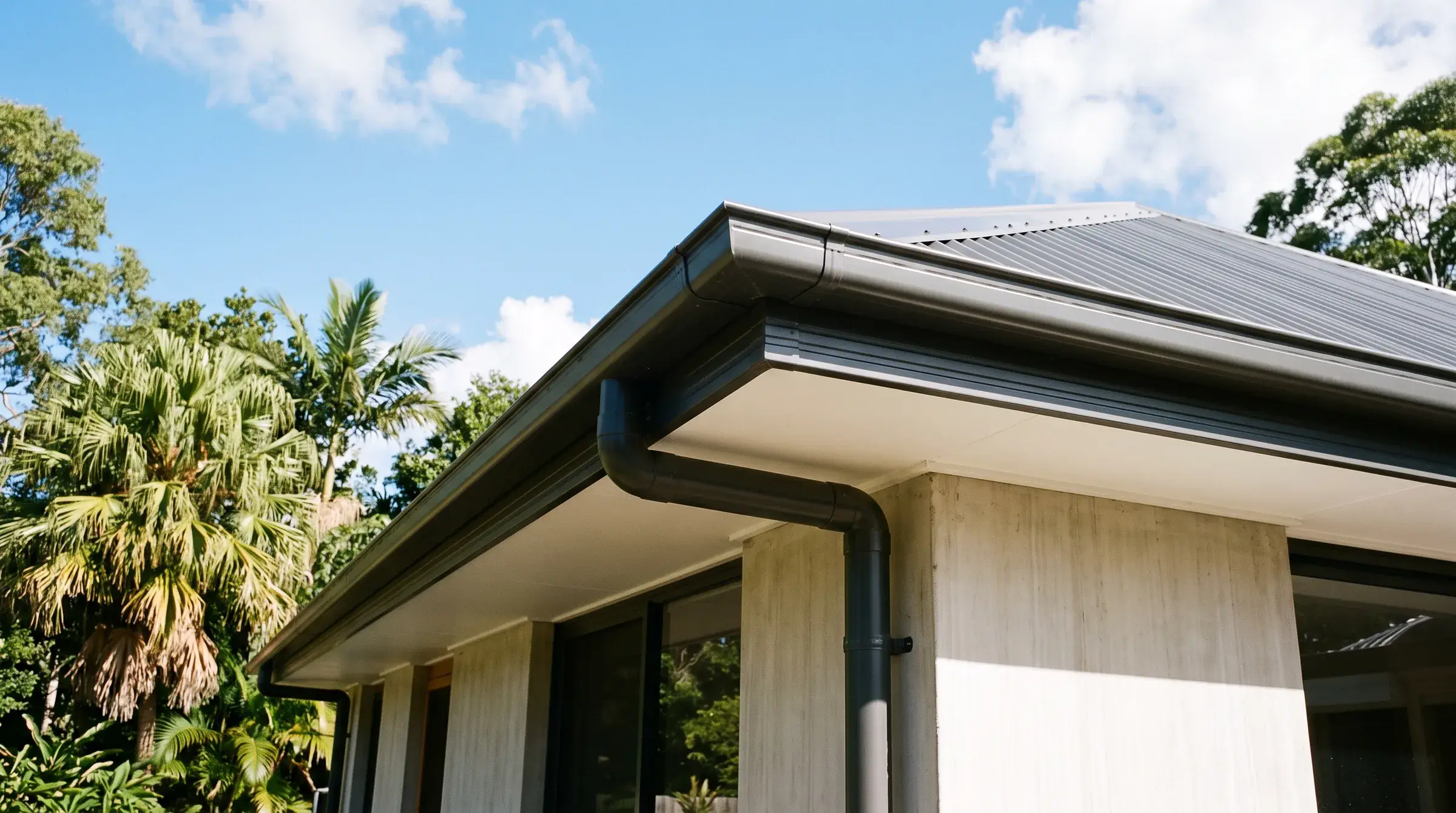
The sheets are only part of the roof. Ridge, hip and barge cappings, valley flashings and every flashing around a chimney, skylight or vent pipe keep the water out at the joins. BlueScope’s material warranty for Colorbond roofing expects those flashings and cappings to be made from Colorbond steel, and it excludes damage from lead, copper and other incompatible metals.
Gutters are worth planning at the same time. Matching gutters in the same colour finish the roof, and a new roof is the right moment to check that the gutters and downpipes are big enough for the roof area and our heavy summer rain.
Putting it together
A good roof is the right profile for the pitch, the right grade for the site, a colour that suits the house and the heat, insulation underneath, and flashings and gutters that match. Ricky Jenner Roofing is based in Wollongbar, and Ricky has been a licensed roof plumber since 2009. We measure every roof before we quote, and our Colorbond roofing page shows the jobs we do across the Northern Rivers.
Common questions
What are the main types of metal roof sheeting?
There are four main types. Corrugated sheeting has the classic rounded wave. Trapezoidal or ribbed sheeting has flat pans between square-edged ribs. Concealed-fixed sheeting clips down onto hidden brackets, so no screws go through the top. Standing seam has tall, narrow seams for a flat, modern look. Each suits different pitches, spans and styles of house.
What's the difference between Trimdek and Spandek?
Both are Lysaght ribbed profiles. Trimdek has a wider cover of 762 mm, trapezoidal ribs about 29 mm high and fine fluting in the pans. Spandek covers 700 mm with squarer ribs about 24 mm high, for a crisper, more modern line. Lysaght lists both down to a 2 degree pitch, with Spandek subject to its design provisions.
Which profile suits a low-pitch roof?
Concealed-fixed profiles such as Klip-Lok suit the lowest pitches. Lysaght lists Klip-Lok 700 Hi-Strength down to 1 degree when its design provisions are met. Ribbed profiles such as Trimdek and Spandek go down to 2 degrees, while corrugated Custom Orb needs at least 5 degrees. Below those pitches, water can back up over the laps.
What is the newest type of roofing?
Most recent changes in steel roofing are in the coatings rather than the shapes of the sheets. BlueScope's Zincalume coating now uses an aluminium, zinc and magnesium alloy it calls Activate technology, and all but one core Colorbond colour carries Thermatech, which reflects more of the sun's heat. Ask for the current product data when you compare quotes.
Can different profiles be used on one house?
Yes. It is common to use one profile on the main roof and another on a verandah, a low-pitch extension or the wall cladding. A low skillion might need a ribbed or concealed-fixed sheet while the main roof stays corrugated. Keeping the same colour, and using flashings made to suit both profiles, makes the two sections read as one design.