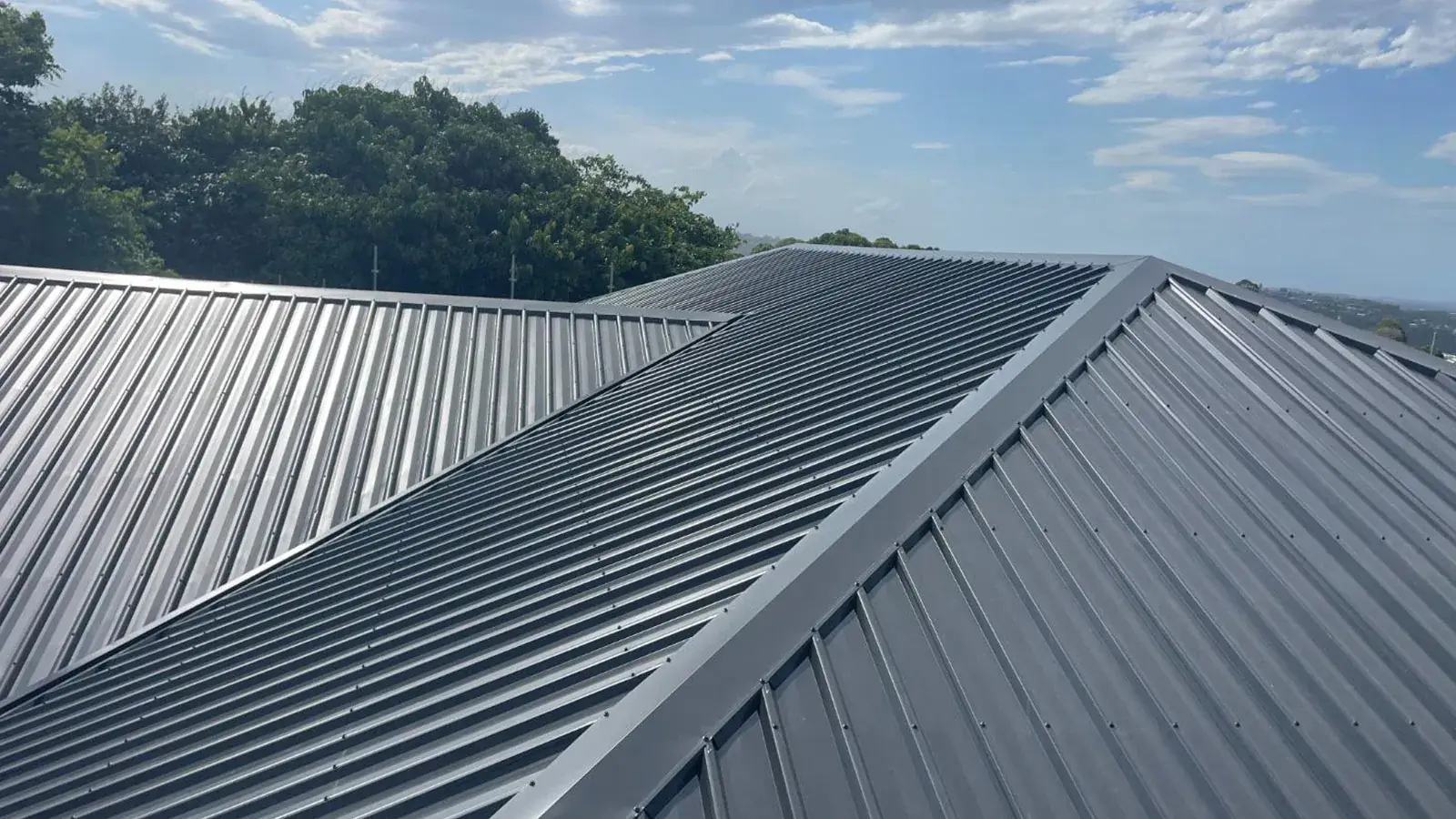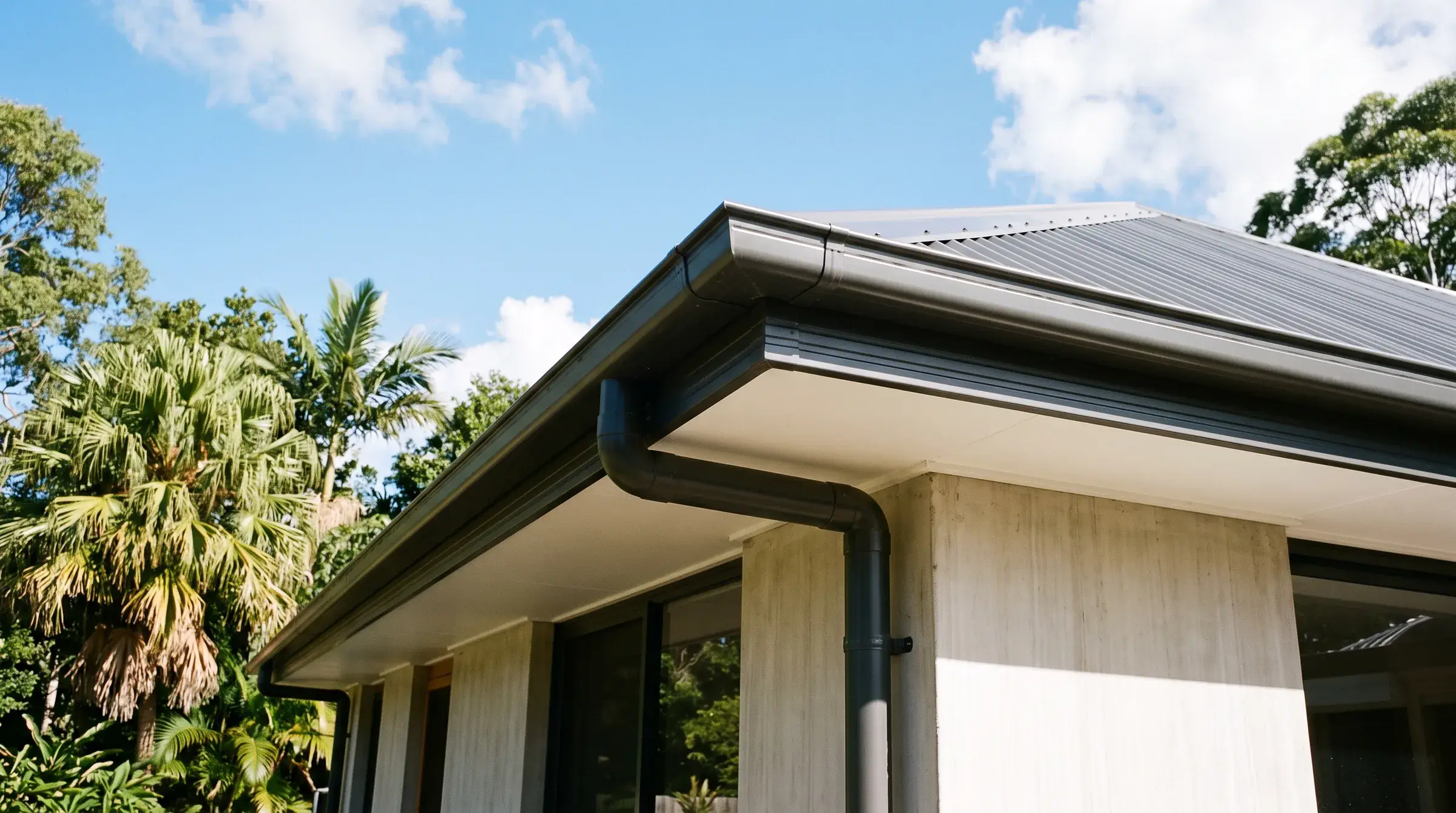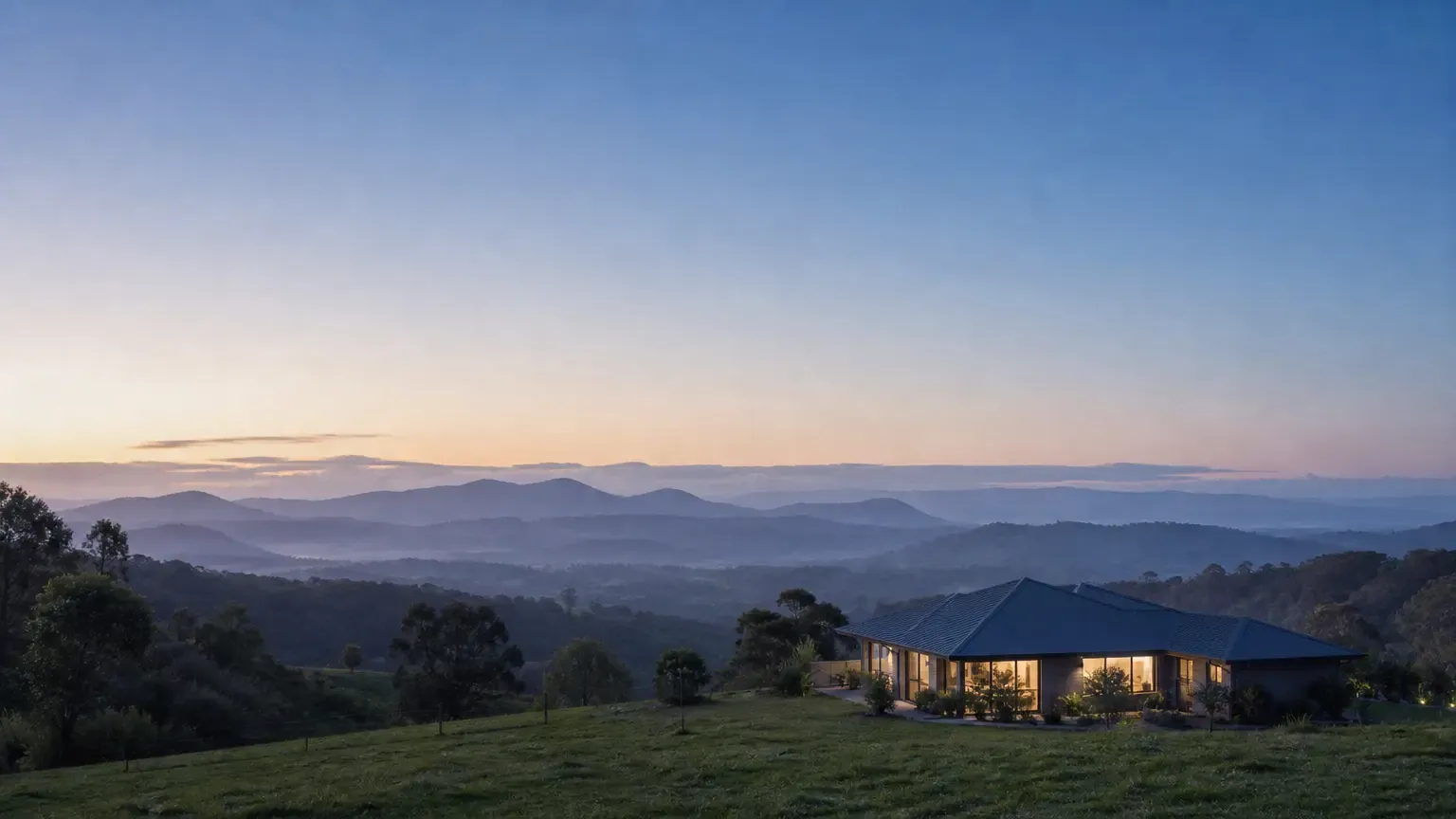
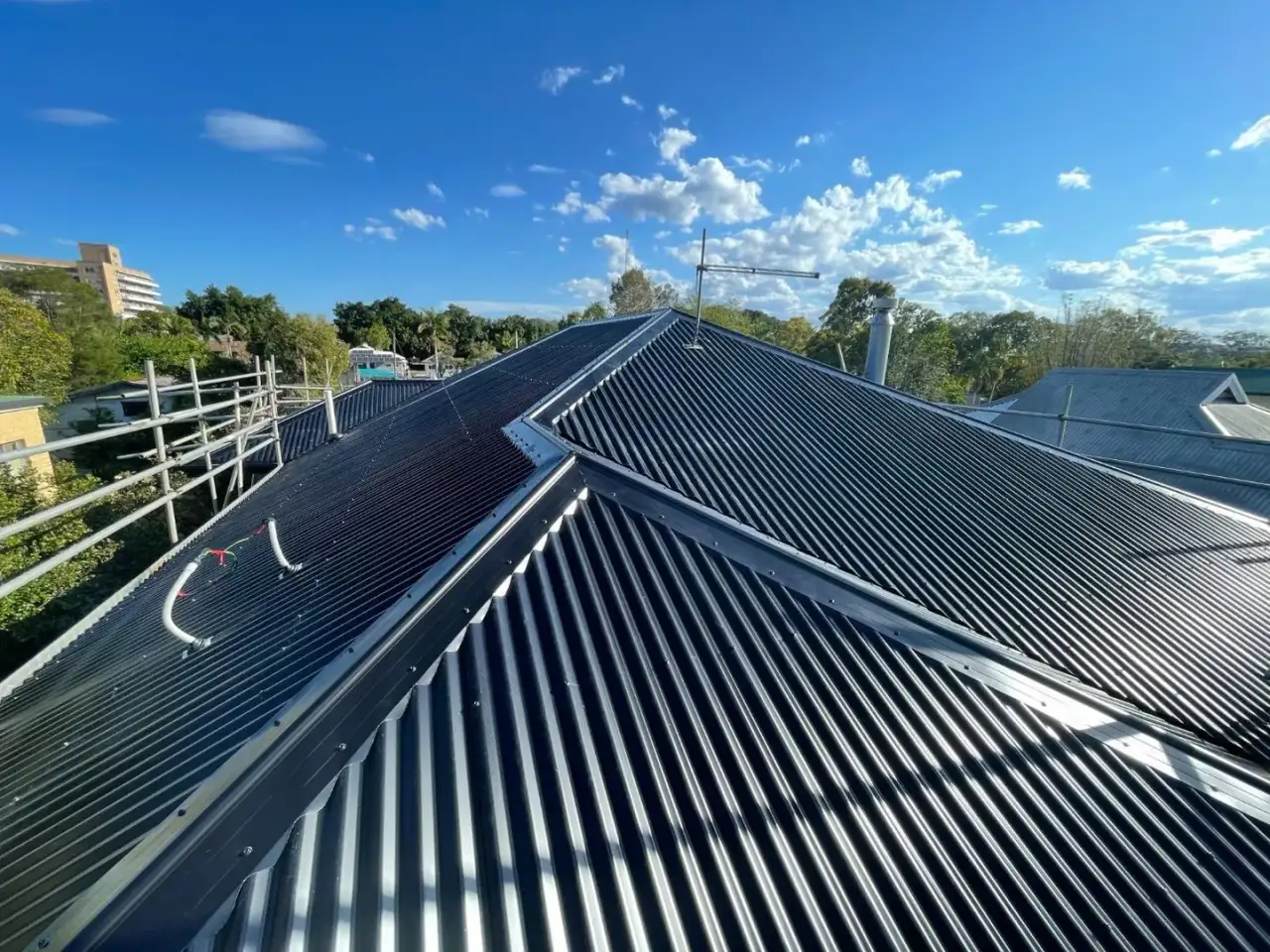
Ricky Jenner Roofing replaces old metal and tiled roofs with new Colorbond® steel across the Northern Rivers, and this is what to expect during a roof replacement with us. The work runs in a set order: scaffold and edge protection first, then the old roof off, battens checked, insulation down, new sheets fixed, flashings finished and a full clean-up.
Before work starts
A good re-roof is mostly decided before anyone climbs a ladder.
- Inspection and quote. Every roof replacement starts with a free on-site inspection. We measure the roof, check the structure and battens, and give you an itemised written quote.
- Colour and profile. You choose the Colorbond colour and sheet profile, and decide whether gutters, fascia and downpipes are replaced at the same time. Look at physical samples in daylight, because screens are only a guide.
- What goes under and through the roof. Decide now on insulation blanket and sarking, whirlybirds and skylights, because they go in while the roof is open. Solar panels have to come off before the old roof does, so book your solar installer early.
- Timing and budget. Read up on the best time of year to re-roof and on what it costs before you lock in dates.
- The contract. According to the NSW Government, jobs between $5,000 and $20,000 need a written small job contract, and jobs over $20,000 a large job contract with a five business day cooling-off period. The deposit is capped at 10%. Over $20,000, the contractor must also give you a home building compensation certificate before taking any payment.
Day by day: how a re-roof runs
Every roof is different, but the order of work is the same on almost every job.

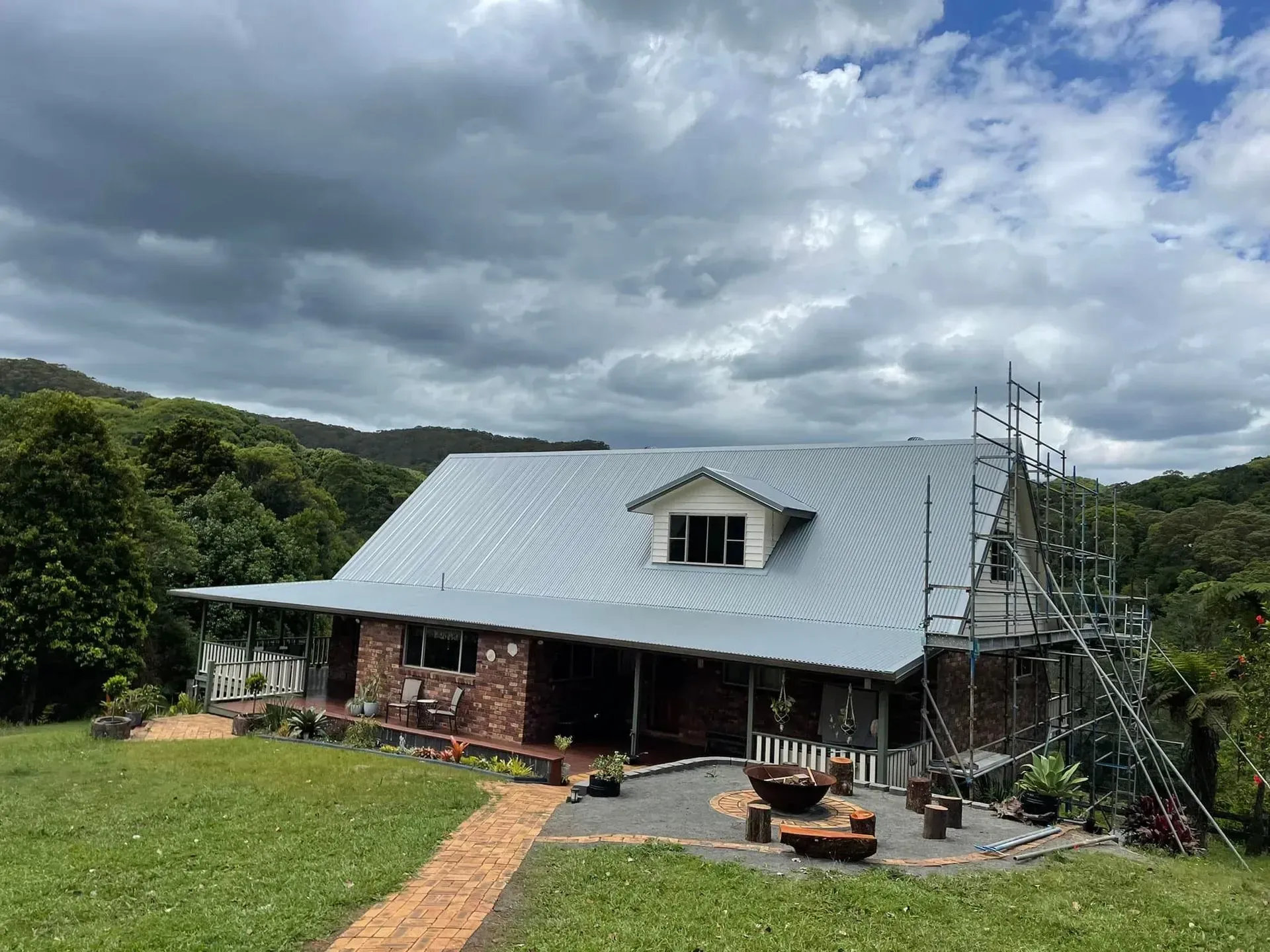
- Scaffold and edge protection go up. On day one, before anyone works on the roof. Expect a delivery of sheets and flashings, and sometimes a crane truck to lift the sheet packs up.
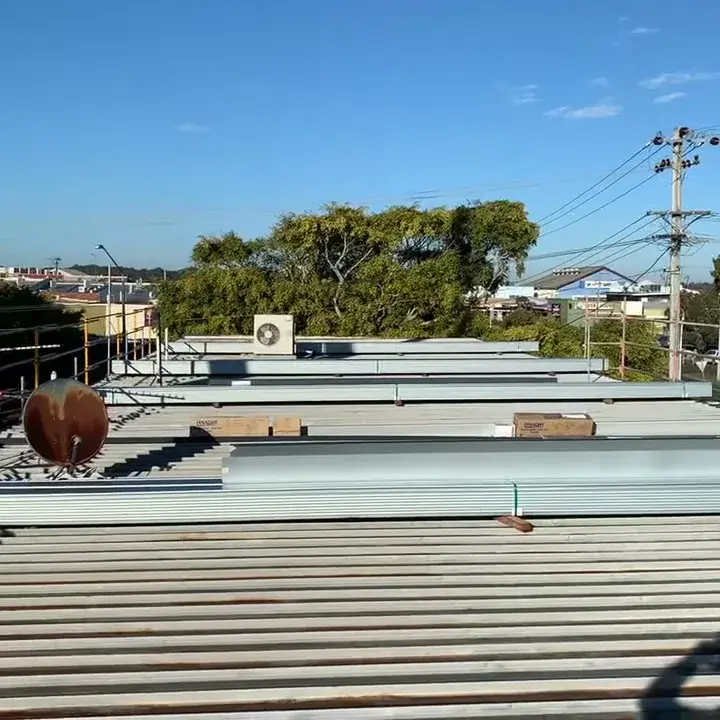
- The old roof comes off. The crew strips the old sheets or tiles back to the battens and takes the old material away. On a tile to metal conversion, the work is staged so the home is not left open overnight.
- Battens are checked and fixed. Loose, rotten or rusted battens are replaced. On a tile to metal conversion, new battens go on at metal spacings. Anything bigger, such as frame damage, is raised with you before it is covered.
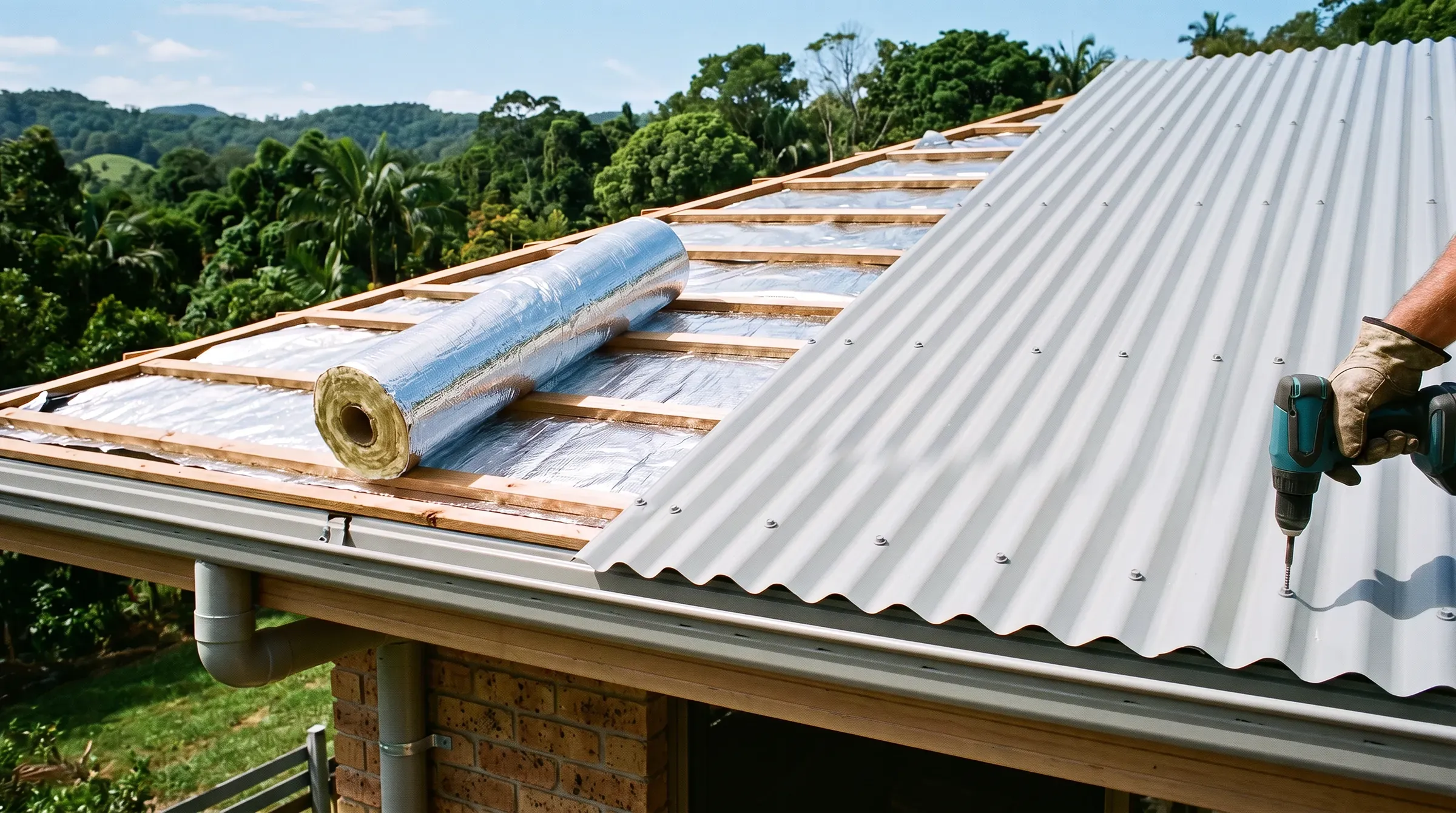
- Insulation goes down. The blanket, and sarking where specified, is rolled over the battens just ahead of the new sheets, trimmed clear of the gutter line.
- New sheets are fixed. Sheets are laid with the correct side laps and screwed down. Coastal homes get marine-grade materials and fixings to suit their exposure to salt.
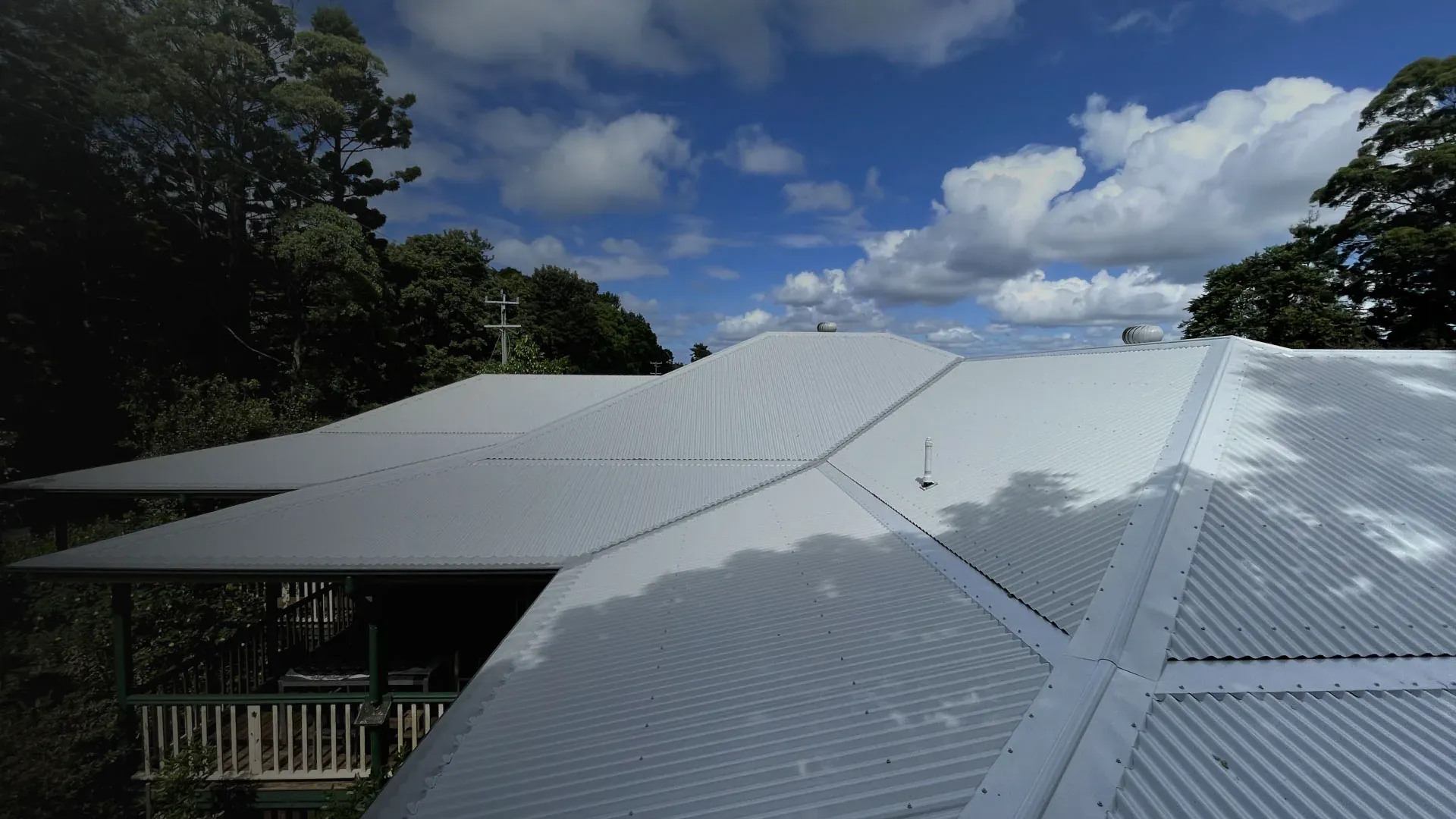
- Flashings, cappings and gutters are finished. Ridge and hip cappings, barge and apron flashings, and flashings around vents and skylights are fitted. New gutters usually go on now too.
- Clean-up and walk around. Including a magnetic sweep for screws and offcuts. Metal filings, called swarf, are cleared off the roof and out of the gutters, because they leave rust-like stains. The scaffold comes down after a final check with you.
Living at home during a re-roof
Most people stay home for the whole job. A few things make it easier.
- Noise. Stripping and screwing are loud through the working day. If you work from home, plan calls around it or work elsewhere while the old roof comes off.
- Dust. Old roofs hold decades of dust. Some can drop through downlights and the manhole while the roof is open, so cover anything valuable in the rooms below.
- Access. Keep the driveway clear on delivery days, and keep children and pets away from the scaffold.
- Walls. Vibration can shake pictures and mirrors loose on walls under the roof, so take them down until the job is finished.
- Neighbours. A quick word next door about deliveries and noise saves a lot of goodwill.
After the job
Keep the contract, quote and product details with your house records. BlueScope’s material warranties are subject to application and eligibility, so check how the warranty for your roof will be applied for, and keep the paperwork safe.
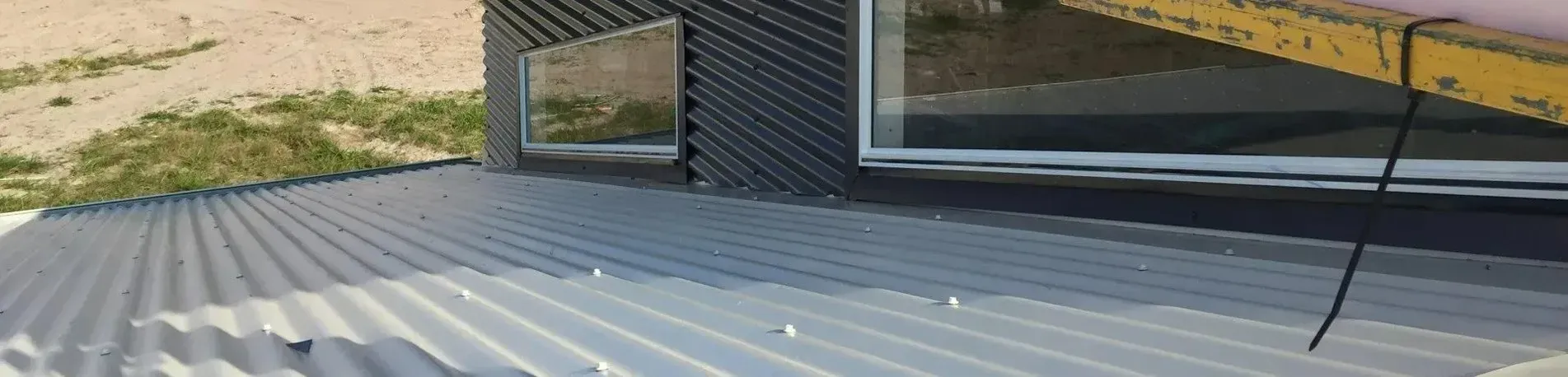
A new metal roof needs little looking after, but it is not nothing. BlueScope’s maintenance bulletin (TB-4) recommends washing areas that rain does not reach, such as under eaves and the undersides of gutters, at least every six months, and every three months near salt spray. Keep gutters clear of leaves, and have the roof checked after a big storm.
When you are ready to plan yours, every re-roof starts with an on-site look and a free itemised quote.
COLORBOND® is a registered trade mark of BlueScope Steel Limited.
Common questions
How long does a roof replacement take?
There is no single answer, because the size and pitch of the roof, access for scaffold, the condition of the battens and the weather all change it. A steep or two-storey roof, or a tile to metal conversion, takes longer than a simple single-storey re-roof. Your written quote sets out an expected timeline for your roof, and you should be kept updated if weather moves it.
Can I stay home during a re-roof?
Yes, most people stay in the house. Expect noise through the working day while old sheets come off and new screws go in, some dust in the roof space, and scaffold around the walls. Keep pets inside or away from the work, move cars off the driveway on delivery days, and take fragile things off walls in rooms under the roof.
What happens if it rains mid-job?
A wet roof is slippery and unsafe to work on, so work stops in rain and restarts once the roof has dried. Wet weather can push the finish date back. On a tile to metal conversion, Ricky Jenner Roofing stages the work so the home is not left open overnight. Whoever does your re-roof, ask how the roof will be kept weathertight if rain comes in mid-job.
Do I need to be home?
No, as long as the crew can get into the yard and there is room for the scaffold and material deliveries. It helps to be reachable by phone, especially on the first day and at the end for the final walk around. Mention locked gates, dogs and alarm sensors in the roof space before work starts, so nothing holds up day one.
What paperwork do I get at the end?
Keep the signed contract, the itemised quote it was based on, a note of what went on the roof (material, profile and colour) and the details of the BlueScope material warranty, which is subject to application and eligibility. In NSW, jobs over $20,000 also need a home building compensation certificate, which must be given to you before any deposit is taken.