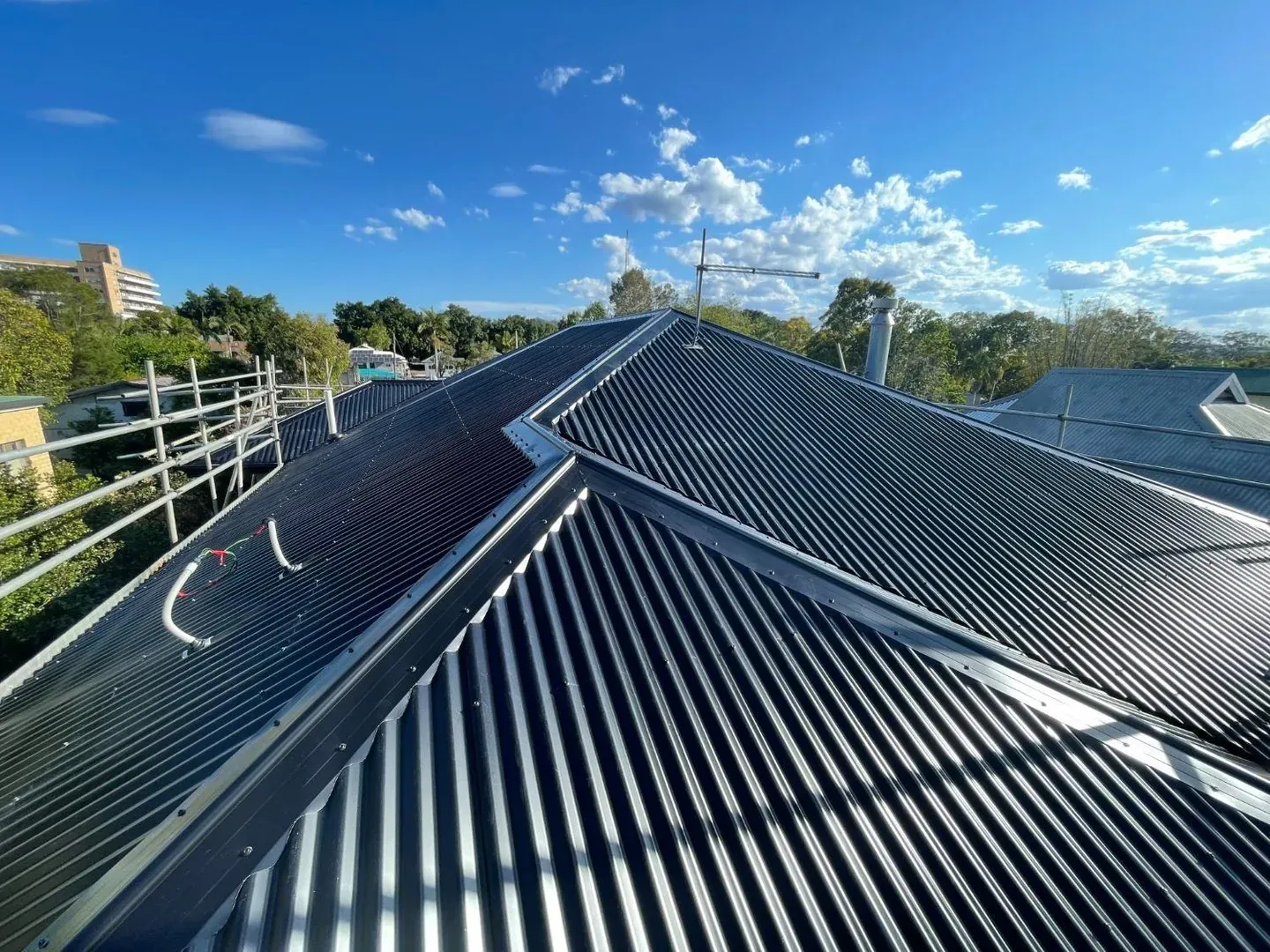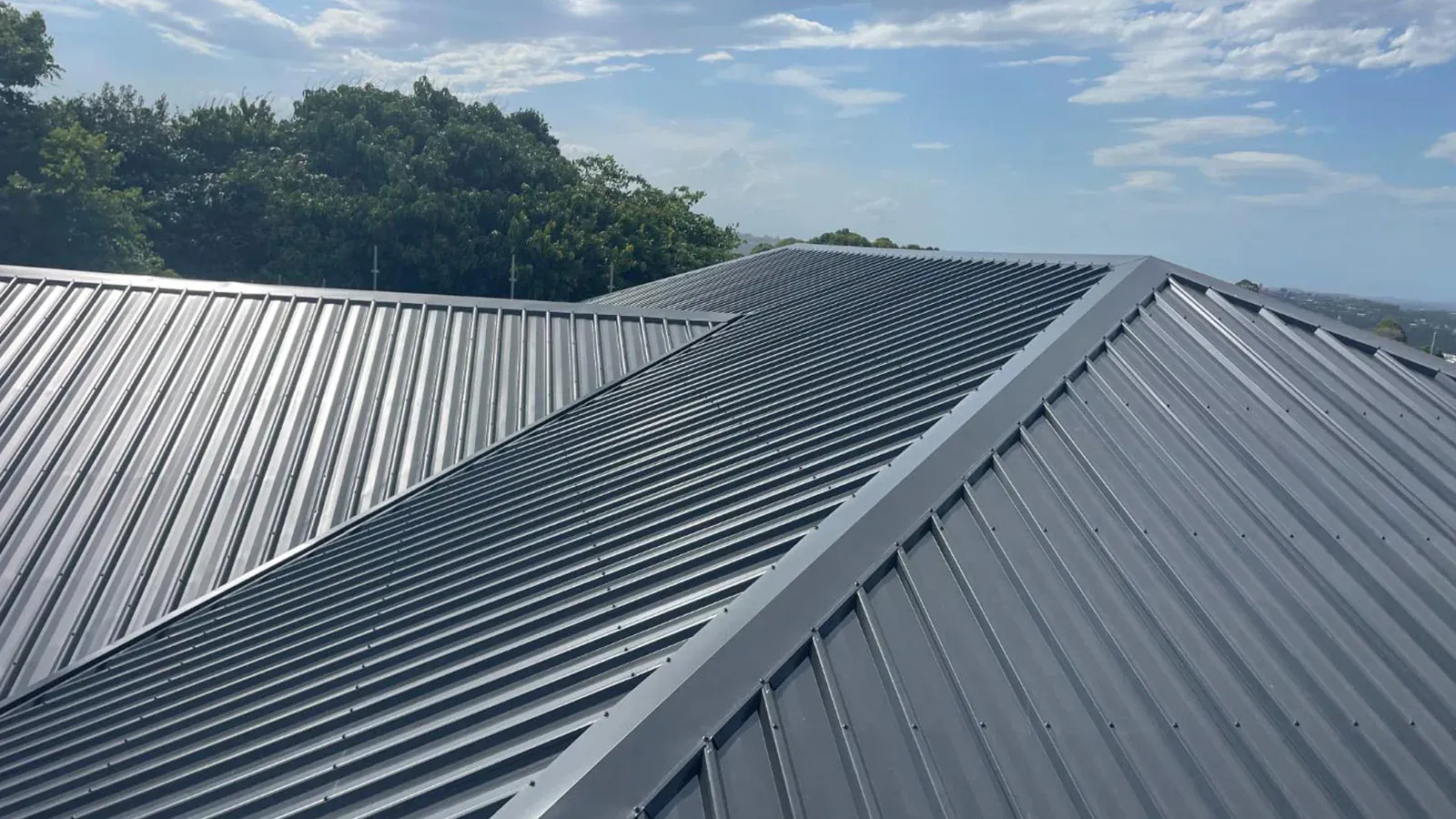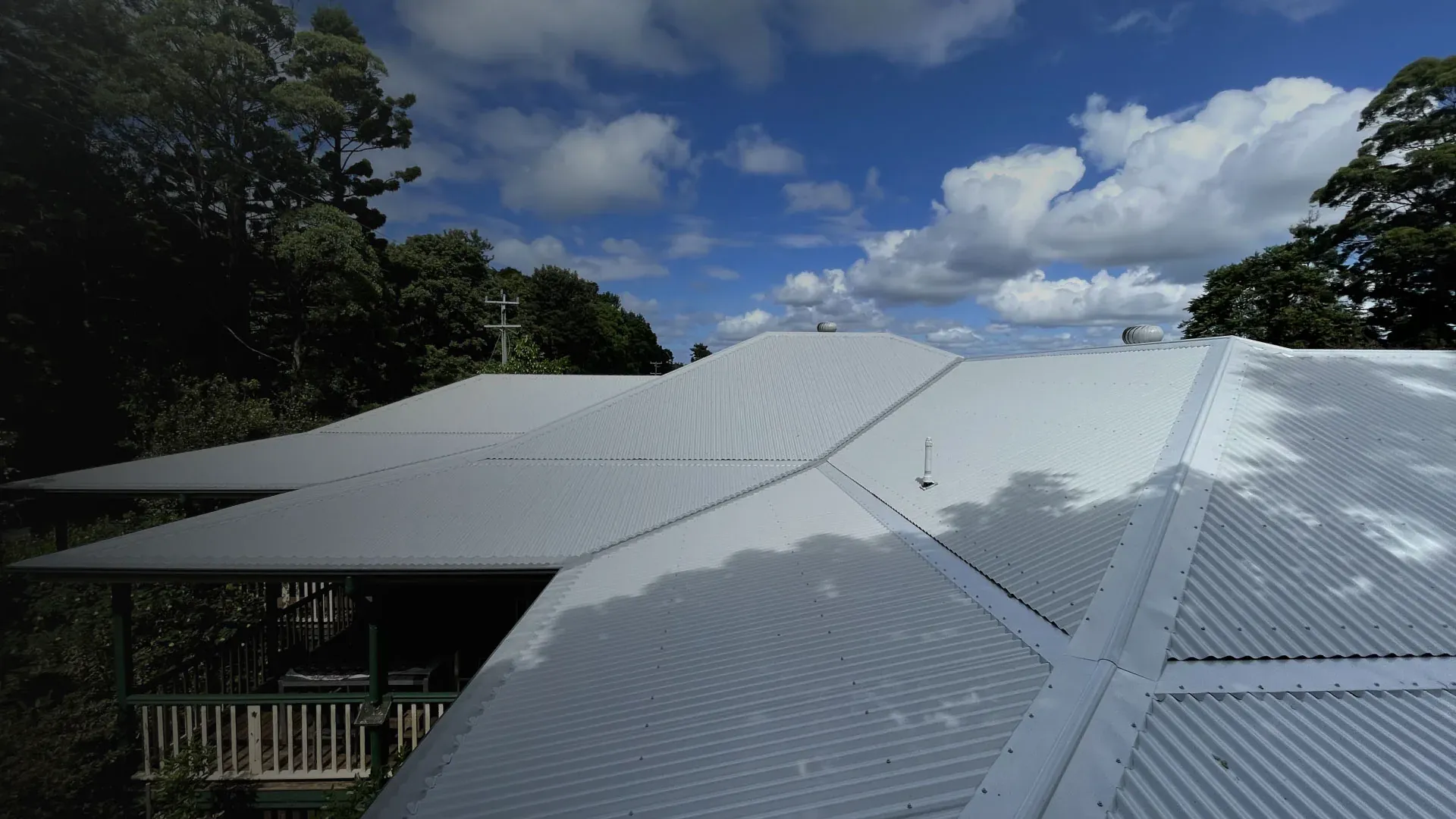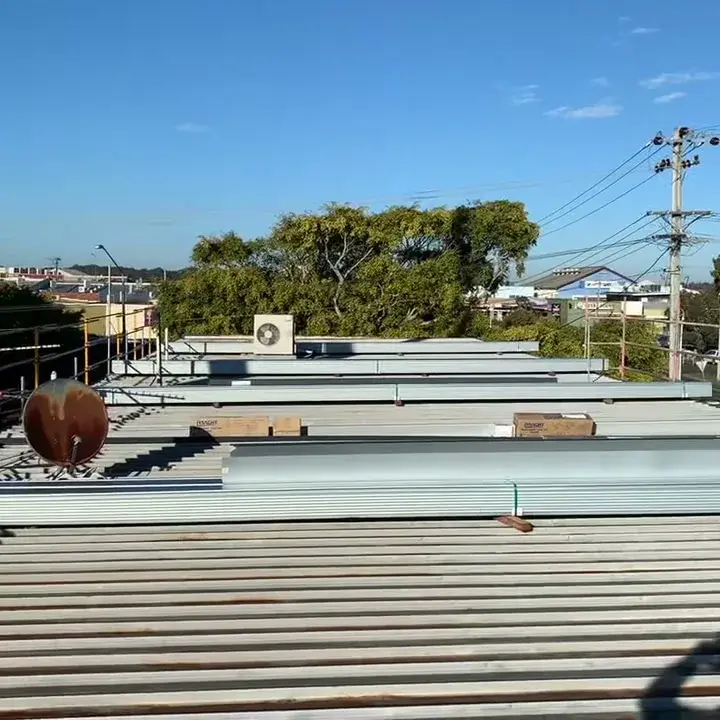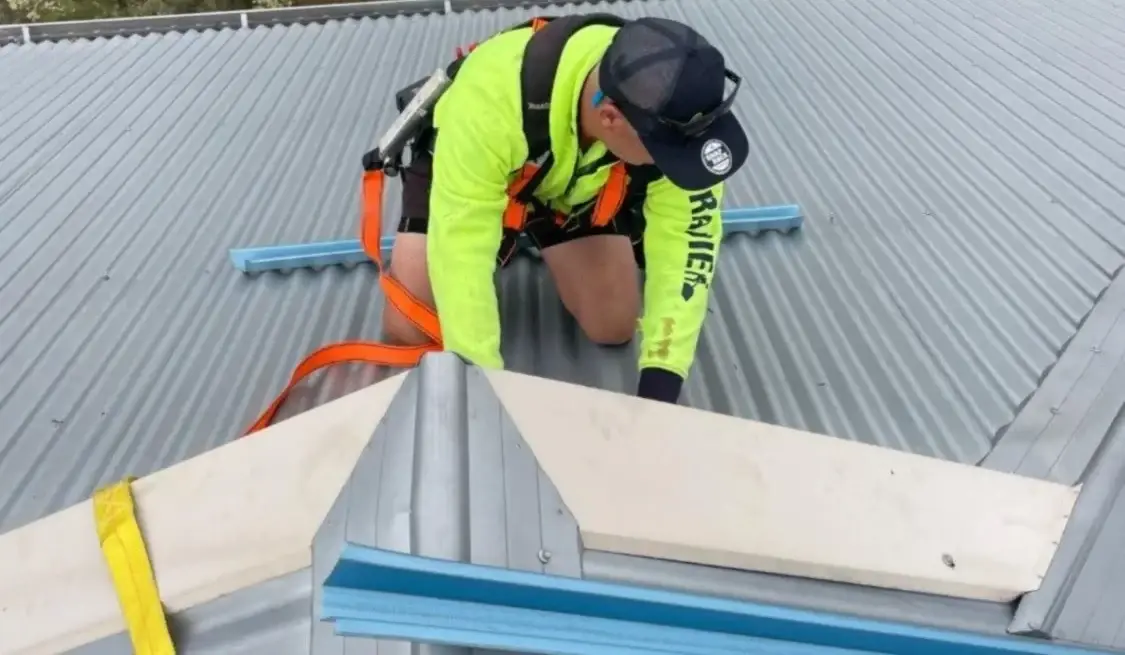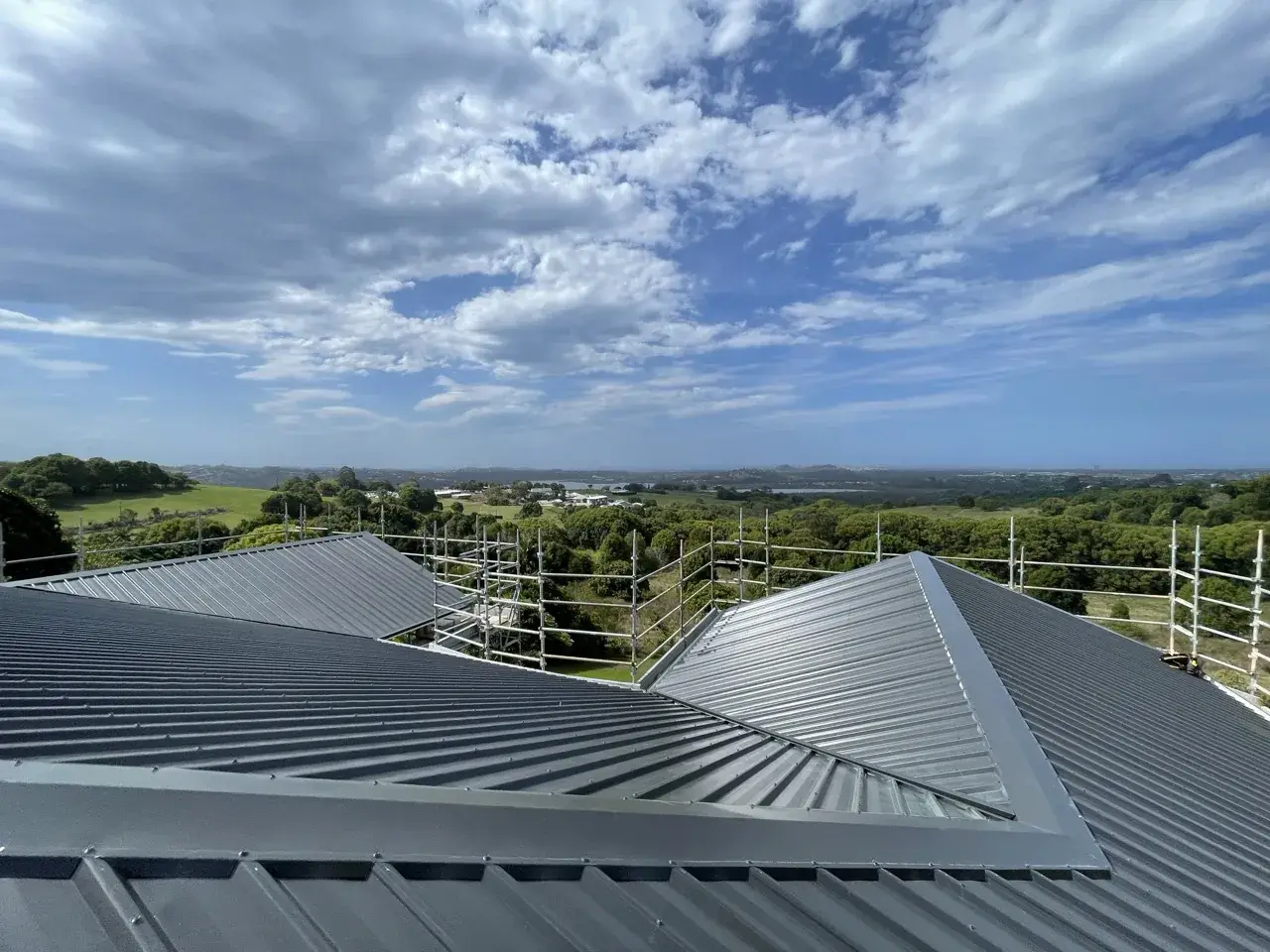
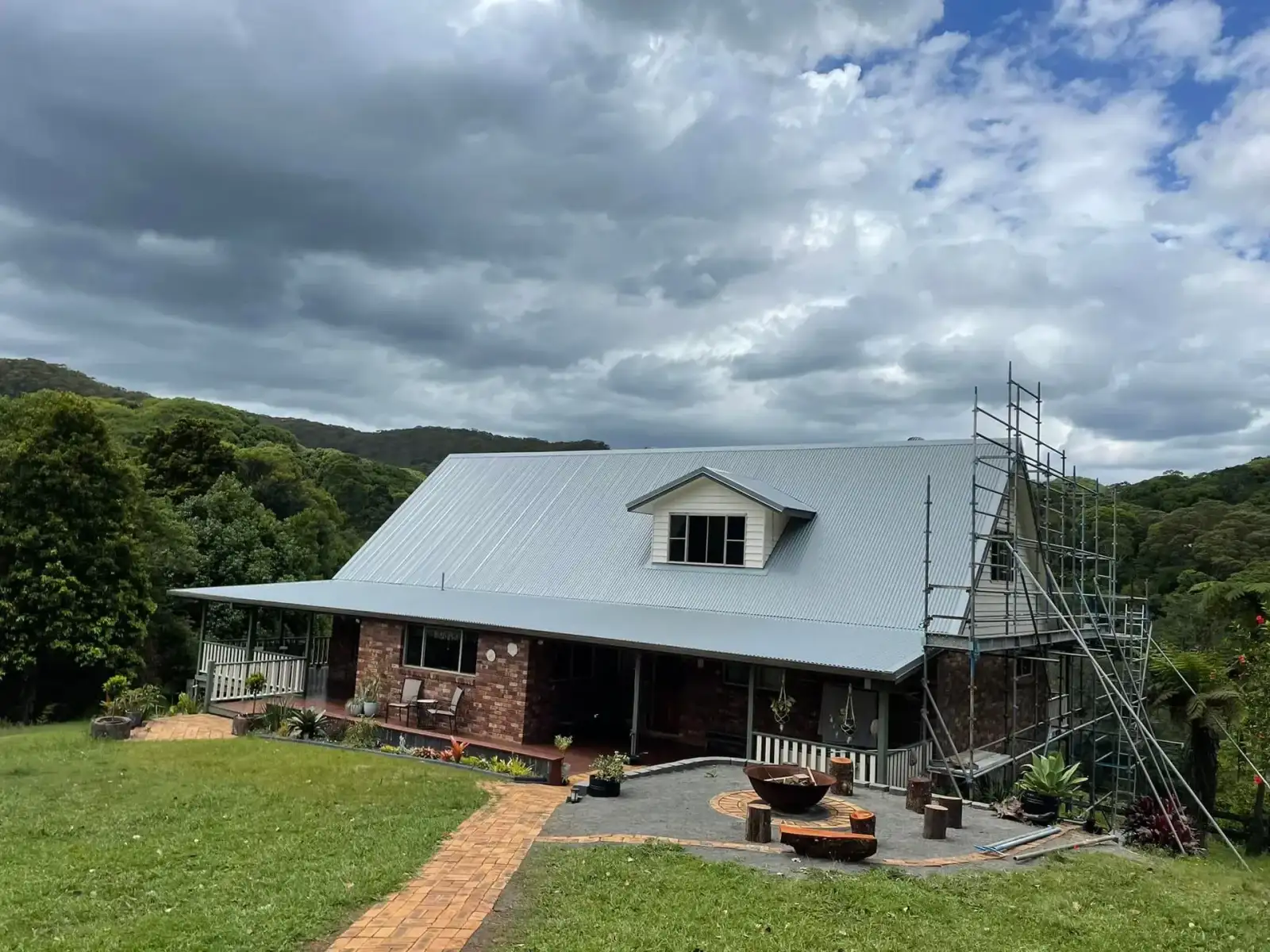
The best time of year for roof repair is simple: as soon as you find the problem. The best time to replace a roof in the Northern Rivers is late winter to early spring, when rain is usually lightest. Ricky Jenner Roofing repairs and replaces metal roofs across Ballina, Lismore, Byron Bay and the plateau from our base in Wollongbar, and this guide explains how to plan roof work around our weather.
Should a roof repair wait for the dry season?
No. A roof leak never fixes itself. Every storm pushes more water past the fault, and the damage spreads to battens, insulation and ceilings that were fine to begin with. A failed flashing or a few lifted screws is a small job. The same leak left for a wet season can mean new timber and a new ceiling as well.
Most roof repairs only need a dry spell, not a dry season, so there is rarely a good reason to put one off.
Re-roofs: plan around the wet months
A full roof replacement is different. The old roof comes off in sections, so the weather matters much more. Bureau of Meteorology averages for Ballina Airport show a clear pattern.
| Month | Mean rainfall, rain days (1 mm or more) |
|---|---|
| January | 167 mm, 10.4 days |
| February | 220 mm, 12.3 days |
| March | 232 mm, 14.6 days |
| April | 189 mm, 12.2 days |
| May | 165 mm, 12.2 days |
| June | 183 mm, 10.1 days |
| July | 110 mm, 8.5 days |
| August | 88 mm, 7.2 days |
| September | 71 mm, 6.0 days |
| October | 107 mm, 8.9 days |
| November | 118 mm, 9.4 days |
| December | 142 mm, 9.5 days |
Source: Bureau of Meteorology, Ballina Airport AWS, records from 1992. Figures rounded.
Lismore shows the same shape. At the Bureau’s long-running Lismore (Centre Street) station, February and March were the wettest months and August and September the driest. A re-roof booked for late winter or early spring usually loses the fewest days to rain.
How do rain, heat and wind affect a re-roof?
Roofs are not stripped and sheets are not laid in the rain. Wet steel is slippery, and an open roof lets water in. On a tile to metal conversion, the work is staged so the house is not left open overnight. A wet week in March simply means more lost days than a wet week in September. Our guide on what to expect during a re-roof walks through the stages.

Summer brings long, hot days on a metal roof and afternoon storms that can shut a site down. Strong wind also stops work, because large sheets act like sails. None of this rules summer out, but it makes spring the easier season to plan around.
Inspections and small jobs: late winter
The dry months are also the best time to find problems. A roof check in July or August, before storm season, gives you time to fix lifted screws, tired flashings and blocked gutters while the weather is settled. If the inspection shows the roof is near the end of its life, you still have the spring window to plan a replacement instead of reacting to a leak in February.
On the coast, many holiday rentals are busiest over summer and the school holidays, and shops have their own peak trading times. We stage work around bookings and trading hours where we can, and the quieter, drier months make that much easier to plan.
When does everyone else book roof work?
Across Australia, Google searches for roofers and roof repairs are highest in July and August and lowest in December (Google Trends, five years to September 2026). Locally, demand also jumps after big storms, when many roofs need attention at once.
So if you are planning a re-roof, it pays to book early: get your quote in autumn or winter, and ask for a likely start date at the same time. Before storm season, work through our storm season checklist to catch the small jobs as well.
Common questions
What is the best time of year for roof repair?
The best time for a roof repair is as soon as you find the problem. A leaking flashing or lifted screw lets in more water with every storm, and wet battens, insulation and ceilings cost more to fix than the original fault. Small repairs can be done in almost any dry spell, so there is rarely a reason to wait for a season.
What is the best time of year for roof replacement?
In the Northern Rivers, late winter and early spring are usually the best time. Bureau of Meteorology averages for Ballina Airport show August and September are the driest months, while February and March are the wettest. A re-roof in the drier months means fewer rain days lost and the new roof in place before the worst of storm season.
What is the best time to replace a roof?
Before it fails, and ideally in a dry stretch. Replace the roof when repairs stop holding: rust through the sheets, leaks in several places or a tiled roof that keeps cracking. Planning it for late winter or spring, rather than waiting for a leak in February, gives you more choice of start date and less weather risk.
Can roofing work be done in the rain?
Small make-safe work sometimes can, but roofs are not stripped and new sheets are not laid in the rain. Wet steel is slippery and an open roof lets water into the house. A wet day simply moves the job to the next dry one. On a tile to metal conversion, the work is staged so the house is not left open overnight.
How far ahead should I book a re-roof?
Ask for a quote as soon as you know the roof is near the end of its life, and ask for a likely start date at the same time. Lead times change through the year and after big storms, when repair work jumps. If you want the new roof on before storm season, get your quote in winter.