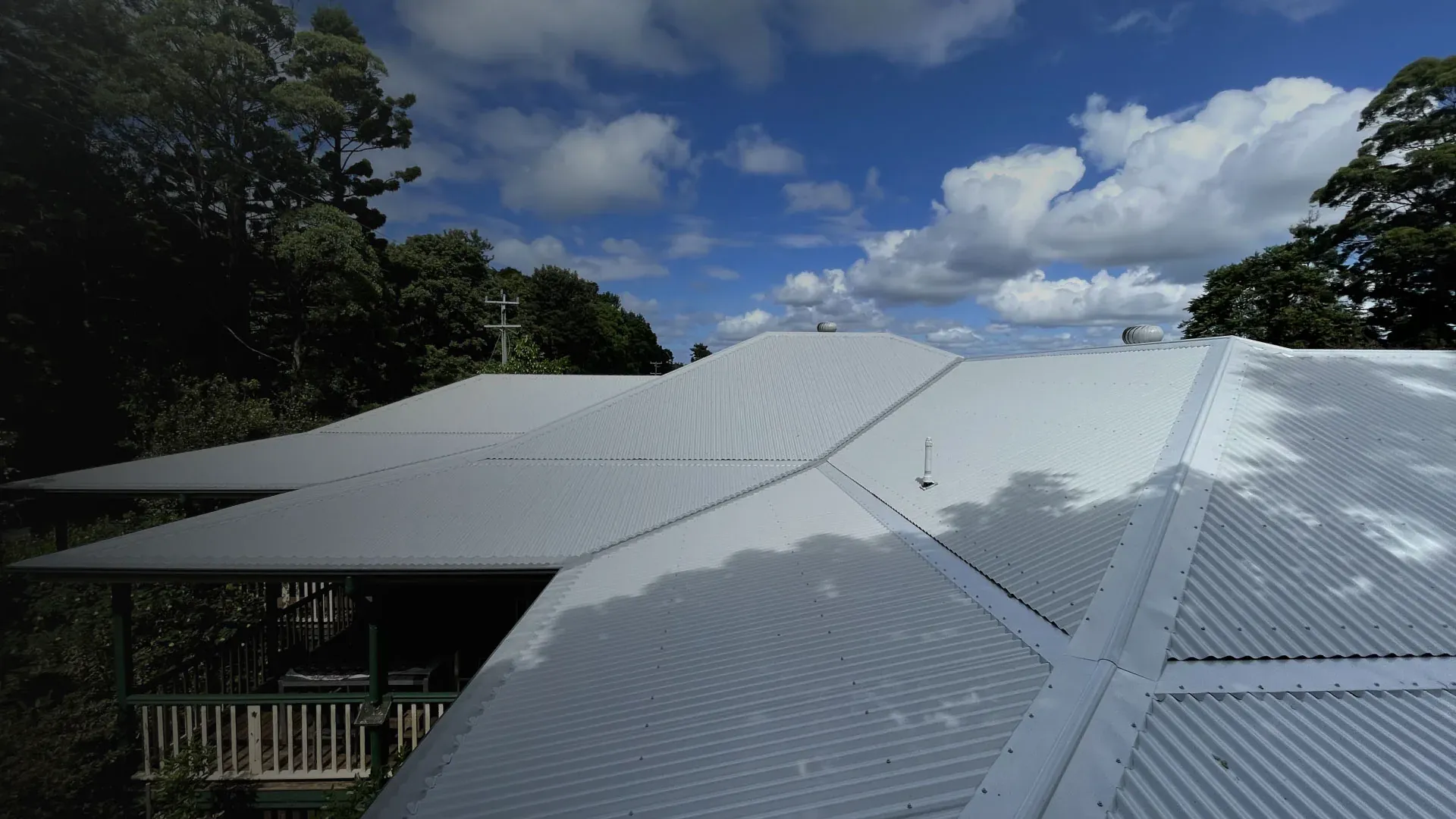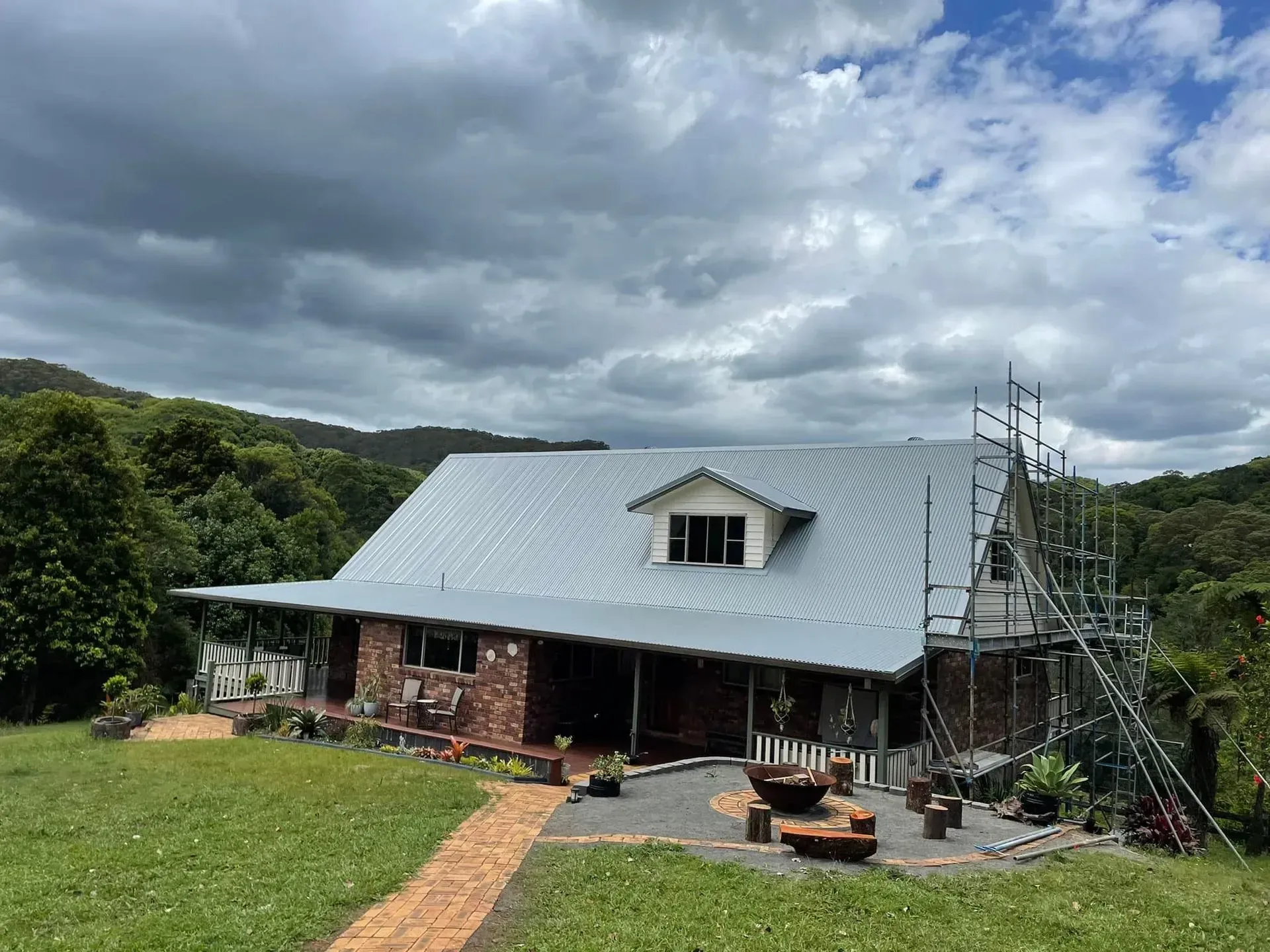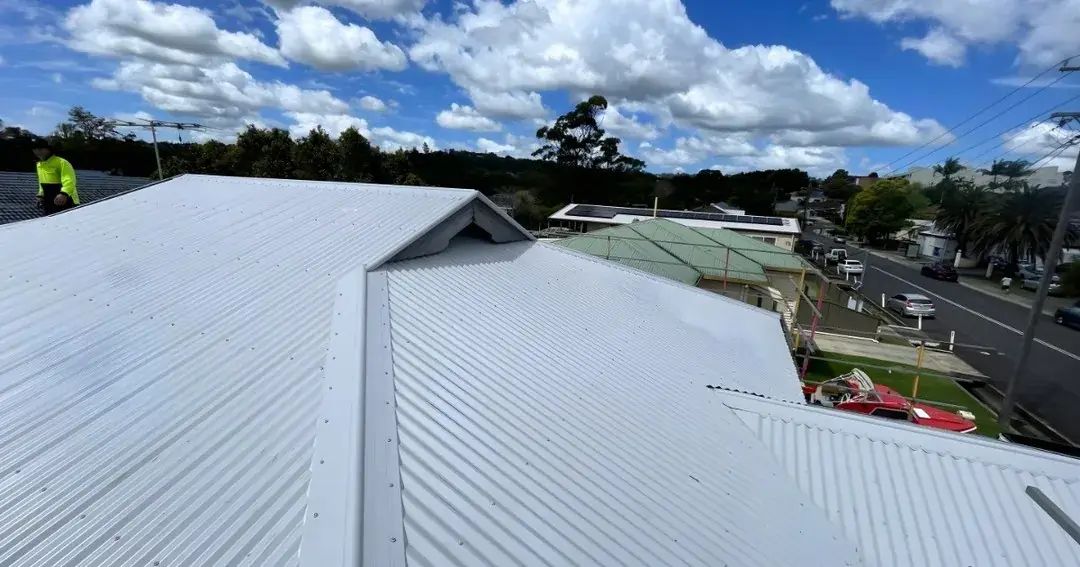
Getting a Northern Rivers home ready for storm season is simple: clear gutters and downpipes, trim overhanging branches, secure anything loose and fix small roof faults before September. Ricky Jenner Roofing works on roofs and gutters across Ballina, Lismore, Byron Bay and the plateau from our base in Wollongbar, and this is the checklist we would give our own family.
When do storms hit the Northern Rivers?
NSW SES says storm season in NSW runs from September to April, and major storms can happen at any time of year. Rain follows a similar pattern. At the Bureau of Meteorology’s Ballina Airport station, February and March are the wettest months on average and September is the driest (BoM climate statistics).
Big storms here do not follow the calendar neatly. They arrive as events, sometimes in spring, sometimes in the middle of the wet. So the aim is to have the roof and gutters ready by September, then keep an eye on them after each storm. You can do every check below from the ground.
Checklist: gutters and downpipes
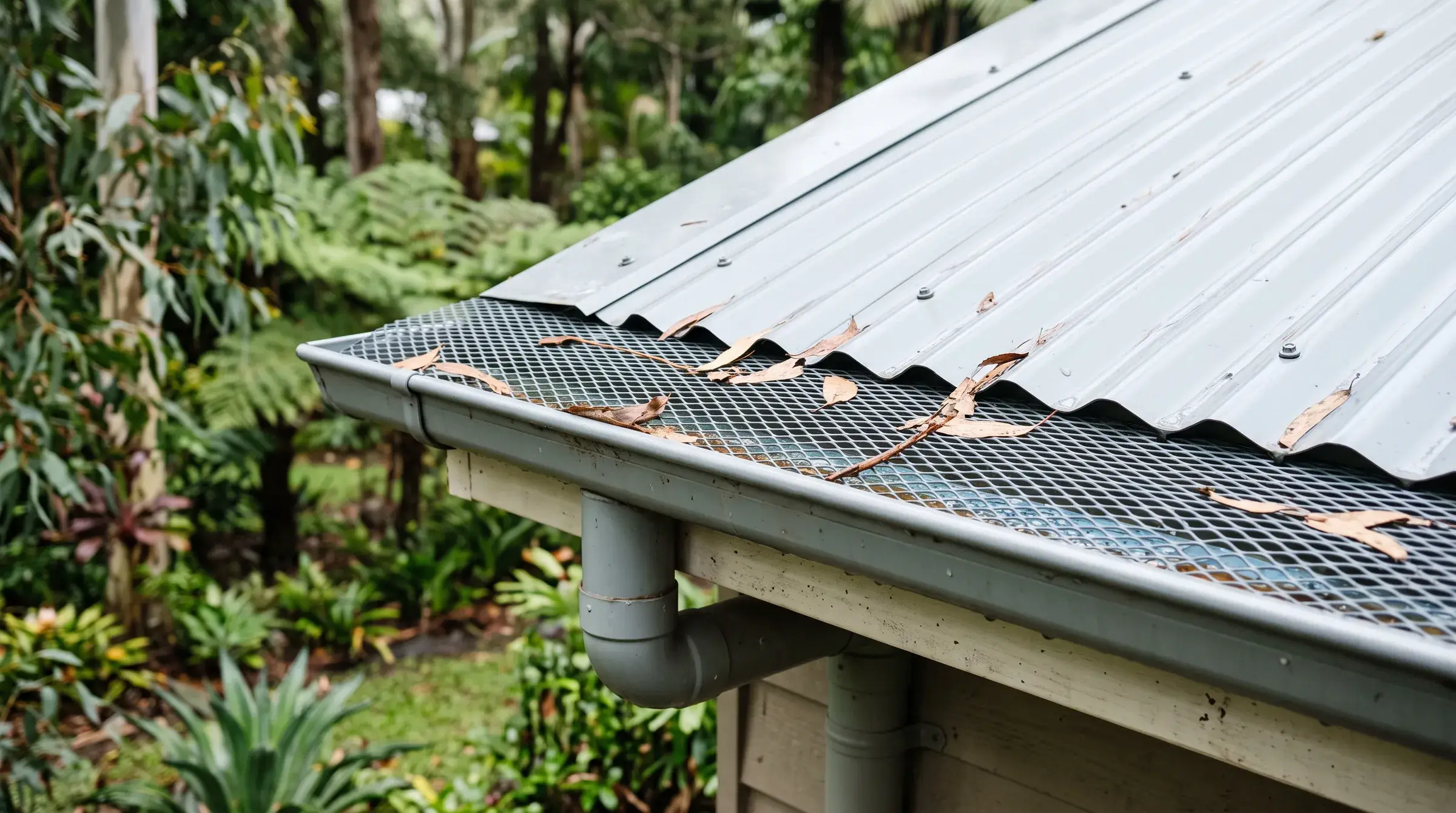
- Clear leaves and silt from gutters, valleys and downpipe outlets. NSW SES lists this as one of the first steps.
- Check downpipes are connected and water drains away from the house, not against the slab or walls.
- Look for gutters that sag, have lost their fall or are pulling away from the fascia. Gutter repairs are much easier in dry weather than during a downpour.
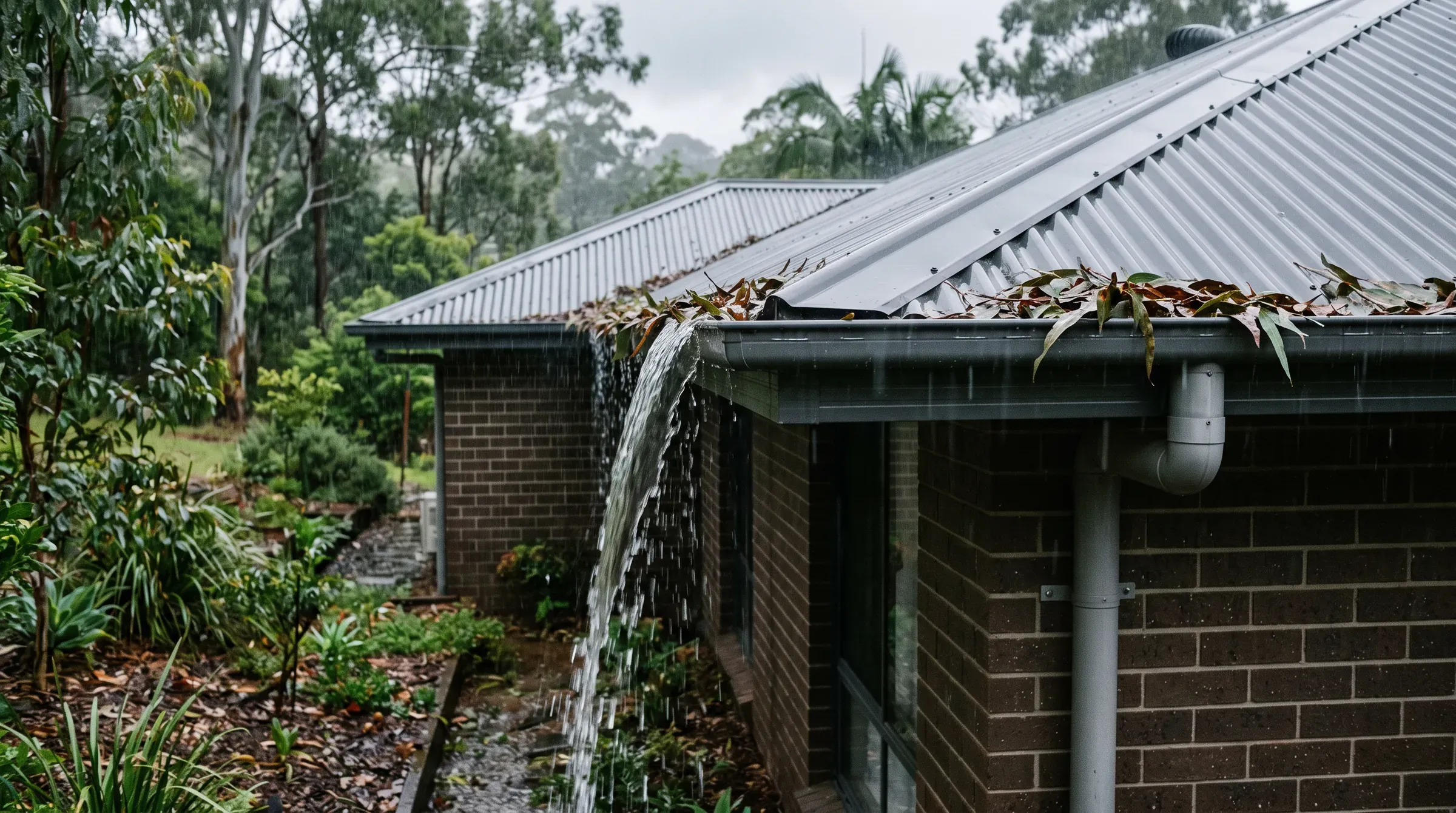
A gutter packed with leaves spills over in the first heavy storm, often into the eaves and walls rather than over the front edge.
Checklist: the roof itself
Stand back where you can see the roof, and use binoculars if you have them.
- Sheets and fixings. Look for lifted sheet edges, missing screws or rust streaks running down from fixings.
- Ridge and hip cappings. They should sit straight and tight. Cracked mortar on a tiled roof, or a capping lifted at the end of a metal roof, is a weak point in wind.
- Tiles. Broken, slipped or missing tiles let wind-driven rain straight in. NSW SES advises fixing broken or missing tiles and any leaks before storms.
- Flashings. Check where the roof meets walls, chimneys and skylights. Flashings pulling away or dried-out sealant are common leak points.
- Anything on the roof. Whirlybirds, antennas, solar hot water and skylights all need to be fixed down and sealed.
Checklist: trees, the yard and your paperwork
- Trim branches that overhang the roof or could fall on the house. Use an arborist for big trees.
- Tie down or put away outdoor furniture, trampolines, bins and anything else the wind could throw at the roof or windows.
- Know where your electrical switchboard and water main are.
- Save the key numbers: NSW SES 132 500 for storm and flood help, Essential Energy 13 20 80 for fallen power lines, and 000 if anyone is in danger.
- Read your home insurance policy for storm, rainwater and maintenance terms, so there are no surprises at claim time.
Book a pre-storm roof inspection
A lot of storm damage starts at a fault that was already there: a loose capping, a lifted screw, a flashing that had started to pull away. A pre-storm roof inspection finds those while the weather is calm and a fix is small. Late winter and early spring are the easiest time to do it, which our guide to the best time for roof work covers in more detail.
For the rest of the year, our roof maintenance guide lists what to check and how often.
Do gutter guards help in storms?
On leafy blocks, yes. Gutter guards keep leaves out of the gutter, so outlets and downpipes stay clear when a storm arrives. They do not fix a gutter that is too small or has lost its fall, and they still need an occasional clean, but they cut down how often gutters block.
After a storm passes
Once it is safe, walk around the house and look for damage from the ground. Stay off the roof: it is wet, slippery and may be loose. If the roof is damaged or leaking, call NSW SES on 132 500 for temporary help, then your insurer.
Our guide on what to do after a storm covers the first steps, photos for your insurer and when to call a roofer. For lifted sheets, leaks or damaged flashings, see our storm damage repairs page.
Common questions
When is storm season in the Northern Rivers?
NSW SES says storm season in NSW runs from September to April, although major storms can happen at any time of year. Around Ballina, Bureau of Meteorology averages put the heaviest rain in February and March. In practice, storms here are event-driven, so the safest approach is to have the roof and gutters ready by September.
How do I prepare my roof for a storm?
Clear gutters, valleys and downpipes, and check that downpipes drain away from the house. Trim branches that hang over the roof. Look from the ground for lifted sheets, loose cappings, broken tiles and flashings pulling away from walls, and have them fixed while the weather is calm. Finally, tie down or store anything the wind could throw.
Should I clean my gutters before storm season?
Yes. NSW SES lists clearing gutters, downpipes and drains as one of the first steps to prepare for storms. Blocked gutters overflow in heavy rain and can push water into the eaves and walls. If your block is leafy, do it in late winter and again after heavy leaf drop, and consider gutter guards to slow the build-up.
When should I book a roof inspection?
The best time is late winter or early spring, before storm season starts in September and while the weather is usually drier. That leaves time to fix any faults before the first big storm. After a severe storm, book another check, because lifted screws and flashings often do not leak until the next heavy rain.