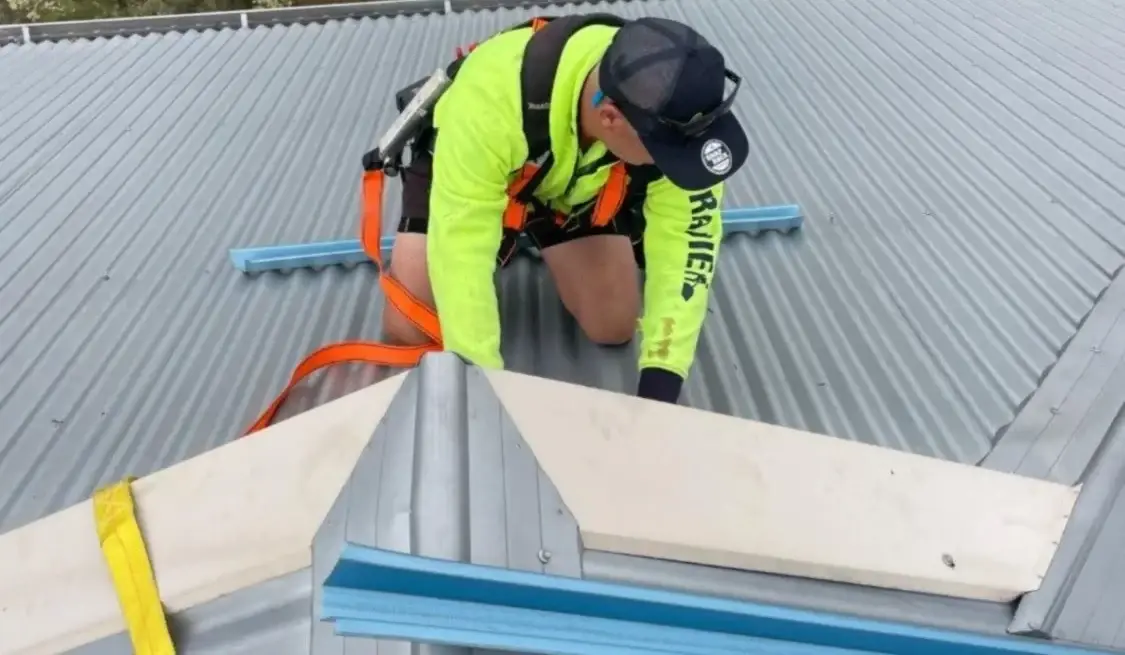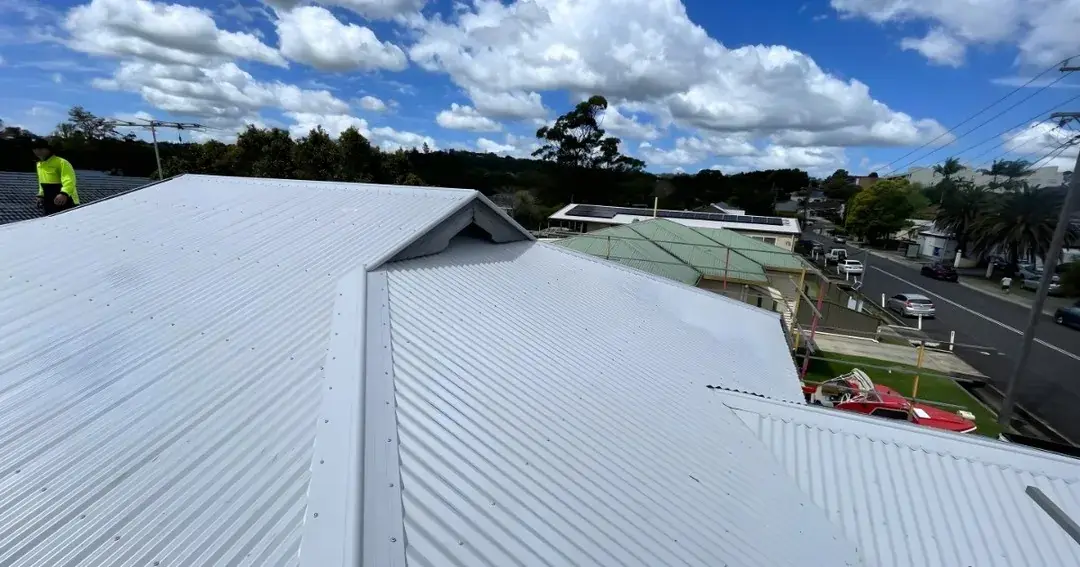

In a storm or roof leak emergency, the order matters: people first, then the inside of the house, then evidence for your insurer, then the repair. Ricky Jenner Roofing repairs storm-damaged roofs across the Northern Rivers from our base in Wollongbar, and these are the five things we would want any family in Ballina, Lismore or Byron Bay to do first.
1. Get everyone safe
If anyone is trapped or injured, call 000. Then check the house:
- Keep out of rooms with a sagging or bulging ceiling. It is holding water and can collapse.
- Keep away from wet electrics. If water is coming through near light fittings, fans or power points, do not touch them. Switch off at the switchboard only if you can reach it safely and dry, and have an electrician check it before the power goes back on.
- Treat fallen power lines as live. NSW SES advises staying at least 8 metres clear. In the Northern Rivers, report them to Essential Energy on 13 20 80, or call 000 if someone is in danger.
- Stay away from fallen trees and branches resting on the house or the roof.
2. Stay off the roof
This is the one people get wrong. After a storm, a roof is wet, slippery and possibly loose. Lifted sheets can move underfoot, tiles can be cracked where you cannot see it, and a branch on the roof can hide weakened framing or a live power line. NSW SES advises staying clear, and indoors, if a tree or large branch has hit your roof, even when there is no obvious damage. So do not climb up with a tarp.
3. Protect the inside of the house
While you wait, limit the water damage indoors:
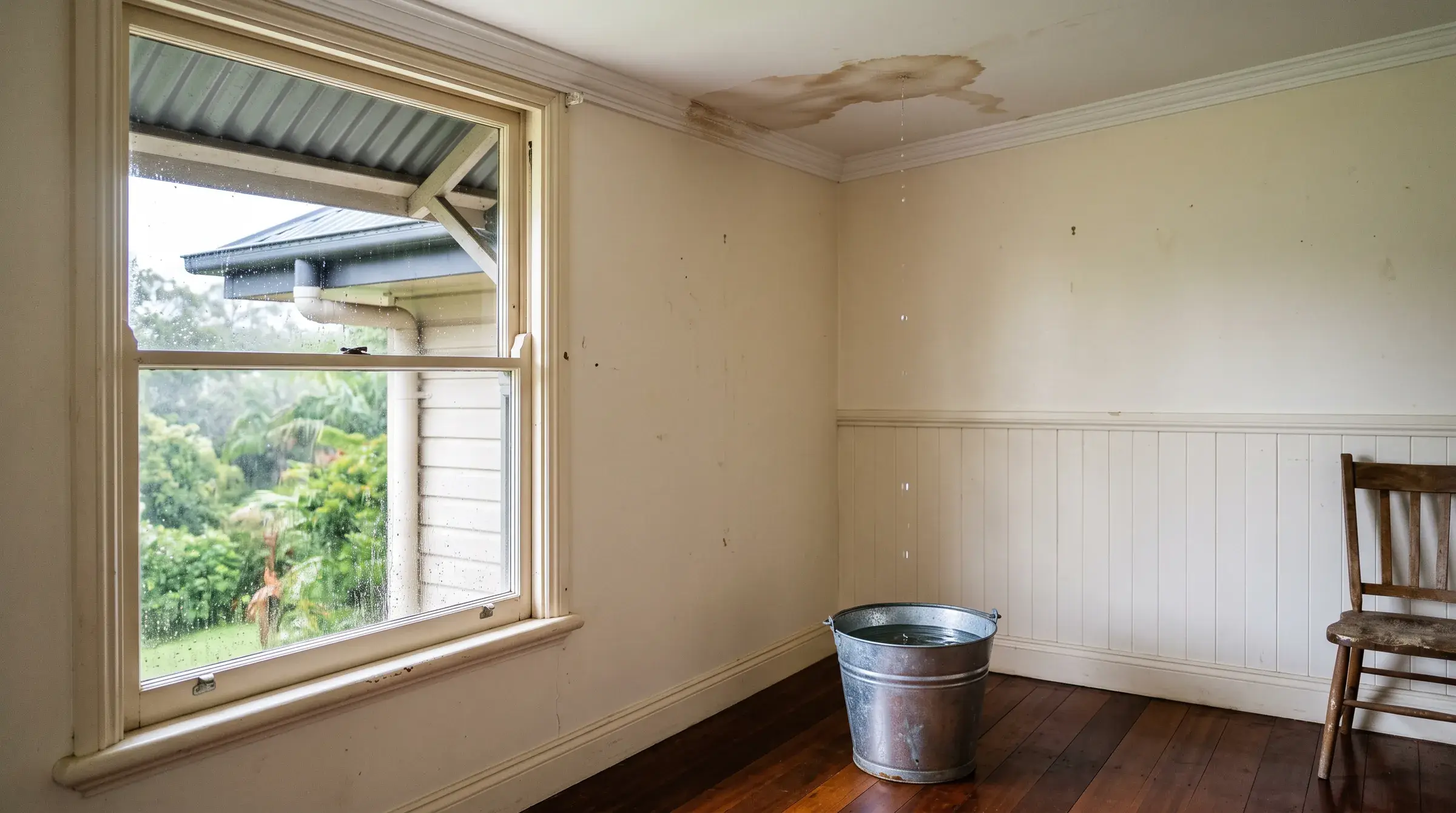
- Put buckets, tubs and towels under drips.
- Move furniture, rugs, electronics and paperwork out of the wet rooms.
These steps are also what insurers expect. Most policies ask you to take reasonable steps to stop further damage, and the Financial Rights Legal Centre suggests keeping before and after photos, and receipts for anything you spend.
4. Photograph everything and call your insurer
Before you clean up, record the damage. The Insurance Council of Australia recommends photos and video before any clean-up, a list of damaged items with brand, model and serial number, and keeping damaged items unless they are a health risk. Good storm photos include:
- wide shots of each room, then close-ups of stains, drips and damaged contents
- the outside of the house from the ground: lifted sheets, missing tiles, bent gutters, fallen branches
- the date and time, which your phone records automatically
Then call your insurer to lodge the claim. Ask how they handle make-safe work, and whether you need their permission before booking a repair. The Insurance Council advises getting that permission in writing, because unauthorised building work may not be covered. This is general information, not insurance advice.
5. Call a licensed roof plumber for the permanent repair
Once the storm has passed and the roof is dry, get the damage properly assessed. Before you hire anyone:
- Check the licence. In NSW, roof plumbing covers gutters, downpipes, flashings and roof coverings, and work over $5,000 needs a licensed contractor. Look the licence up on the NSW Government licence check.
- Be wary of door knockers. Anyone going street to street after a storm offering a cash deal deserves a second look.
- Get it in writing. An itemised written quote is what your insurer will want to see.
Ricky Jenner Roofing holds NSW contractor licence 389777C, including the Roof Plumber class. We treat active leaks and storm damage as a priority and do emergency roof repairs and permanent roof repairs across the Northern Rivers, Monday to Friday, 7am to 4pm. We inspect the roof, show you what we found and give you a free, itemised written quote that you can pass to your insurer.
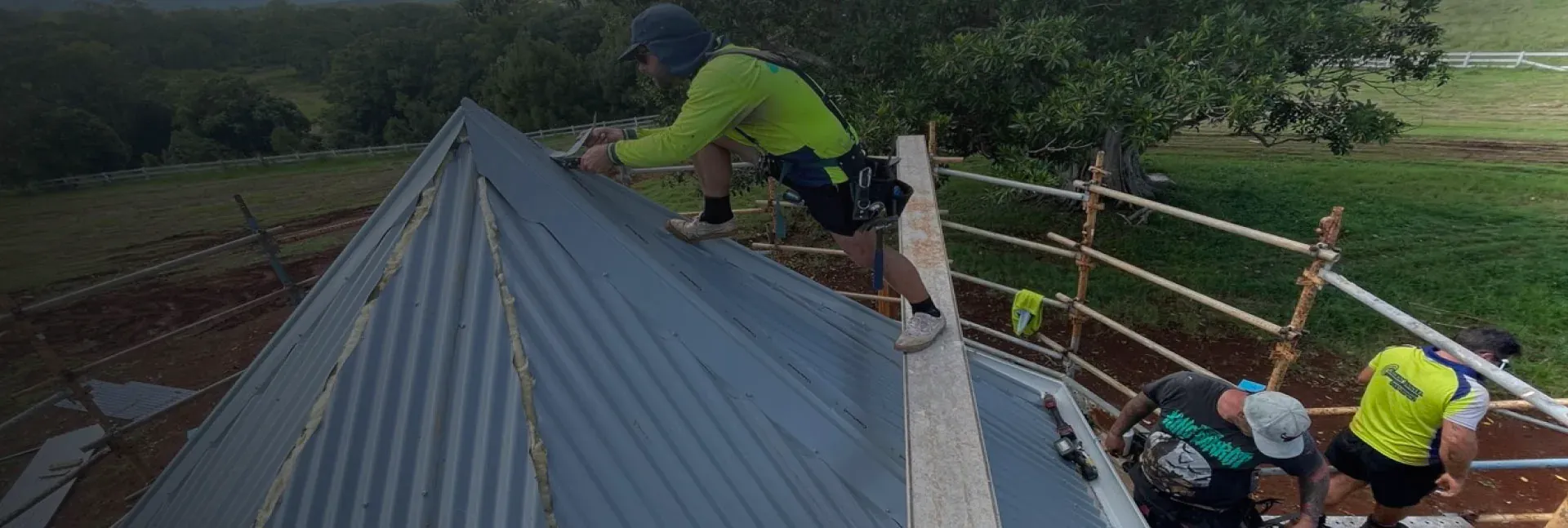
Why is a tarp only a stopgap?
A tarp keeps rain out for days, not months. Wind works it loose, water pools in it, and the sandbags or ropes holding it down can damage the roof underneath. Once a roof has been made safe, book the proper repair soon, before the next storm finds the same weak spot.
After the storm: get the roof checked
Some storm damage does not show until the next heavy rain. Lifted screws, a flashing pulled away from a wall or a cracked ridge cap can all leak weeks later. A post-storm roof inspection finds these while they are small.
If a leak appears later, our guide to why roofs leak explains the likely causes. Before the next season starts, work through our storm season checklist: clear gutters, trim branches and fix small faults while the weather is calm.
Common questions
Should I get on the roof after a storm?
No. A wet roof is slippery, storm damage can leave sheets loose and framing weakened, and fallen branches may be resting on power lines. NSW SES advises staying clear of a roof that has been hit by a tree, even if you cannot see damage. Look from the ground, take photos and let SES or a roof plumber go up.
Should I tarp my roof?
Leave it to someone with the right gear. Tarping means working at height on a wet, damaged roof, often in wind. If your roof is damaged or leaking in a storm, call NSW SES on 132 500, whose volunteers provide temporary help to keep homes safe. For the permanent repair, contact your insurer or a licensed roof plumber once the weather clears.
Does home insurance cover roof leaks?
It depends on the policy and the cause. Sudden storm damage is often covered, but insurers can refuse claims where wear and tear, gradual deterioration or lack of maintenance was a significant cause. Read the storm and water sections of your policy, and ask your insurer directly. This guide is general information, not insurance advice.
What photos should I take for my insurer?
Take wide shots of each damaged area, then close-ups. Photograph ceiling stains, water on floors, damaged furniture and anything you can see on the roof from the ground, such as lifted sheets or a fallen branch. Video helps too. Do it before you clean up, list damaged items with brand and model, and keep receipts for anything you spend.
Who should I call first: my insurer or a roofer?
If the roof is open or water is pouring in, call NSW SES on 132 500 first to make it safe. Then call your insurer to lodge the claim and ask how they handle repairs. The Insurance Council of Australia advises getting your insurer's permission in writing before authorising building work. A roof plumber can then inspect and quote the permanent repair.