If your roof is leaking, the water almost always gets in at a join, a fixing or a blocked drain, not through the middle of a sheet. Ricky Jenner Roofing repairs leaking roofs across Ballina, Lismore, Byron Bay and the rest of the Northern Rivers from our base in Wollongbar. This guide covers the common causes, what to do in the first hour and when to call a licensed roof plumber.
What should you do when the roof starts leaking?
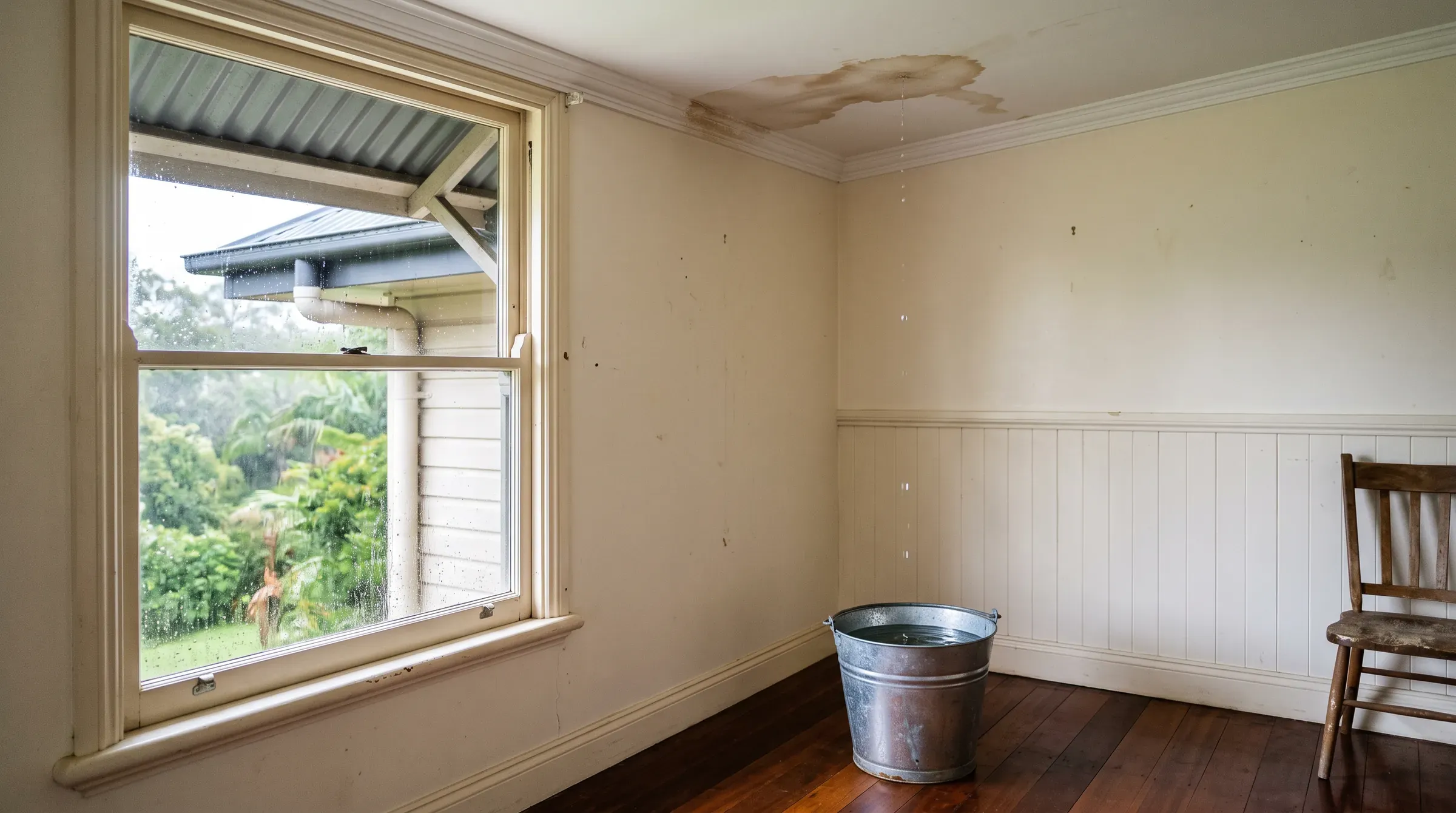
If water is coming through the ceiling, deal with the inside first. The roof can wait until it is dry and safe.
- Catch the water. Put a bucket or tub under the drip and towels around it. Move furniture, rugs and electronics out of the way.
- Keep clear of wet electrics. If water is running near a light fitting, fan or power point, do not touch it. Switch off at the switchboard only if you can reach it safely with dry hands, and have an electrician check it before you switch back on.
- Stay out from under a sagging ceiling. A ceiling that bulges is holding water and can come down.
- Take photos. Photograph the stain, the drip and anything damaged, inside and out, before you clean up. Your insurer and your roofer will both want them.
- Stay off the roof. Wet steel and tiles are slippery, and storm damage can hide loose sheets. Look from the ground instead.
- Get help if a storm did it. NSW SES on 132 500 can help make a storm-damaged roof safe. Our guide on what to do in a storm goes through it step by step.
What are the common causes of a roof leak?
Most leaks come from the same short list of places, and nearly all of them are joins, fixings or drains.
| Cause | What goes wrong |
|---|---|
| Flashings | The metal strips that seal walls, chimneys, skylights and pipes lift in wind, lose their sealant or were never turned up far enough. |
| Screws and fixings | Sealing washers perish in the sun, and screws back out or rust. Water runs down the screw into the roof space. |
| Ridge and hip cappings | Mortar under tiled ridge caps cracks and falls away. Metal cappings lift at the ends or lose fixings in strong wind. |
| Cracked or slipped tiles | One cracked tile lets water onto the sarking or into the ceiling. Tiles also break when people walk on them. |
| Rust through old sheets | Older metal rusts through first at sheet laps, around fixings and along the low edge where water sits. |
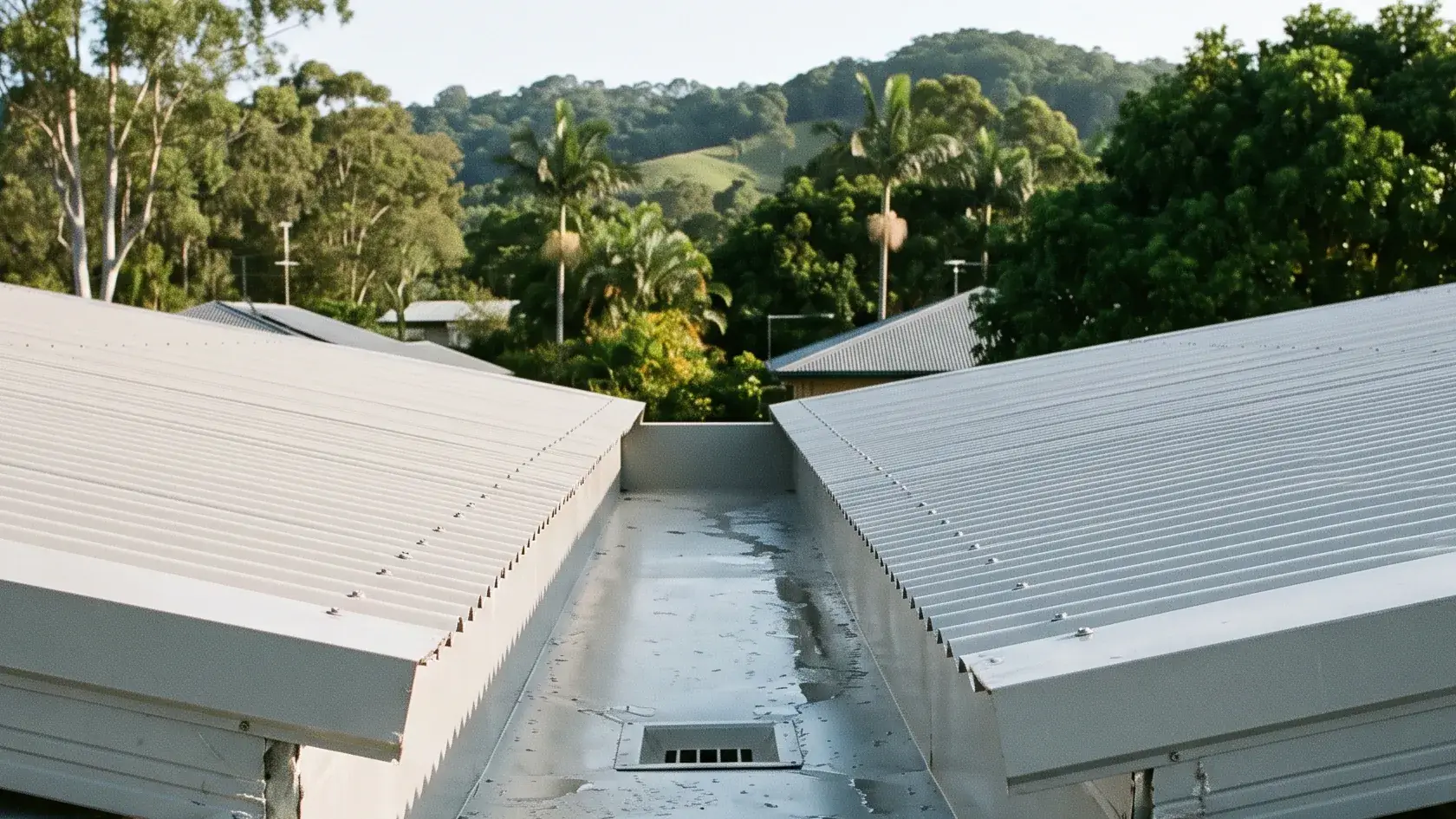
| Gutters, valleys, box gutters | Leaves and silt block the flow, so water backs up over the back edge into the eaves, the walls or the building. |
| Penetrations | Skylights, flues, solar hot water, antennas and whirlybirds each rely on a flashing that ages faster than the roof. |
| Condensation | Warm, moist air meets the cold underside of a metal roof and drips on cool mornings, even without rain. |
For a flashing, the lasting fix is a new, correctly folded flashing, not more sealant over the old one. That is work for flashing repairs by a roof plumber. Condensation is different again: sarking or an insulation blanket under the sheets reduces it, as the ABCB condensation handbook explains.
Where does the water show up, and why?
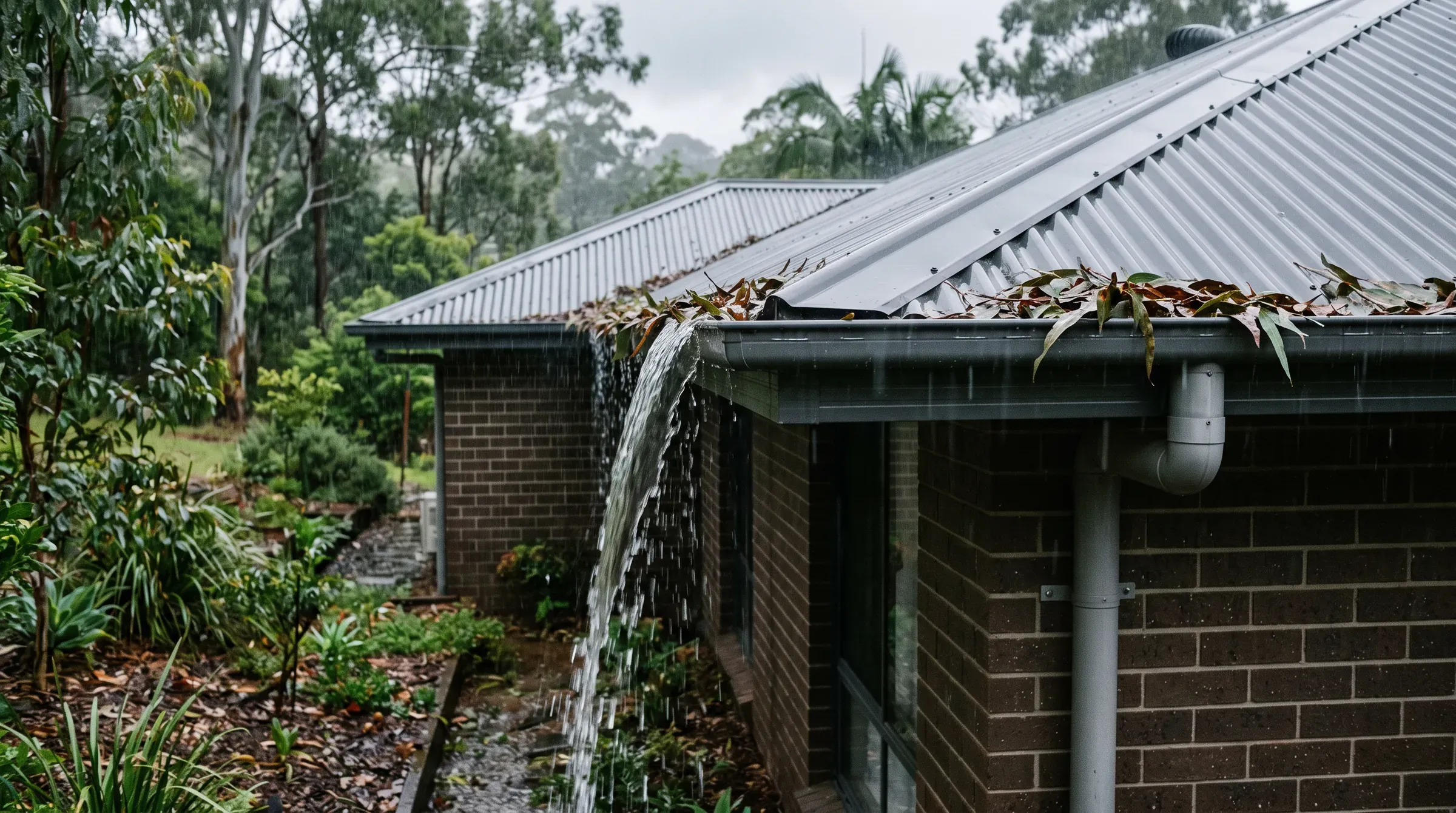
Water runs along battens, rafters and sarking before it drips, so the stain on your ceiling can be a metre or more from where the water gets in. A leak that only shows in a downpour is usually a volume problem: gutters and valleys overflowing, or wind pushing rain under flashings and cappings. Keep your gutters and downpipes clear, and read our guide to overflowing gutters if yours spill in heavy rain.
| Where you see water | Likely cause | What to check first |
|---|---|---|
| Near a chimney, skylight or flue | Failed flashing | The flashing and its seal |
| Along an outside wall or cornice | Overflowing gutter or valley | Gutters, valleys and downpipes |
| A small drip in one spot | Lifted or rusted screw, cracked tile | Fixings or tiles directly above |
| Under a box gutter | Blocked outlet or overflow | Box gutter outlet and sump |
| On cool mornings, no rain | Condensation | Sarking, insulation and ventilation |
Which leak fixes are safe to do yourself?
Some jobs are safe to do from the ground. Anything on the roof belongs to a professional.
Safe from the ground
- Clear a downpipe outlet you can reach without climbing onto the roof.
- Watch where the gutters spill in steady rain, and note it down for your roofer.
- Photograph stains and damage for your roofer and your insurer.
Leave to a roof plumber
- Anything that means getting onto the roof. Falls from roofs cause serious injuries, and a wet or storm-damaged roof is the most dangerous kind.
- Sealing flashings and fixings. Sealant from a tube is a short-term patch at best, and it often traps water or hides the real fault.
- Replacing sheets, flashings, gutters and downpipes. In NSW this is roof plumbing, and work over $5,000 needs a licensed contractor (NSW Government, roof plumbing).
Getting the leak fixed properly
Call a licensed roof plumber. Ricky Jenner Roofing holds NSW contractor licence 389777C, which includes the Roof Plumber class, and Ricky has been licensed since 2009, with more than 23 years of trade experience.
- What we fix: roof leak repairs, flashings, cappings, rusted sheets, gutters and downpipes.
- How we match it: the colour and profile of your existing roof, where the material is still made.
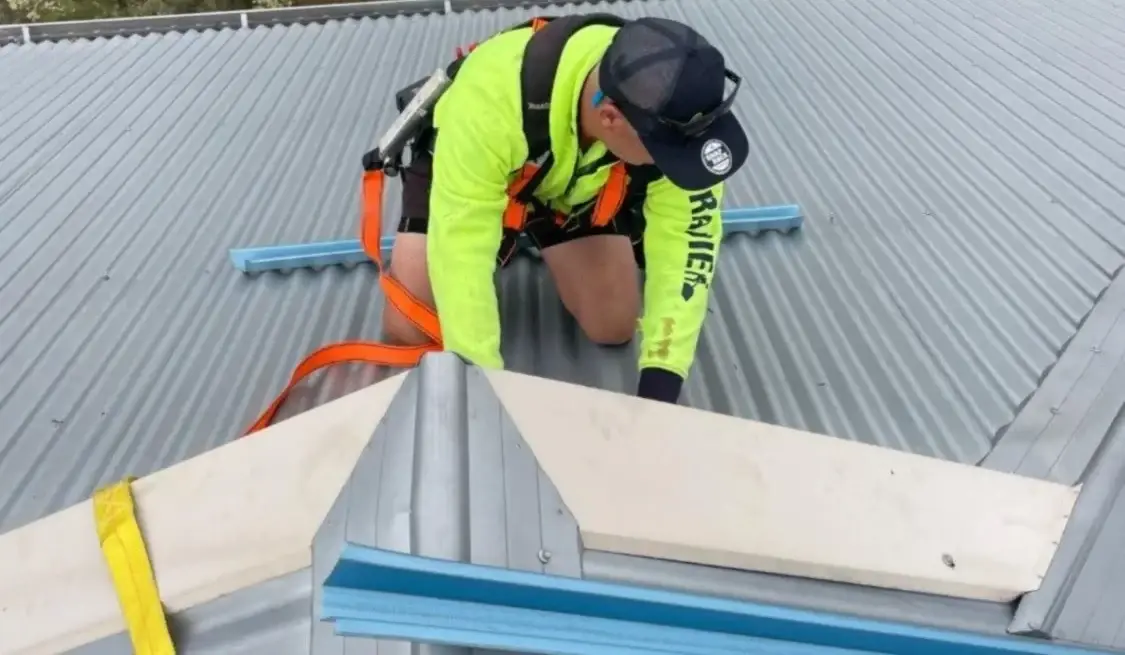
- How we work safely: scaffold edge protection or harnesses, depending on the roof.
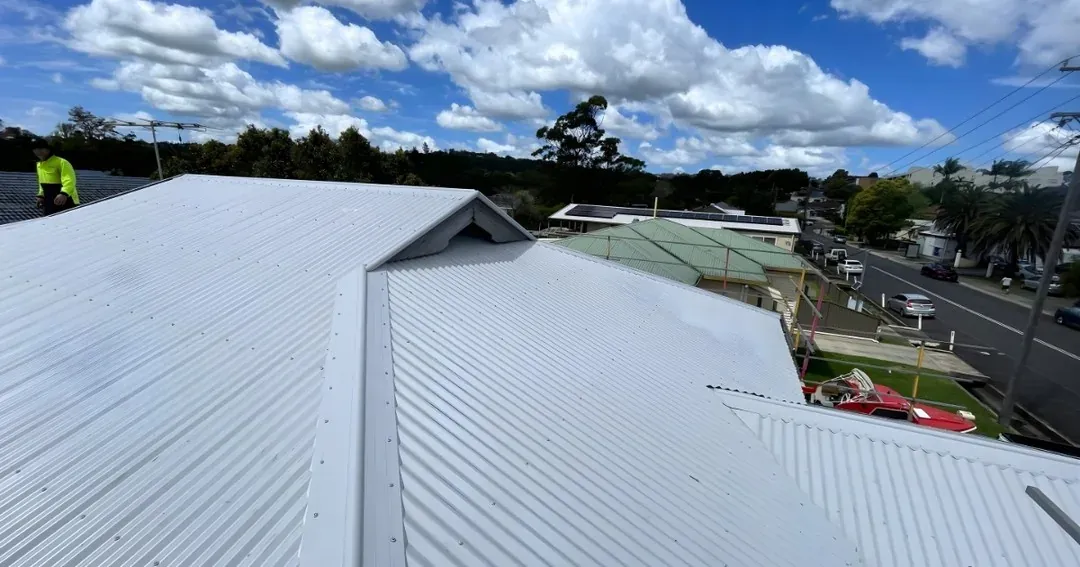
If a storm has left the roof open or water is pouring in, start with our emergency roof repairs page. We also do roof repairs in Lismore, Goonellabah and across the plateau.
What affects the cost of fixing a leak?
We do not publish set prices, because two leaks that look the same from inside can have very different causes. These are the things that move the price:
- Finding it. A leak with a clear cause is quick to confirm. One that only shows in wind-driven rain takes longer.
- What has failed. A new flashing or a handful of screws is a small job. Rusted sheets, rotten battens or a failed box gutter need more time and material.
- Access. Height, roof pitch and whether scaffold or edge protection is needed.
- Matching. Finding the right profile and colour for an older roof.
- Hidden damage. Wet insulation, stained ceilings or timber that has been wet for months.
Every quote we give is free, itemised and written after an on-site inspection.
Common questions
Why is my roof leaking?
Most leaks start where the roof is joined or pierced, not in the middle of a sheet. Look first at flashings around chimneys, skylights, walls and vent pipes, then at lifted or rusted screws, cracked ridge capping or tiles, and blocked gutters or valleys. Rust through old sheets and condensation under a metal roof can look like a leak too.
What should I look for when my roof only leaks in storms?
A roof that stays dry in light rain but leaks in a downpour usually has a water-volume problem. Gutters, valleys or a box gutter overflow, wind drives rain under flashings and cappings, or water backs up at a sheet lap on a low-pitched roof. Watch where water spills in steady rain and tell your roofer what you saw.
Who do I call for a roof leak?
Call a licensed roof plumber. In NSW, roof plumbing covers gutters, downpipes, flashings and roof coverings, and work over $5,000 needs a contractor licence. You can check any licence on the NSW Government licence check. If a storm has damaged the roof and water is coming in, NSW SES on 132 500 can help make it safe first.
What decides the cost of a roof leak repair?
Mostly what is causing the leak and how hard it is to reach. Resealing or replacing one flashing is a small job, while rusted sheets, rotten battens or a failed box gutter take more time and material. Height, roof pitch, scaffold needs and colour matching also affect the price, so ask for an itemised written quote.
Can I fix a leaking roof myself?
You can do the safe parts from the ground: clear a blocked downpipe you can reach, catch the water and take photos. Working on the roof itself is different. Falls from roofs cause serious injuries, sealant from a tube rarely lasts, and roof plumbing over $5,000 needs a licensed contractor in NSW. For anything above ladder height, call a professional.
Does the cause of a roof leak affect an insurance claim?
It can. Cover depends on your policy and on what caused the leak. Sudden storm damage is often covered, while insurers commonly exclude damage from wear and tear, gradual deterioration or lack of maintenance. Photograph the damage before you clean up, keep damaged items and ask your insurer before authorising repairs. Read your policy or ask your insurer for a clear answer.