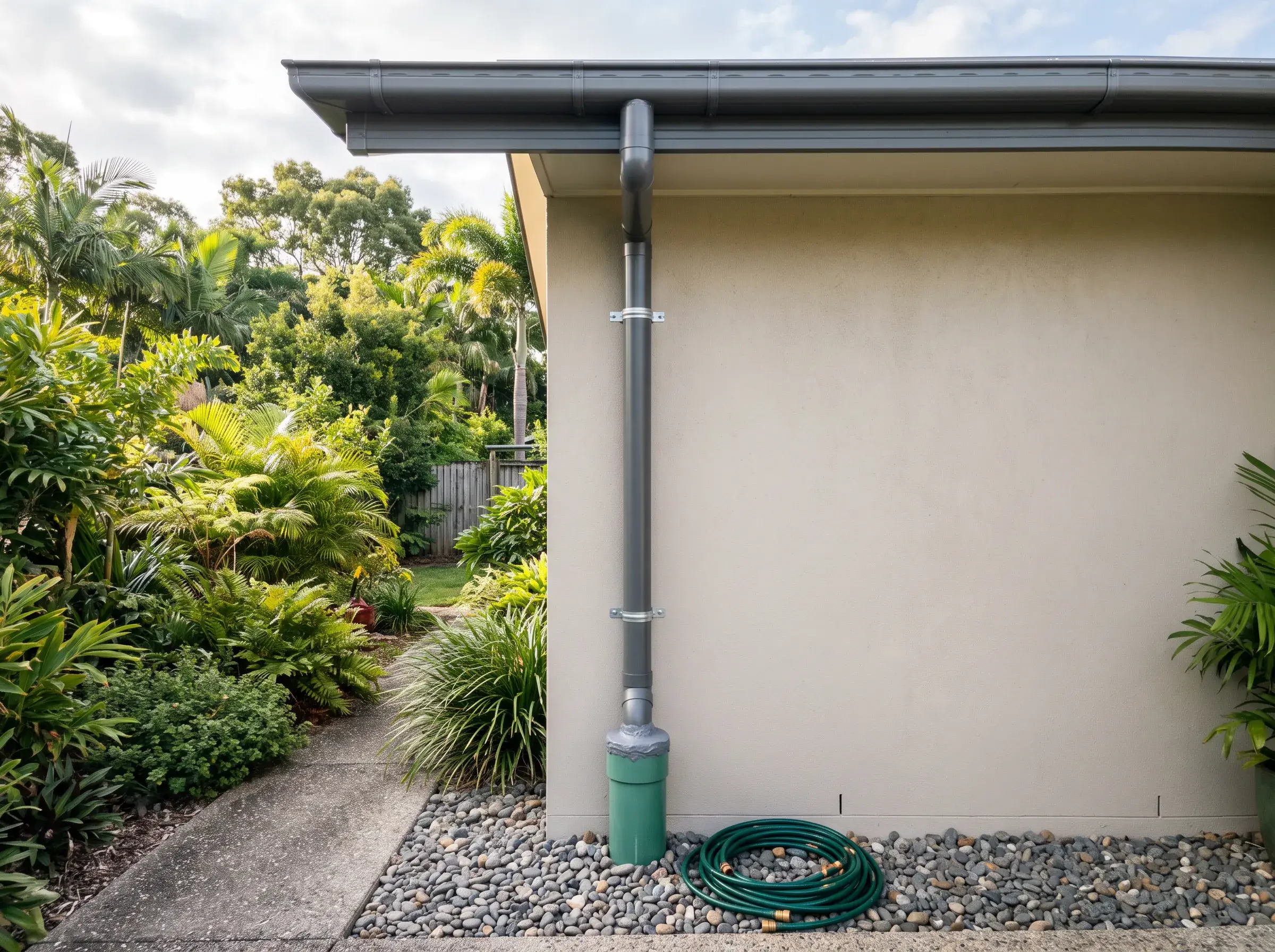
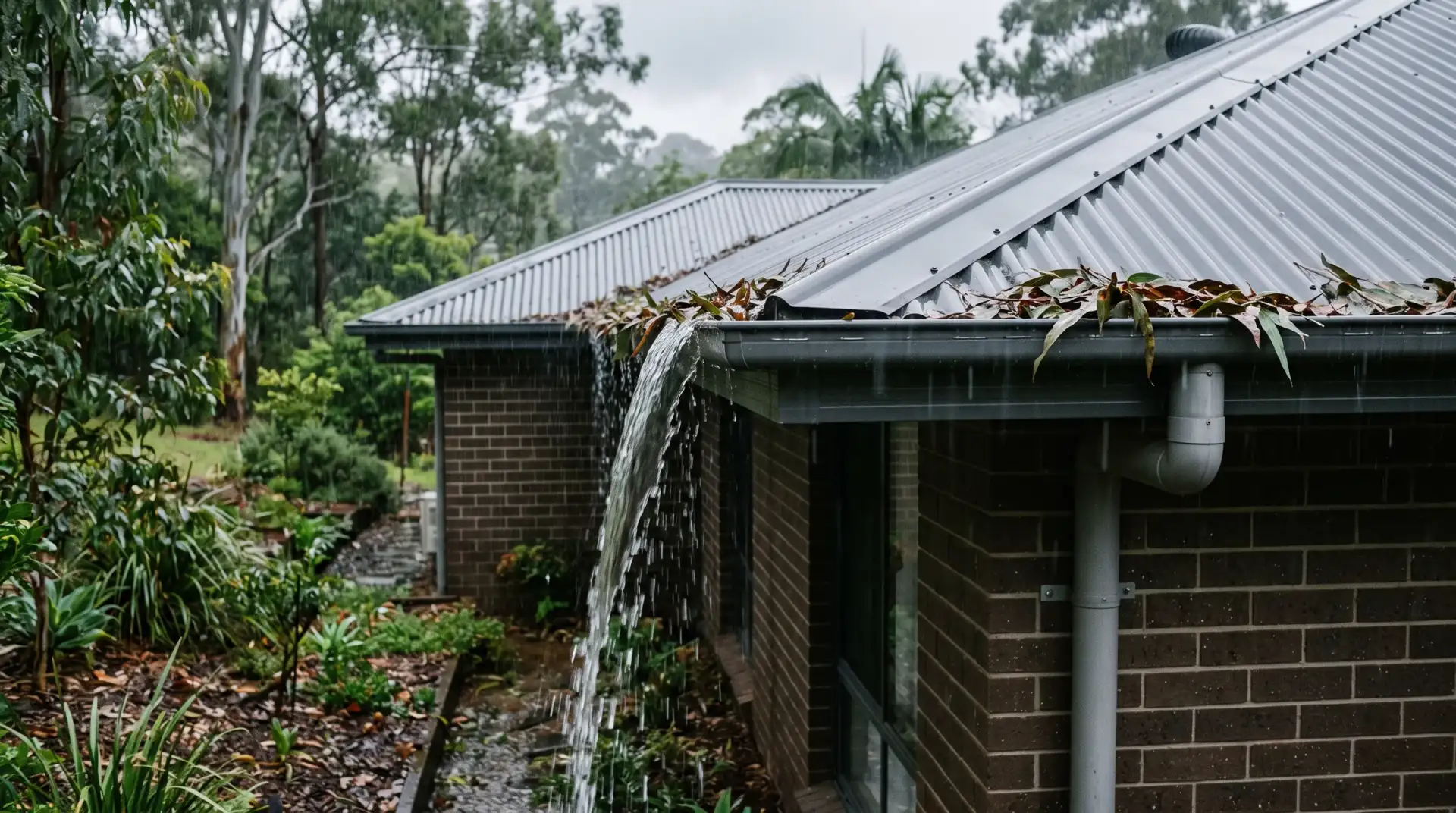
Ricky Jenner Roofing fixes overflowing gutters, downpipes and box gutters across the Northern Rivers, and the cause is almost always one of four things: a blocked outlet or downpipe, a gutter that has lost its fall, too few downpipes, or a gutter too small for the roof. Watching where the water spills in steady rain usually tells you which one, before anyone climbs a ladder.
Where is the water spilling?
Stand back from the house during steady rain and look along each gutter. The spot where the water comes over tells you most of what you need to know.
| Where it spills | Likely cause | First step |
|---|---|---|
| At one outlet or corner | Blocked outlet or downpipe | Clear the outlet and flush the downpipe |
| Along the whole run | Gutter too small, too few downpipes or no fall | Have the size, fall and downpipes checked |
| At a low spot mid-run | Sagging brackets, lost fall | Re-hang the gutter so it falls to the outlet |
| Below a valley | Two roof planes draining into one short length | Add a downpipe near the valley, or upsize the gutter |
| Over the back, into the eaves | Blocked outlet, or no safe overflow path at the front | Treat as urgent: water is getting into the building |
| From a box gutter or a ceiling | Blocked sump or overflow, or an undersized box gutter | Call a licensed roof plumber straight away |
What causes gutters to overflow?
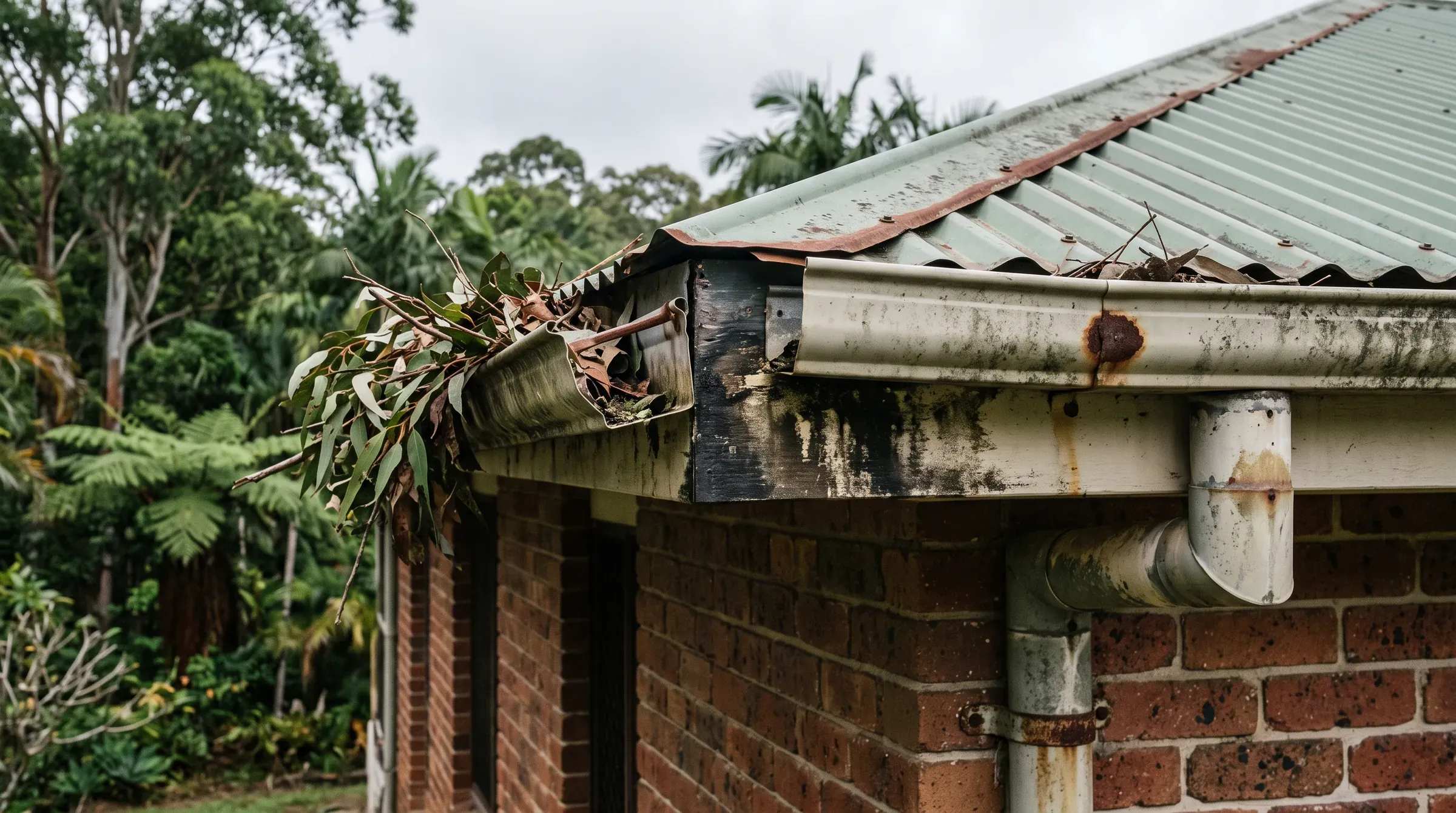
Blocked outlets and downpipes. Leaves, seed pods, silt and roof grit collect where the gutter drains into the downpipe. Once the outlet is half blocked, a downpour backs up and spills over. A blocked downpipe gives itself away when water spills at a clean outlet, when the pipe gurgles, or when its base stays dry in heavy rain.
Too few downpipes. The NCC housing provisions (Part 7.4) allow one downpipe for no more than 12 m of gutter, placed as close as possible to valley gutters. Older homes and extensions often have long runs draining to a single outlet.
Gutters that have lost their fall. When brackets rust or pull out of a soft fascia, sections sag, and water ponds and spills at the low spots. Standing water also shortens a gutter’s life.
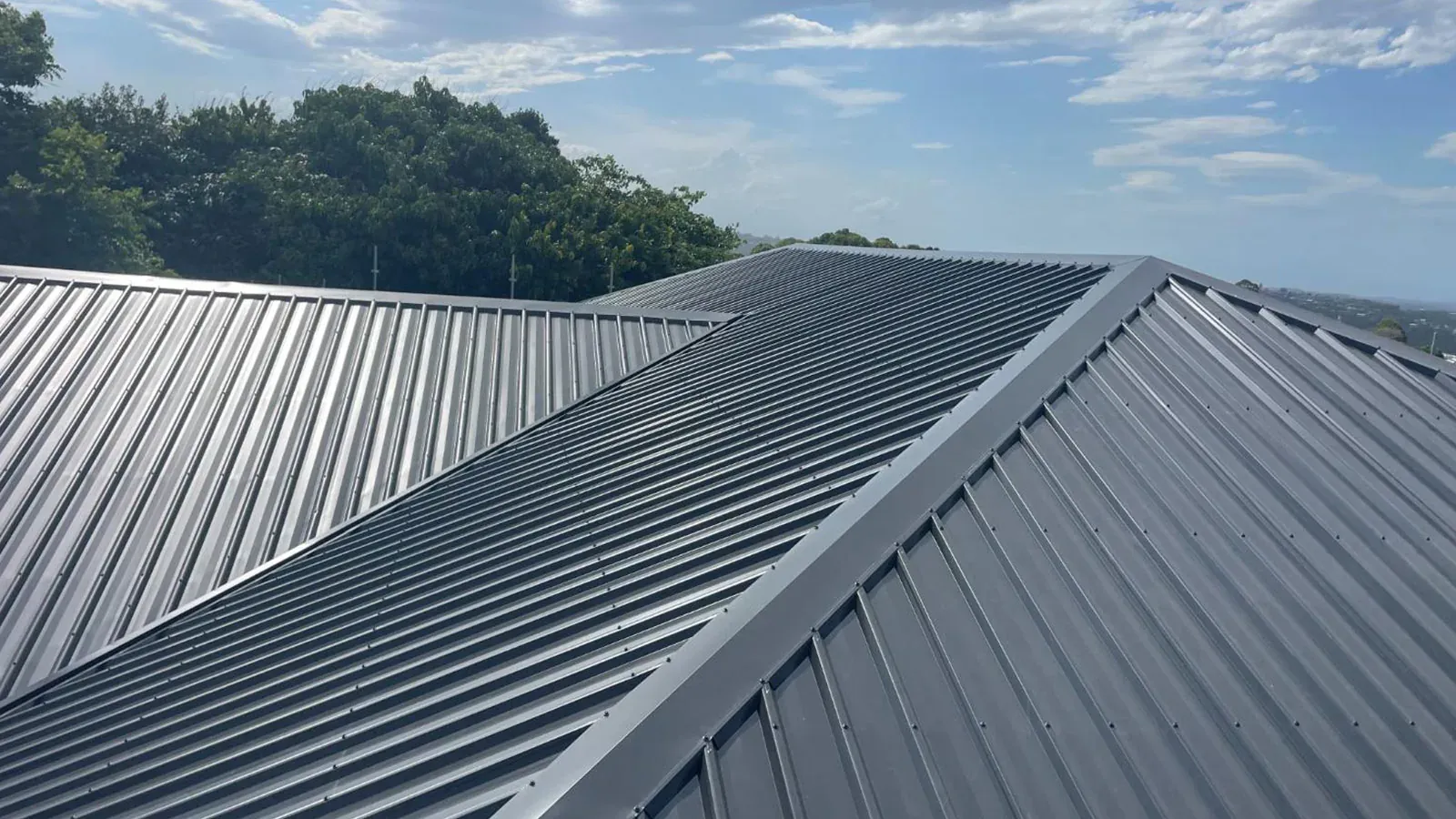
Gutters too small for the roof. Gutter size depends on the roof area draining into it and the local rainfall intensity. Large roof planes, valleys, and extensions drained into an old gutter can all overwhelm it.
Box gutters and sumps
A box gutter sits inside the roof line: between two roof planes, behind a parapet or along a wall. When an eaves gutter overflows, water falls outside. When a box gutter overflows, the water has nowhere to go but into the building.
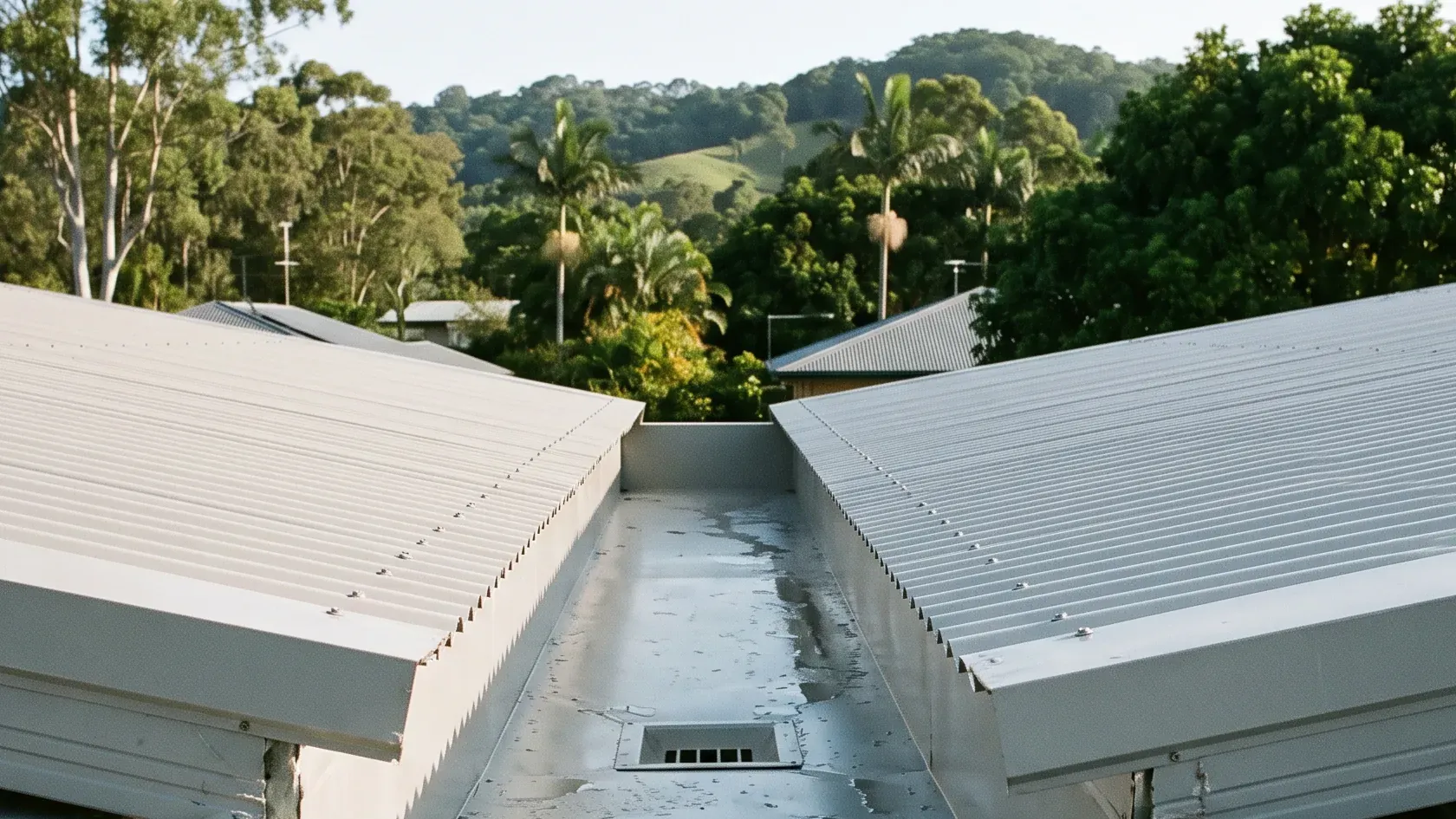
Box gutters can be designed to AS/NZS 3500.3, which covers their size, fall and overflow, and the NCC calls for particular care with box gutters above internal rooms. The usual reasons one overflows are:
- a sump or outlet blocked by leaves, silt or debris
- an overflow, such as a rainhead or spitter, that is missing, blocked or too small
- a box gutter, sump or downpipe too small for the roof area draining into it.
If a box gutter has already overflowed into a ceiling, clear the sump only if you can reach it safely, and have a licensed roof plumber check the sizing and the overflow before the next storm. For larger buildings, see our work on commercial box gutters.
Designing for Northern Rivers downpours
The NCC’s five-minute design rainfall table does not list Lismore or Ballina, but the nearest town it does list, Tweed Heads, has the highest figure of any NSW town in the table.
| Town | Eaves gutters (5% annual chance) | Overflow (1% annual chance) |
|---|---|---|
| Tweed Heads | 252 mm/h | 332 mm/h |
| Brisbane | 236 mm/h | 306 mm/h |
| Sydney | 201 mm/h | 262 mm/h |
Eaves gutters are designed for the 5% storm when they are clear. Beyond that, up to a 1% event, the NCC wants the extra water sent away from the building, which is why it accepts slots in the front of the gutter or a controlled gap behind it: in a big storm, water should spill outward, not in. In Lismore and the hills around it, that means high-capacity gutters, correct falls and enough downpipes, the work covered on our guttering in Lismore page.
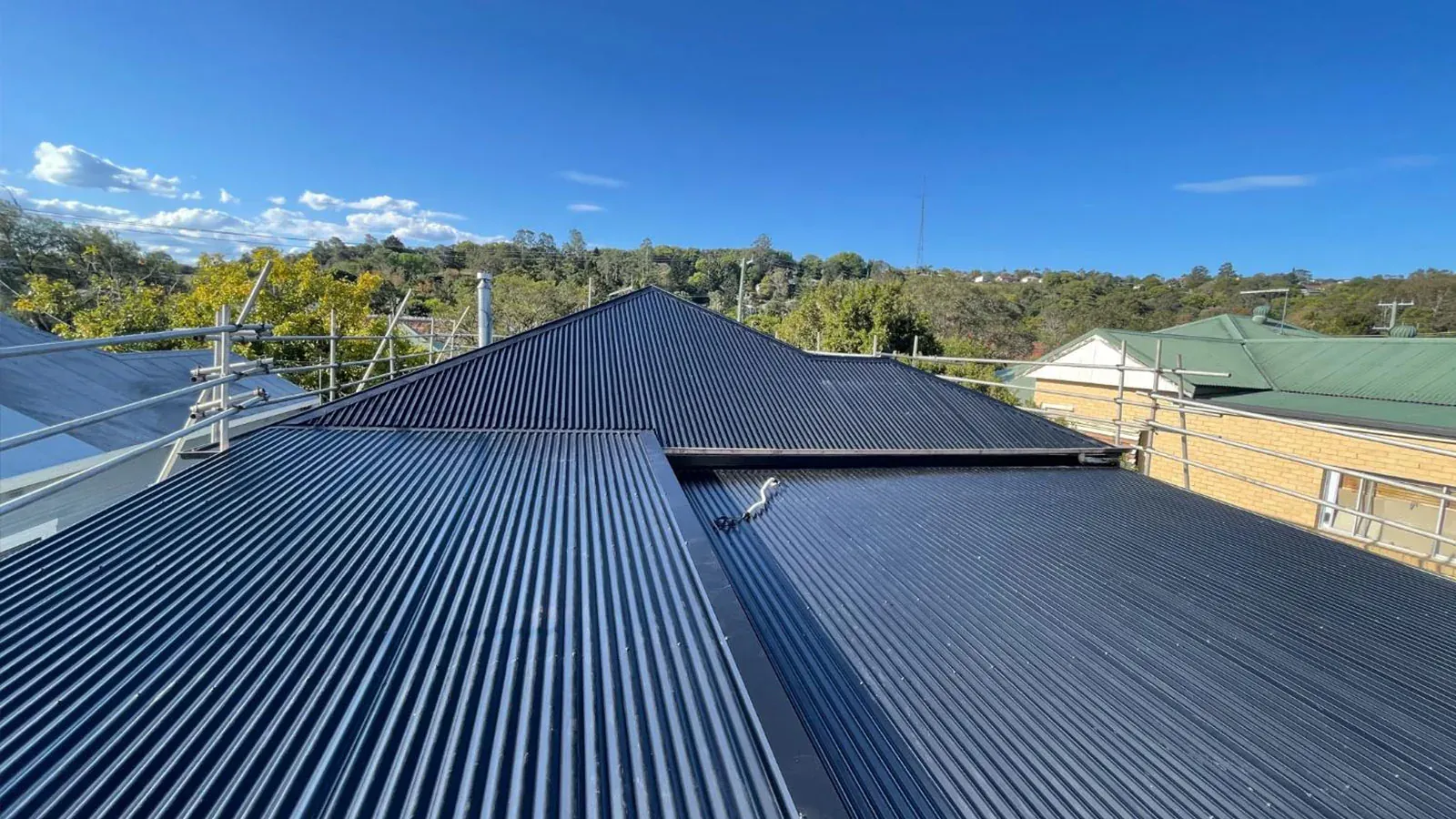
Valleys need the most care, because a valley gathers water from two roof planes into one gutter and downpipe.
Fixes that actually work
Most overflowing gutters are fixed with one or more of these.
- Clear the outlets and downpipes before storm season and after big storms.
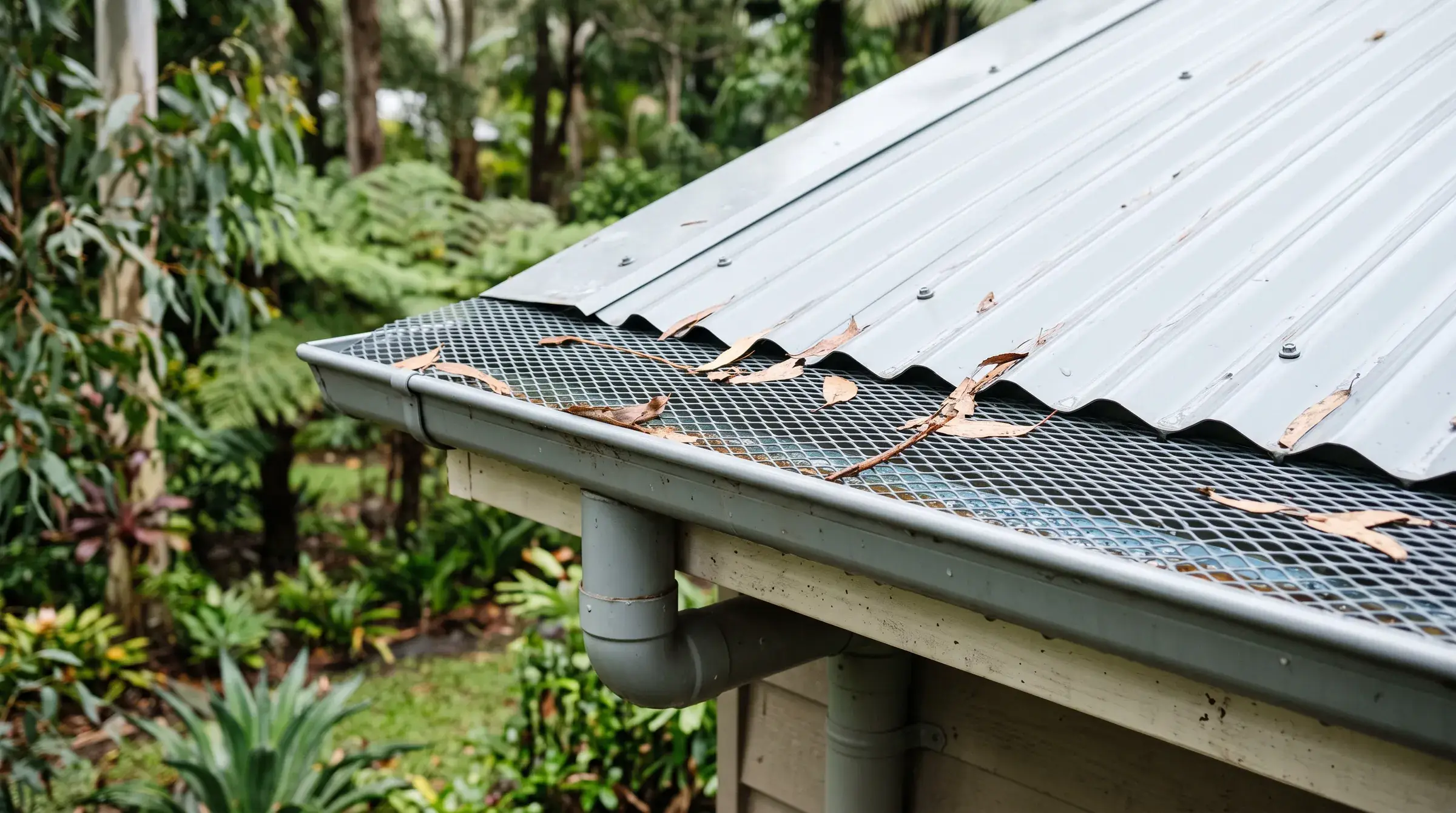
- Fit gutter guards on leafy blocks, so the outlets stay clear between cleans.
- Add a downpipe to shorten long runs, especially near valleys and internal corners.
- Re-hang sagging sections so the gutter falls properly to its outlets.
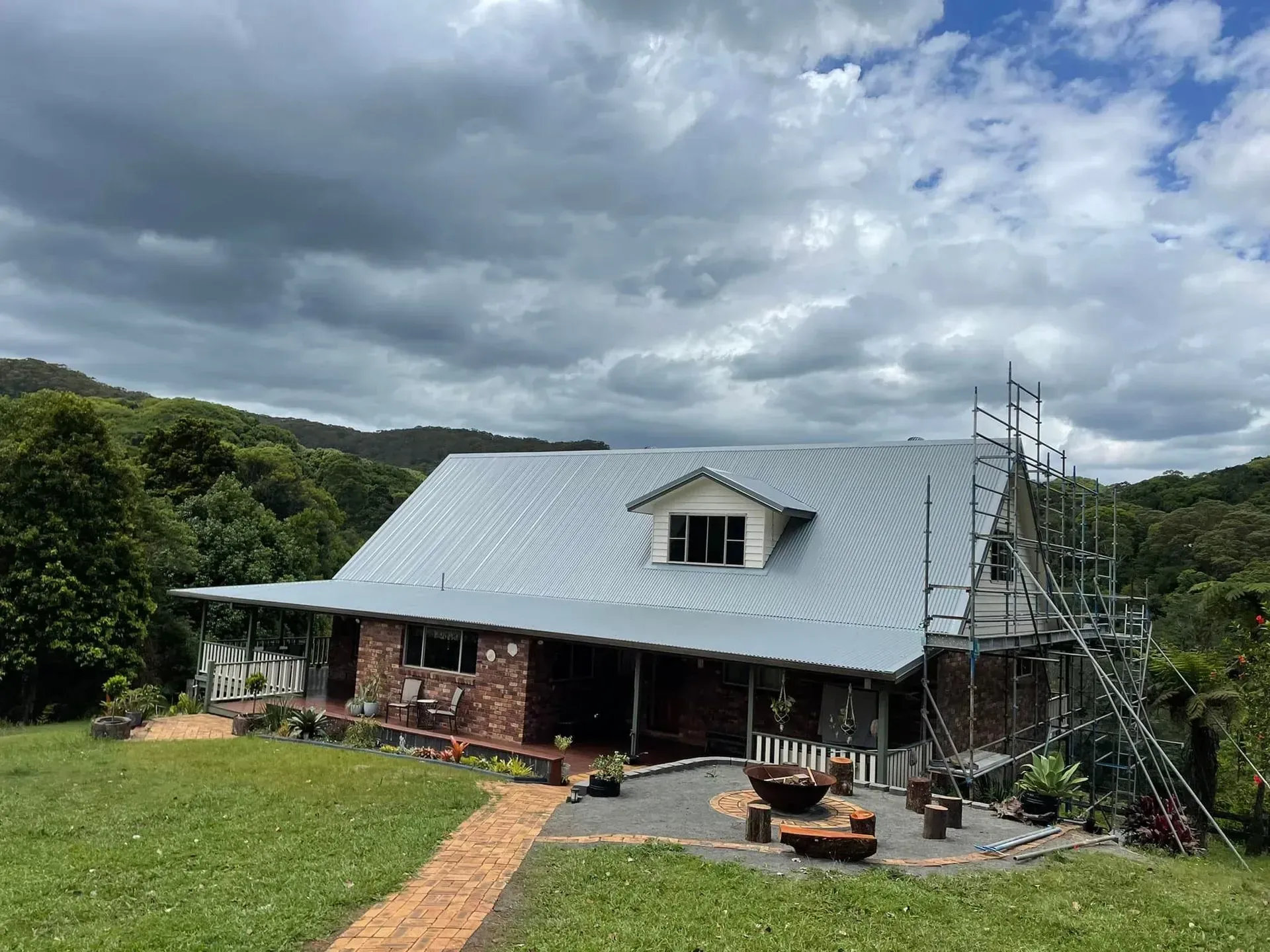
- Upgrade the gutter to a larger or higher-capacity profile where the roof area needs it. That is part of our gutter replacement work.
- Add overflow measures, such as a slotted front, a controlled back gap or a rainhead, with any overflow directed away from the building.
- Check the stormwater below ground if downpipes back up even when the gutter is clear.
When to call a licensed roof plumber
A clean-out fixes a blockage. Resizing gutters, adding downpipes, restoring the fall, box gutters, sumps, rainheads and stormwater connections are roof plumbing and drainage work. In NSW, work on guttering, downpipes and flashings is roof plumbing, and a contractor licence is needed when the job is worth more than $5,000 in labour and materials.
Our business licence is NSW contractor licence 389777C, with the Roof Plumber and Drainer classes, so you can have a licensed roof plumber look at the gutters and the stormwater they drain into. If the gutter itself is rusting, sagging or leaking at the joints, read our guide to the signs of gutter damage as well. And stay off wet roofs: clearing a gutter from a ladder in a storm is how people get hurt.
Common questions
Why do my gutters overflow in heavy rain?
Usually because water reaches the gutter faster than the gutter and downpipes can carry it away. The common reasons are a blocked outlet or downpipe, a gutter that has lost its fall, too few downpipes for the length of gutter, or a gutter that is simply too small for the roof above it. Watching where it spills in steady rain tells you which one you have.
How do I stop a box gutter overflowing?
Keep the sump, outlet and overflow clear of leaves and silt, and check them after every big storm. If it still overflows, the box gutter, sump or downpipe may be too small for the roof draining into it, or the overflow may be missing or blocked. Box gutter size and overflows are covered by AS/NZS 3500.3, so resizing them or adding an overflow is work for a licensed roof plumber.
How do I unblock a downpipe?
Clear the gutter outlet first, because most blockages start there. From a stable ladder, pull the leaves out by hand, then run a hose down the downpipe. If the water backs up, the blockage is lower down or in the stormwater pipe below ground. Stay off wet roofs and high ladders, and call a licensed plumber if a hose will not clear it.
Which overflow problems will gutter guard not fix?
Gutter guard stops the most common cause, which is leaves blocking the outlets, and that is why it suits leafy blocks. It will not fix a gutter that is too small, one that holds water because it has lost its fall, or one draining into a blocked downpipe or stormwater line. Mesh also needs an occasional clean, because fine silt and seed pods can build up on it.
Do I need bigger gutters?
Only if clean gutters with a proper fall still spill along the whole run in heavy rain. Check the simpler fix first, because an extra downpipe often solves it, and the NCC limits each downpipe to 12 m of gutter. A roof plumber can check the gutter size against the roof area and the local design rainfall, and tell you whether a larger profile is worth it.